
 E-Paper



Does the new government in Bangladesh give hope to India?
This article is authored by Shrabana Barua, associate professor and director, Jindal School of International Affairs, OP Jindal University, Sonipat.

 Prefer HTon Google


A new government in Bangladesh just took oath. After 35 years, Bangladesh has a male Prime Minister (PM), Tarique Rahman of the Bangladesh National Party (BNP). Last week’s elections had made the outcome clear – a majority government will rule, led by BNP that alone obtained 209 of the 300 seats, and, the Jamat-e-Islami (JeI)-led coalition of 11 parties will be the opposition. For India, three things were understood almost immediately.
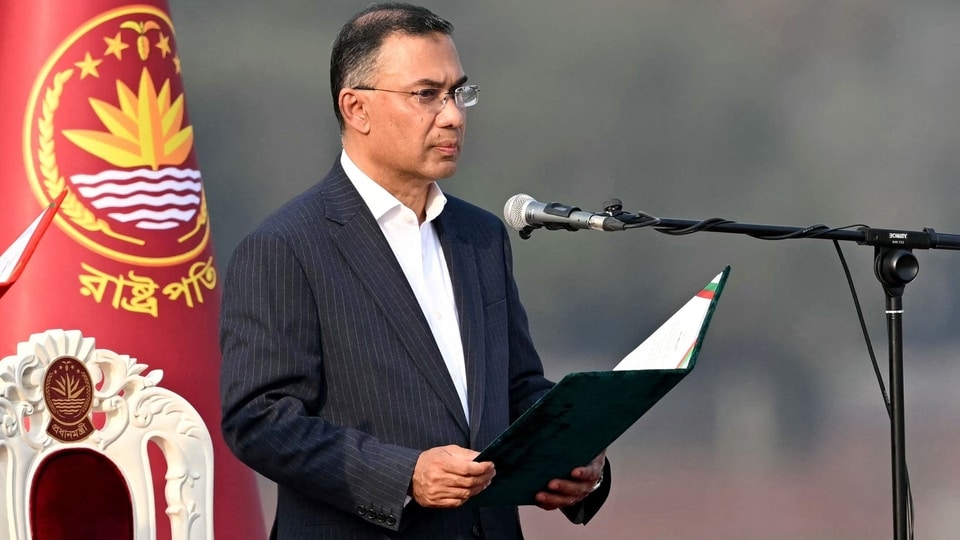
One, Bangladesh will be more stable and, therefore, easier to deal with than in the last 18 months. The interim government led by Mohammed Yunus was evidently anti-India. For Tarique Rahman, domestic issues remained a priority during campaign (India was a moot point on the BNP manifesto). This should not change drastically. Of course, the strained India-Bangladesh ties when BNP last ruled from 2001-06 must remain a tale of caution. Two, stable Bangladesh will not translate to better security for India. On the contrary, JeI mainstream role for the first time, its increased vote share and big wins, particularly along 6 of the divisions bordering Indian territory, reeks of problems. JeI is an opportunist radical party. In 1996 it tied up with Awami League (AL) to remove Khaleda Zia. In 2001 it joined the coalition with BNP against AL. And now, as a pre-poll alliance offer by JeI was reject by BNP, it first refused to accept the results and later agreed to form opposition. Meaning, it cannot be trusted. Three, the extradition of Sheikh Hasina will continue to remain a problem. Tarique Rahman reiterated this demand of India openly. Since it may be a bit of a puzzle for Rahman personally, who neither wants Begum Hasina in Bangladesh (given that AL has future prospects) nor let her be in India, the issue itself can become complicated.
Now, some developments during the oath taking ceremony on February 17 must be discussed. First, BNP openly side-lined the constitutional reforms which were put to vote via a referendum during the same elections. This result was as clear – 60.2% voters said ‘yes’ for reforms. BNP never showed enthusiasm for these reforms, a list of 80-plus items, half of which barely made sense to the populace. BNP members stated that they have not been elected as members of Constitutional Reform Council. This means there is going to be no new Bangladesh through reforms, as Yunus had envisioned. Instead this has the potential to disrupt the seeming stability in the country. Shafiqur Rahman, the JeI leader of opposition, calls BNP statements a disrespect to the July movement and Charter.
Second, of the 50-member cabinet, two appointments in particular are notable for India. Khalilur Rahman is the new foreign minister of Bangladesh. He was not elected by the people. He was one of the three technocrats brought in directly. Some call him the US hand in Bangladesh. His appointment also means the humanitarian corridor via Cox’s Bazar to Arakan in Myanmar, something he has long pushed for, may become a reality. This could unleash more serious power games between the US and China in India’s eastern neighbourhood. What must be remembered is that BNP criticised Rahman only last year, demanding his resignation as national security advisor of the interim government. Selecting him as the foreign minister indicates BNP’s altering stance and pragmatism. This is also reflected in the appointment as cultural affairs minister of Nitai Roy Chowdhury, a minority Hindu. Given the anti-minority and open attacks on Hindus in recent times, this appointment points to BNP’s moderation for the coming term.
What does the future India-Bangladesh look like? Slightly better. On India’s part, New Delhi has got it right in reaching out to both PM Tarique Rahman and Leader of Opposition Shafiqur Rahman. Both have reciprocated positively, stating they want good relations with India. While these developments are comforting, it certainly cannot be taken at face value. Besides the extradition question, Dhaka is expected to push for a few bi-lateral discussions. The killings of Bangladeshis along the border for instance. Reportedly, 34 Bangladeshis were killed in 2025 alone. With the JeI in control of most border areas, if this is not addressed, there may be backlashes. The 2011 Teesta Agreement is going to be brought up too. At that time, West Bengal chief minister, Mamata Banerjee, opposed New Delhi’s decision and stalled progress. This time around, Banerjee has shown exuberance at BNP’s win. But if she is back in power after the assembly elections this year, it is difficult to predict how much progress will be made on the subject. On the economic front, while trade imbalances with India look bad for Bangladesh (of $13.51 billion bi-lateral trade in 2025, India exported $11.46 billion), this is unlikely to be any issue. The infrastructural progresses made between the two countries are expected to reap benefits, particularly as forums like BBIN and BIMSTEC continue to focus on furthering these agendas. The question about revival of SAARC however will be debatable. New Delhi clearly is not keen, especially given the worsening of its relations with Pakistan.
Tarique Rahman’s return to Bangladesh after 17 years of exile, the BNP’s landslide victory in a supposedly free, fair and inclusive elections and the slogan of Bangladesh First have definitely opened a fresh page for the country. New Delhi must find hope in this and yet move with caution.
This article is authored by Shrabana Barua, associate professor and director, Jindal School of International Affairs, OP Jindal University, Sonipat.


