
 E-Paper



Exploring Xi Jinping’s concept of common prosperity
The piece has been authored by Shyam Saran.

 Prefer HTon Google


Common prosperity conveys China’s role as a development partner helping narrow the gap between developed and developing countries. The phrase itself was used in the 1950s to underline the goal of creating an egalitarian society in China following the success of the Chinese Communist Party (CPC) in liberating China from a semi-feudal and semi-colonial past. It encompassed policies such as the setting up of peoples’ communes in the rural areas, the nationalisation of the means of production and advocacy of simple and frugal living. The term underwent a complete makeover after Deng Xiaoping took over the reins of leadership in 1977 and launched the “reform and opening up” of the Chinese economy in 1978 at the third plenum of 11th Central Committee. Deng put forward the proposition that in order to bring prosperity to the people of China it was fine for some individuals and localities to get rich first and to then help and pull others along to also become rich and prosperous. “To get rich is glorious” is a phrase attributed to Deng but there is no record of him having used it, but perhaps it reflects the spirit of his reforms. The hitherto strong commitment to frugality in society and the principle of egalitarianism were jettisoned in practice if not always in rhetoric.
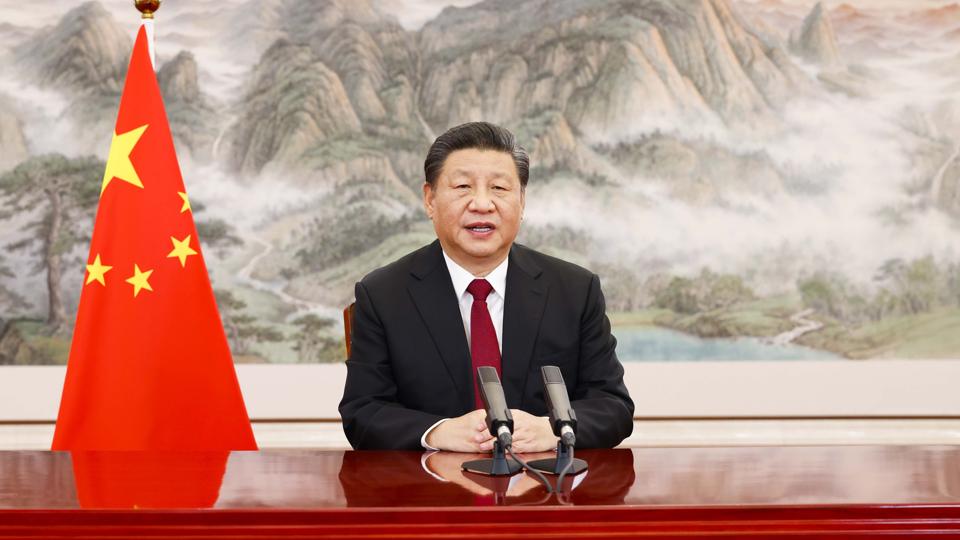
In the Xi era, the glaring income and wealth inequalities are considered a source of social instability and incompatible with a socialist society. The latest Resolution of the Central Committee of the CPC on the major achievements and historical experience of the Party over the past century, adopted on November 16, 2021, reaffirms the reform and opening up policies of the Deng era, but also draws attention to the consequential adverse impacts such as weak Party leadership, “newly emerging problems in reform, development and stability” and the spread of “startling level of corruption” within the Party. Though economic issues do find a place in the long and fairly elaborate document, it should be noted that the term “common prosperity” is not highlighted as a major theme. It is mentioned as one of the several objectives to be achieved by 2035 in the march towards the Second Centennial Goal. It is also referred to in the context of China’s external relations. It is one of the several objectives of Party policy. This leads one to think that the decision to make it a defining slogan is probably of more recent origin. One needs to ask why.
Xi Jinping’s economic strategies have evolved from a phase emphasising “supply side structural reforms”, first announced in 2015, followed by a “dual circulation” strategy, adopted formally in May 2020, and now the pursuit of common prosperity since August this year. The commentary on supply side reforms drew attention to Xi’s directive to guide the “new normal”, which the deceleration in China’s Gross Domestic Product (GDP) growth. A specific reference was made to the imbalances unleashed by the massive economic stimulus of nearly $600 billion during the global financial and economic crisis of 2007-08, which further expanded investment led growth and property development, creating a mounting debt overhang. Even in 2015 it was estimated that China’s overall debt to GDP ratio had exceeded 250 per cent. An important objective of the reforms was to shift the economy from its reliance of investment and exports as growth drivers to a consumption, innovation and service-oriented growth pattern. The dual circulation strategy which followed in May 2020 was related to both the outbreak of the highly disruptive Covid-19 pandemic and the fallout from the US-China trade war. In an environment of mounting risks and a more hostile and protectionist international economic environment, the dual circulation strategy sought to achieve greater economic self-reliance. According to a Chinese analyst, if the previous rebalancing under supply side reforms was aimed at reducing China’s dependence upon exports, in contrast, the thrust of dual circulation was to reduce dependence on imports and increase self-sufficiency. The effort would be to meet most of increased domestic demand through domestic production rather than imports. This would include the domestic sourcing of consumer goods and services but the domestic sourcing of intermediate goods and components in key industries, semi-conductors being one such category.
In the 14th FYP, common prosperity does find a mention, but it is defined in a manner different from what it is designed to convey at present. The Plan talks about achieving common prosperity through “new rural revitalisation and urbanisation strategies.” It puts the concept in the context of bridging the growing gap between the rural areas of the country and urban areas and narrow the income and wealth divide between them. On August 17, 2021, at the Central Finance and Economic Affairs Work Conference, Xi Jinping highlighted the concept of common prosperity declaring that it would be the “focal point” to ensure both the well-being of the people and the Party’s “long-term ruling foundation.” Some specific features of this version of Common Prosperity include:
* Reasonably adjusting excessive incomes;
* Promoting giving back to society by those who have become wealthy i.e. to encourage philanthropy;
* Achieving an “olive shaped distribution structure with a large middle and two small ends”;
* Reducing regional disparities and the rural urban divide;
* Promoting housing for living and not for speculation;
* Providing public services in the shape of education and health in an inclusive manner so as to promote upward social mobility; and
* Maintain the public ownership system (i.e. the State-owned enterprises) as the mainstay and simultaneously develop the economics of a variety of ownership systems.
Therefore, while the concept of common prosperity has several elements in common with the earlier supply side reforms and the dual circulation strategy, it has broadened its meaning to indicate a new and strong emphasis on an all-round inclusive development with an unmistakable egalitarian flavour. It now has a clear ideological dimension. And yet it neither figures in its current elaborate incarnation in the Party history document nor in the 14th FYP with the prominence it has now acquired. Henceforth, one could discern that is strong advocacy of common prosperity a perennial preoccupation of CPC leaders with ensuring social and political stability in China. Through common prosperity Xi appears to be preparing China for a new era of slower growth and signaling a decisive shift away from the Deng era. He is casting himself in the role of a leader of the people, capable as no other of turning a pear into an olive!
The study can be accessed here
(The piece has been authored by Shyam Saran.)


