
 E-Paper



India at the point of renegotiation of the world order
This article is authored by Simran Keshwani, political economist and lecturer, Macquarie University, Sydney.

 Prefer HTon Google


In 2026, the world has changed faster than the institutions built to govern it. Global economic power has moved east and south. The climate crisis, Artificial Intelligence, critical technologies and supply-chain disruptions have created problems that barely existed when the United Nations was established. Developing countries have become larger producers, consumers and sources of capital. Yet at the centre of the multilateral system sits an institutional architecture whose distribution of authority still carries the imprint of 1945.
India’s message at the 81st United Nations General Assembly should be understood against this widening gap.
New Delhi is again calling for reform of the UN Security Council (UNSC). But treating India’s agenda simply as another campaign for permanent membership misses the more consequential argument it is making. India is questioning whether multilateralism can remain legitimate when the institutions exercising global authority no longer adequately reflect the distribution of power, interests and problems in the world they govern.
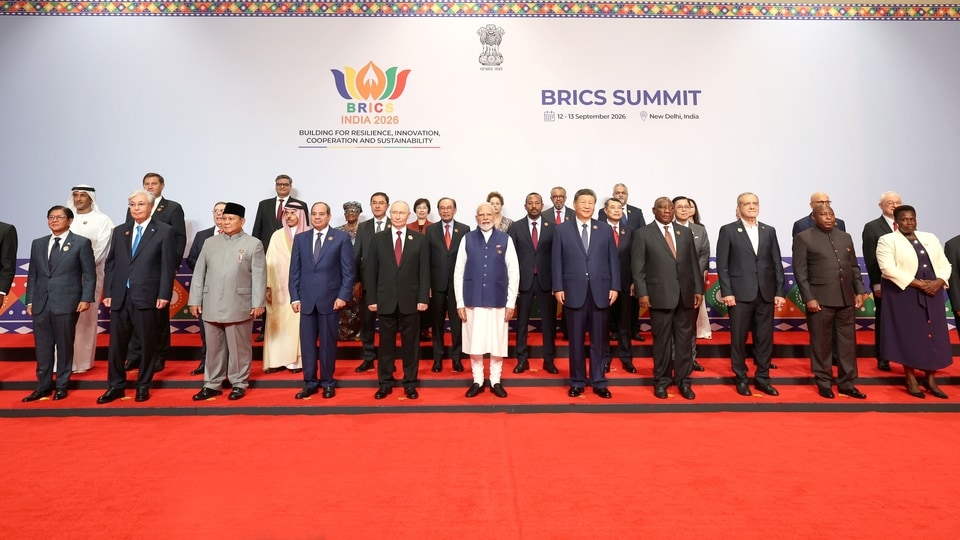
India hosted BRICS leaders in New Delhi, and days later, joined international partners on the margins of the United Nations General Assembly (UNGA) to launch a new initiative for multilateralism. Though these coalitions feature different memberships, both converge on a single demand: international institutions must change. This juxtaposition offers a vital lens for understanding a shifting global order - one that is not taking shape through a neat, binary division between the West and the rest, but through complex, overlapping partnerships. These partnerships will shape the next era of multilateralism.
India’s diplomatic engagements reveal an architecture where countries negotiate varying economic, technological, and security interests without needing total alignment across the board. Thus, India’s diplomacy at the 81st UNGA transcends its campaign for a permanent UNSC seat. It bridges two distinct struggles: the fight to redistribute authority within global institutions, and the battle to reduce structural vulnerabilities within the world economy. This distinction is critical. Multipolarity concerns the raw distribution of global power, while multilateralism governs how countries organize cooperation. More centres of power do not automatically produce more effective institutions, nor does growing international influence insulate a country's domestic factories, farms, or households from external shocks. Political weight and economic security are not interchangeable. This tension was starkly underlined by external affairs minister S Jaishankar at the inaugural Partners for Multilateralism, International Law, Peace and Prosperity summit. By pointing to the 4F crisis of fuel, food, fertiliser, and finance, Jaishankar tied geopolitical instability directly to the operational health of national economies.
The central question of our era is no longer whether countries remain globally connected, but whether they retain meaningful choices when those connections face political coercion. Strategic resilience relies on supply diversification and avoiding dangerous economic chokepoints. Authority today operates through control over supply chains and critical infrastructure just as much as it does through votes in international bodies. This is precisely what initiatives like the new multilateralism pact--co-sponsored by India, Australia, Brazil, Canada, Kenya, and the European Union--seek to address by pushing back against the weaponisation of economic interdependence.
Complementing these universal platforms are focused regional engagements, such as India’s inaugural foreign ministerial meeting with the Visegrad Group. Alongside securing crucial support for its permanent UNSC membership, these partnerships establish institutionalised business and technological forums that build practical cooperation from the ground up. However, the language of reform frequently conceals deep disagreements. While nations agree that the Council must evolve, visions for its structure fracture wildly, from Moscow’s insistence on retaining the veto system to Ankara’s call for its total abolition. Agreement that institutions are broken does not equal agreement on how authority should be shared.
Beyond institutional seats, climate change and technology introduce a decisive third dimension. India’s priorities call for predictable climate finance, broader developing-country participation in artificial intelligence governance, and the scaling of Digital Public Infrastructure as a development tool. A formal voice in negotiations does not inherently grant access to capital or advanced technology, just as unmanaged technological dependence can leave a nation bound to rules written elsewhere. Representation and capability address entirely different forms of global vulnerability.
Ultimately, the contest over the modern world order is not about replacing one dominant hegemon with another. It is a dual negotiation over formal authority and strategic autonomy - the power to make decisions versus the capacity to retain choices when others apply pressure. By pursuing both tracks simultaneously across diverse forums, India is attempting to reshape not just its rank in the global hierarchy, but the very terms on which nations depend on one another.
(The views expressed are personal)
This article is authored by Simran Keshwani, political economist and lecturer, Macquarie University, Sydney.


