
 E-Paper



Quad’s quiet resilience: Minilateral diplomacy in a fractured world
Author - Sriparna Pathak, professor, China Studies and International Relations, Jindal School of International Affairs, OP Jindal Global University, Sonipat.

 Prefer HTon Google


In an era defined by great-power rivalry, supply-chain fragmentation, and the erosion of multilateral consensus, the international order has fractured along geopolitical, economic, and ideological lines. Traditional alliances strain under the weight of domestic politics and divergent threat perceptions, while formal institutions often prove too rigid or inclusive to deliver decisive action. Against this backdrop, minilateral groupings - flexible, purpose-built coalitions of like-minded states, have emerged as vital instruments of order-building. The Quadrilateral Security Dialogue (Quad), comprising India, Japan, Australia, and the US, exemplifies this model. Though lacking the binding commitments of a formal alliance, Quad has demonstrated remarkable staying power. Its survival, even amid the conspicuous absence of a leaders-level summit in 2025, underscores the enduring value of pragmatic, working-level cooperation in safeguarding a free and open Indo-Pacific.
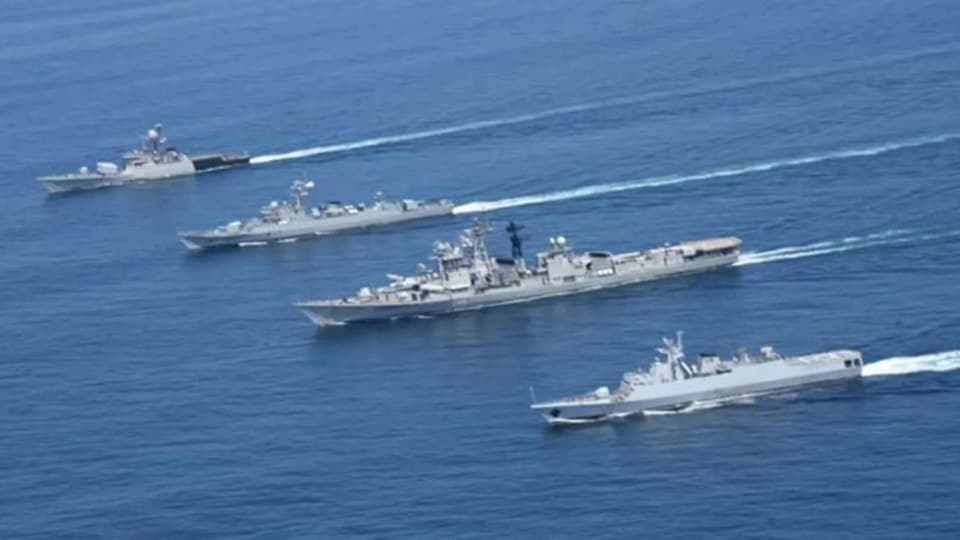
This is not the first time Quad has weathered strain. Inaugurated informally in 2007 as a response to the Indian Ocean tsunami and growing concerns over Chinese assertiveness, the grouping faltered almost immediately. In 2008, Australia withdrew under the newly-elected Kevin Rudd government. Canberra’s decision reflected a classic cost-benefit calculus: Beijing had voiced strong opposition to Quad, viewing it as an embryonic anti-China containment mechanism. Prioritising economic relations with its largest trading partner, Rudd’s administration chose not to antagonise China. The move, announced alongside Chinese foreign minister Yang Jiechi, effectively placed Quad in hibernation until its quiet revival in 2017. The episode revealed a recurring vulnerability: the grouping’s cohesion depends on convergent threat assessments and domestic political will. Yet the very fact of its resurrection, driven by shared democratic values, maritime interests, and a collective desire to uphold the rules-based order, demonstrated its latent resilience.
The current interregnum echoes that earlier hiatus but differs in its character. India was scheduled to host the Quad leaders’ summit in 2025 as the rotating chair, yet 2025 passed without a leaders-level gathering. Bilateral frictions, including India-U.S. trade tensions under the second Trump administration, and shifting American priorities contributed to the delay. Critics have seized on the optics of drift. Yet a closer examination of diplomatic activity reveals continuity rather than collapse. In the past year, Quad has sustained momentum through ministerial and working-level engagement. On January 21, 2025, barely hours after his confirmation, US secretary of state Marco Rubio convened his Quad counterparts, India’s external affairs minister S Jaishankar, Australia’s Penny Wong, and Japan’s Takeshi Iwaya, in Washington. The meeting reaffirmed the partners’ commitment to a free and open Indo-Pacific and opposition to unilateral attempts to alter the status quo by force or coercion. A second foreign ministers’ meeting followed on July 1, 2025, again in Washington, where the four nations expanded their agenda to include maritime and transnational security, economic prosperity and security, critical and emerging technologies, and humanitarian assistance and disaster relief. They launched the Quad Critical Minerals Initiative and announced new cooperation on illegal, unreported, and unregulated fishing and law-enforcement capacity-building. These gatherings, though lower-profile than leaders’ summits, have kept the mechanism operational and adaptive.
Further evidence of vitality comes from the diplomatic calendar ahead. Secretary Rubio is scheduled to visit New Delhi from May 24 to 26, 2026 for bilateral consultations with Indian leadership and a Quad foreign ministers’ meeting. The visit is framed explicitly as an effort to reset and deepen India-US strategic ties strained by tariff disputes and other frictions. Far from signalling abandonment, this sort of insistence on maintaining ministerial rhythm demonstrates that Quad remains a priority even within an America First framework that emphasises burden-sharing and transactional diplomacy.
Nowhere is Quad’s strategic logic more evident than in India’s growing role as a net security provider in the Indian Ocean Region and broader Indo-Pacific. New Delhi has long championed the SAGAR (Security and Growth for All in the Region) vision; in 2025 Prime Minister Narendra Modi articulated its evolution into MAHASAGAR--Mutual and Holistic Advancement for Security and Growth Across Regions, during engagements in Mauritius. This framework emphasises capacity-building, maritime domain awareness, and inclusive regional architecture. India’s hosting of the Indo-Pacific Regional Dialogue in October 2025, which drew participants from over 30 countries, underscored its convening power on issues ranging from blue-economy development to climate-resilient maritime security.
Central to India’s Indo-Pacific posture is the Great Nicobar Island Development Project. Located at the southern tip of the Andaman and Nicobar archipelago, barely 160 kilometres from the Malacca Strait, the ₹81,000-crore initiative includes a major international container transshipment terminal at Galathea Bay, a dual-use civil-military airport, a township, and supporting power infrastructure. Once operational, the project will enhance India’s ability to monitor one of the world’s busiest chokepoints, through which roughly 80 percent of China’s energy imports and 25-30% of global trade pass, while reducing dependence on foreign transshipment hubs. Dual-use facilities will bolster naval projection, surveillance, and logistics, directly countering Beijing’s string of pearls strategy and exacerbating China’s Malacca dilemma. Environmental safeguards and tribal welfare provisions have been integrated, yet the project’s strategic rationale remains unambiguous: it cements India’s forward presence in the eastern Indian Ocean and serves as a tangible expression of Quad’s maritime security objectives.
The US, for its part, has signalled basic levels of continuity amid change. While emphasising burden-sharing and a degree of retrenchment elsewhere, Washington continues to invest in Quad mechanisms for supply-chain resilience, critical minerals, and maritime domain awareness. The July 2025 foreign ministers’ statement explicitly welcomed the next leaders’ summit, and the subsequent Australian-hosted ministerial in 2026, illustrating institutional memory and forward planning.
Quad’s ability to endure without constant summitry reflects a maturation of minilateral diplomacy. High-level pageantry remains symbolically valuable, but the grouping’s real strength lies in its working groups, technical cooperation, and habit of consultation. Practical deliverables, like vaccine diplomacy during the pandemic, humanitarian assistance coordination, and now critical-minerals security, build trust and interoperability more durably than photo opportunities. In a fractured order where formal alliances risk entrapment and multilateral forums risk paralysis, Quad offers calibrated flexibility: Democratic solidarity without the rigidity of treaty obligations.
Sceptics will continue to question the grouping’s relevance whenever leaders’ calendars diverge. Yet history and recent practice suggest otherwise. The 2008 withdrawal did not kill Quad; it merely paused it. Today’s strains, born of domestic politics and economic recalibration in one of the four members, have likewise failed to derail its core functions. As Rubio prepares to land in New Delhi later this month, the message is clear: Quad persists not despite the absence of a leaders’ summit, but because its participants recognise that sustained, functional cooperation serves their shared interests far better than episodic spectacle. In the Indo-Pacific’s contested waters, quiet resilience may prove the most potent form of strategic signalling.
(The views expressed are personal)
This article is authored by Sriparna Pathak, professor, China Studies and International Relations, Jindal School of International Affairs, OP Jindal Global University, Sonipat.


