
 E-Paper



Undercurrents of the Pakistan, Iran strikes
This article is authored by Tara Kartha, distinguished fellow, Institute of Peace and Conflict Studies, New Delhi.

 Prefer HTon Google


Never was there a better example of a domino effect. Iran engaged in a series of attacks against those it charged with attacking it, including Kurdistan, and Syria. That was after Teheran launched attacks against Israel, and hit shipping through its sponsored groups like the Houthis, Hamas, and the Hezbollah among others. But the curious thing in all this is that it also chose to attack Pakistan, who is supposedly brotherly’ Muslim country. And Pakistan has struck back with air strikes. The threat of escalation may seem immense, but both actors have very carefully stepped back from the brink, as Beijing weighed immediately in calling for restraint. In simple words, Iran is getting attacked from all sides. Uan has for long been a target of terrorist attacks from Pakistan, from what was originally the Jundullah, and now its successor the Jaish ul Adl (JuA). Attacks began around 2000, at a time when Iran was formally declared as part of the “Axis of Evil’ by George W Bush, and which included Iraq and North Korea. An interesting tidbit. In 2010, Iran reportedly forced down the aircraft, of Jundullah leader Abdul Malik Regi, and then executed him. That’s the public story. Al-Jazeera TV reported that he had been handed over by the Pakistan authorities. The point is Teheran chose to keep Pakistan out of the picture to save Islamabad embarrassment. But then came the JuA which claimed a series of horrifying attacks against Iranian security forces over the years. The most recent horrific January 3 twin blasts at a memorial for legendary Iranian commander Qassem Soleimani was claimed by Islamic State Khorasan as it often does, whether it did it or not. Teheran blamed Israel’s Mossad, and subsequently targeted Islamic state in Syria. Another attack in Rask which killed several policemen was blamed on both Pakistan and Israel . Now that’s a new combination that raises interesting speculation. At any rate, Iran not just attacked Israeli/ United States (US)’ proxies in Kurdistan, it also attacked bases of the group in Pakistan on January 16 using drones and missiles.
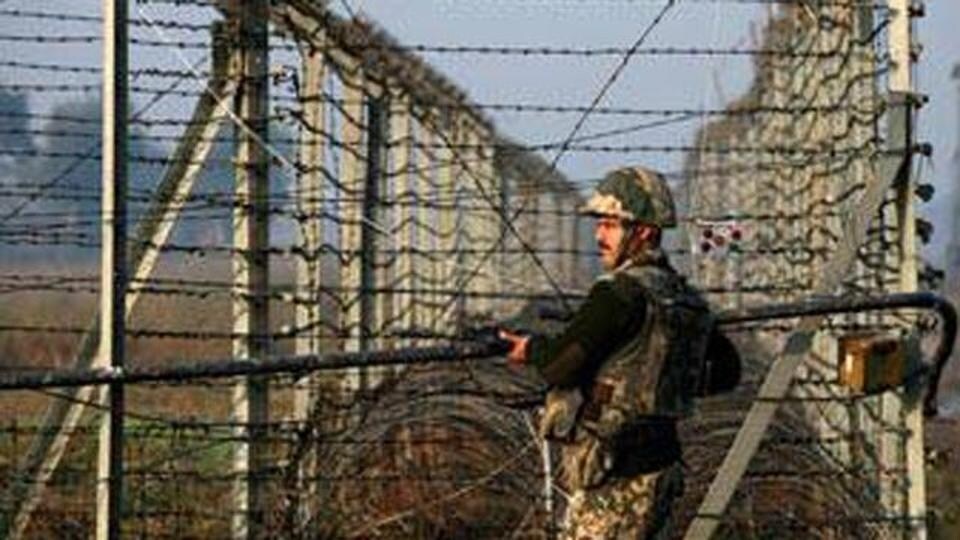
Now consider the reactions of both. A furious Pakistan declared that Iran should have used the many channels of communication that existed instead of an ‘unprovoked’ attack on Panjgur in Balochistan using drones and missiles. The truth is that Teheran has demanded action through those channels for years with little reaction from Rawalpindi. It even charged Pakistani security forces of being in cahoots with terrorists. Pakistan reacted two days later with ‘precision strikes’ of its own. But here’s the curious part. Its operation Marg Bar Sarmachar was said to have targeted “Pakistani origin terrorists’ with safe havens in “ungoverned spaces’. That’s a nice one for a country that has safe havens for decades for almost every terrorist group in the neighbourhood. At one time, that included Chinese Uighurs. Iran was equally circumspect. Iran’s foreign minister Hossein Amir-Abdollahian said attacks targeted an “Iranian terrorist group” and that “…none of the nationals of the friendly and brotherly country of Pakistan were targeted by Iranian missiles and drones.” There seems to have been a rethink overall, after Pakistan downgraded its representation in Iran. Islamabad statement also stressed ‘respect and affection’ for Iran, all of which is as ironical as it can get. Earlier, in July 2023, the army chief Asim Munir met top Iranian military officials, with the thrust being on enhancing cooperation along the border, and defence and security ties. Teheran responded with fulsome compliments and swore that Pakistan’s and Iran’s security were one. And then came the attack.
US intelligence is extremely brief in its description of the JuA, and all that is known is that its leader is Abdolrahim Mullahzadeh more commonly known as Salahoodin Farooqi. It was also said to have kidnapped retired naval officer-turned-businessman Kulbushan Jadav in 2016. That in itself shows that the group has a good relationship (at the very least) with Pakistani intelligence. Some eight million Baloch live in the desolate areas of Iran, Pakistan and Afghanistan. Some 60% live in Pakistan. All live in dire conditions in one of the most hostile terrains, and almost all are oppressed in their respective States. Here’s another curious fact. The JUA has little to do with the many insurgent groups fighting the Pakistanis who have caused a 57% violence according to a Pakistani report. Nowhere does it mention JuA or any assistance to ‘Sarmachars’ like the Balochistan Liberation Front. All of these are entirely ‘non jihadi’, except that the insurgents want an independent state or at least full autonomy, while the JuA doesn’t seem to want anything at all. Here’s another fact. The border area where all of these operate is known for smuggling of all kinds, even through border posts manned on the Pakistani side by the Frontier Corps, its paramilitary force. Control of the border is clearly remunerative as earlier eight officers of the force serving in Balochistan were arrested for corruption in a rare case. On the Iranian side, the chiefs of Iranian customs were detained among others for financial corruption.
China jumped in to call for restraint immediately following the attack with the foreign ofice noting “Iran and Pakistan are close neighbours and major Islamic countries.” A day later it was offering to play a 'constructive role'. In June, China has hosted a trilateral meeting with both, to cooperate on counter terrorism. Unsurprisingly, after the first burst of rage, both Iran and Pakistan dialled back their reactions taking great pains to stress their ‘brotherly’ relations. The White House condemned Iran strikes on Erbil, while the spokesman condemned the strikes on Pakistan in response to a question. President Joe Biden said it showed none of its neighbours liked Iran. India took a different view. Its spokesperson noted “This is a matter between Iran and Pakistan. Insofar as India is concerned, we have an uncompromising position of zero tolerance towards terrorism. We understand actions that countries take in their self-defence.”
The threat of escalation remains. Pakistan had no choice but to react, and it seems that decision was taken by the army, even as the political leadership was parleying pleasantly in Davos. Meanwhile its already weak currency plunged as tensions escalated. Both the caretaker Prime Minister Anwar ul Haq Kakar and his foreign minister hurried back to Pakistan to attend a meeting of the National Security Committee, called by the army chief. It’s difficult to see what it can do. In its present perilous state, it cannot afford a war. It can’t even close the border due to much needed cheap petrol being smuggled in, with even Pakistan State oil companies involved. The key point is whether the Pakistan army wants to do so at all. There has been reports of the US backing the Jundullah into Iran. Now if Teheran is to believed, Israel is involved too, as are sections of the Islamic State. In other words, Pakistan is as usual, running with the hare and hunting with the hounds. With the army in charge, there’s also the question of what Beijing thinks about this policy. Rawalpindi could find itself between a rock and a hard place. But then its rather accustomed to that.
This article is authored by Tara Kartha, distinguished fellow, Institute of Peace and Conflict Studies, New Delhi.


