
 E-Paper



What Balen Shah’s win in Nepal means for New Delhi
This article is authored by Prabhu Dayal, former ambassador, New Delhi.

 Prefer HTon Google


The Rashtriya Swatantra Party (RSP), led by 35-year-old rapper-turned-politician Balen Shah, is on track to a landslide victory in Nepal's 2026 general elections. As of March 7, 2026, the party is leading or has won in over 115 constituencies out of 165 directly elected seats, signalling a major shift away from the traditional "old guard" parties. This election is the first since the Gen Z protests in 2025, which toppled the previous government led by KP Sharma Oli.
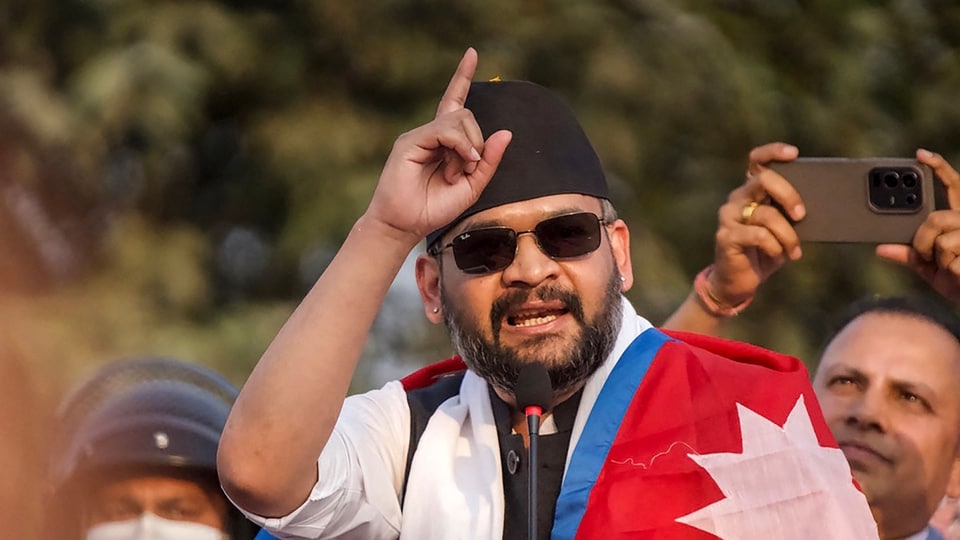
Elections in Nepal are conducted under a mixed electoral system that combines two methods: Direct constituency-based voting and proportional representation. For the House of Representatives (the lower house), there are 275 members elected using two different systems; 165 members are elected by the first-past-the-post system. The candidate with the highest number of votes in each constituency wins.110 members are elected using the proportional representation system. Voters choose a political party, and seats are allocated based on each party's total nationwide vote share. First-past-the-post (direct) results are expected late today, while the final tally for the 110 proportional representation seats may take several more days. Shah’s victory is now a foregone conclusion.
Nepalese citizens have high expectations for fundamental systemic shifts resulting from these elections. Their primary demands centre on a New Nepal defined by integrity, stability, and domestic opportunity. Voters are demanding an end to the revolving-door politics of the aging political class. There is widespread support for high-level commissions to investigate the assets of public officials who have served since 1990. Citizens expect transparent leadership that moves away from nepotism and patronage-driven systems. Younger voters specifically seek personal accountability for governance failures rather than leaders hiding behind bureaucracy.
A critical priority is the creation of jobs at home to stem the mass migration of youth seeking work abroad. Specific expectations include investment in domestic production, hydropower, and a transition to a more liberal, pro-market economy. After decades of frequent government changes (32 since 1990), voters are desperate for a stable administration that can complete its term and implement long-term reforms. Demands include streamlining the bureaucracy, implementing strict term limits for prime ministers and ministers, and introducing right to reject and right to recall provisions for elected officials.
There are strong expectations for universal health care, free secondary education, and a contribution-based social security system. Some parties have even pledged specific digital incentives, such as free internet data for youth. The public expects the new government to maintain a neutral, balanced relationship with its powerful neighbours, India and China, while prioritizing economic diplomacy to tap into regional markets.
How should India view the outcome of the elections in Nepal? The Indian government has officially welcomed the successful conduct of the polls, which took place on March 5, 2026, following the 2025 Gen Z protests that ousted the previous administration. India's ministry of external affairs (MEA) has expressed a readiness to work with the incoming government to build on robust multifaceted ties. For New Delhi, a stable government in Kathmandu is crucial for securing its open border and advancing key infrastructure, trade, and energy cooperation projects. India may need to navigate a more nationalist and less predictable foreign policy from a younger leadership that is now going to be in power in Nepal.
What is Balen Shah's position regarding India? The RSP maintains that they intend to have strong relations with both neighbours while remaining independent of their direct influence. Experts suggest his rise marks a generational shift away from the traditional pro-India or pro-China labels, moving toward a more transactional and dignified bilateral framework.
While Balen Shah has a personal connection with India, being from the Madhesi community and having completed his Master’s in structural engineering in Karnataka, his political actions have frequently drawn criticism from New Delhi. In 2023, Shah displayed a Greater Nepal map in his Kathmandu mayor-office as a direct response to India's Akhand Bharat mural in its new parliament building. This map showed Indian states like Uttarakhand, Himachal Pradesh, and West Bengal as being in Nepal.
In November 2025, as Kathmandu mayor, Balen Shah triggered a major diplomatic and political storm by posting a message on Facebook that explicitly insulted three major foreign powers—the US, India, and China—alongside almost every major political party in Nepal, including the Nepali Congress and CPN-UML. The post drew swift condemnation from political leaders and the public, with many describing it as "the height of irresponsibility" for a public official in a high-ranking constitutional position. This incident occurred just months before the 2026 general elections. His history of explosive opinions on social media has continued to be a focal point of debate regarding his suitability for national leadership. Balen Shah's nationalist stance on border disputes—such as those involving Kalapani and Lipulekh—presents a new diplomatic challenge for New Delhi.
India also needs to remain vigilant about Chinese influence in Nepal. India views Chinese-led projects under the Belt and Road Initiative (BRI), such as the Kathmandu-Tibet railway and the Pokhara International Airport, as strategic threats that could shift the regional security balance. Chinese infrastructure near the open India-Nepal border increases India's risk perception, as it could potentially be used for military or intelligence purposes. Nepal is a protective shield for the Siliguri Corridor (the Chicken's Neck), which connects mainland India to its north-eastern states. Any significant Chinese footprint in Nepal could directly threaten this vital link.
India's policy toward a new government in Nepal should focus on proactive engagement, supporting democratic stability, and strengthening the traditional ties while navigating the changes resulting from emerging young leaders. India should immediately engage with the new leadership, regardless of political affiliation, to build trust and ensure stability. India should maintain a neighbourhood first policy and avoid being seen as a big brother, which can trigger anti-India sentiments. Key priorities should include fostering economic development, accelerating infrastructure projects, and engaging with Nepal's new political generation. India's approach must balance its historical ties with the need for a modern, sustainable partnership that addresses both nations' security and development needs.
This article is authored by Prabhu Dayal, former ambassador, New Delhi.


