
 E-Paper



What the West does not understand about BRICS
This article is authored by Margarita Simonyan, editor-in-chief, RT, Moscow.

 Prefer HTon Google


These last couple of months, a number of western publications and commentators have criticised BRICS. The unhappiness over the lack of joint statement on Iran. Unhappiness over division, because every member has their own interests in mind; India is cautious, while Russia and China support Tehran. In their view, BRICS is more bluster than anything else.
Incidentally, it would be interesting to discuss the unity on Iran within NATO or the European Union.
It would seem that any proper organization or alliance is one where everybody thinks and acts in unison. The thinking within the western elites is difficult to fathom. Ukraine is where it's most evident. Every other week there's a joint European text or sanctions package, framed as a show of unity.
It’s been striking to see how the West treats India, the world’s largest democracy and an important partner. Tariffs over trade and oil imports from Russia which are used by India to power the booming economy. Pressure over Russian weapons purchases. Frustration over its Ukraine position. Lectures about religious and minority issues. The idea that the world’s most populous democracy and a key economic partner might look at the same issue and have a different perspective.
That 11 countries with wildly different interests and cultures sit at the table: India has one set of stakes in the Gulf conflict, China another, the UAE a third, Iran proper - obviously its own. Russia has its own quarrel with the West. Because the world isn't actually arranged into two fractions - what's supposedly right and wrong. Consider each member's history with the region, energy interests, trade, diaspora. That’s what BRICS is about: Giving a chance to those interests and opinions to be heard equally.
The opposite of this should cause concern, I would argue. When an organisation produces (or aims to produce) a single shared voice on every question, you have to ask what's going on. Somebody is being coerced into agreeing. Sovereign States cannot agree on everything. The EU, to be fair, has a structural reason: Foreign policy decisions must be taken in unanimity. But notice what's happening with that rule right now: There's a growing chorus to scrap it precisely because certain countries keep using their veto to put their own national interests first.
BRICS has never said it was going to come together as one and run the world, that’s the wrong genre. BRICS is an organisation where different countries bring a multitude of perspectives to coordinate, cooperate and hopefully make the world a more equitable place: A development bank, settlements in national currencies, trade, energy.
Where it doesn't suit them, they don't agree. And yet it still makes the cooperation worthwhile.
Arranging the world in the ‘right’ way - that's the West's ambition. And for that ambition, yes, you do need a single stance to rally the troops. That's why it spends so much energy disciplining its own ranks and everyone around.
The world is too diverse to be run by a single hegemonic power or group. The idea that there has to be a single centre speaking for everyone isn't the natural shape of modern, international, multipolar life.
There’s a song, I’m sure you are familiar with it: ‘Mile sur mera tumhara’ - when your melody meets mine. That was India's answer, sung in 14 languages in 1988, how different people can live together. Different cultures and tongues, each singing their own tune - but making something beautiful. Together.
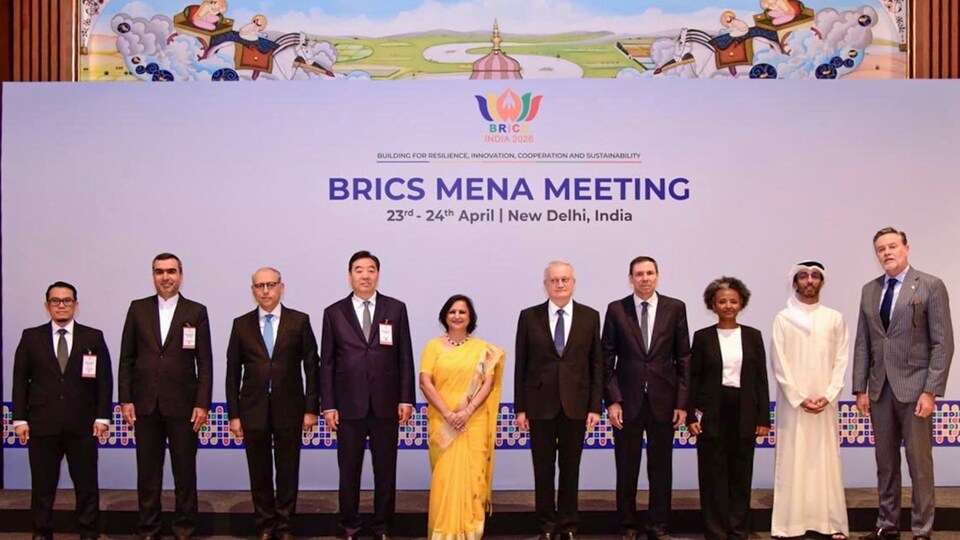
So when I read that BRICS has exposed its own emptiness because it doesn't have a common voice on Iran, what baffles me is the confidence that their yardstick is the only correct one. BRICS has shown exactly what it is: A group of countries celebrating and respecting difference. And when the BRICS foreign ministers come to New Delhi, if they produce a meaningful joint statement on the Iran situation, that would be welcome but if they don’t, that too is not a cause for concern. This is a lesson about respect, and BRICS has it in abundance.
(The views expressed are personal)
This article is authored by Margarita Simonyan, editor-in-chief, RT, Moscow.


