
 E-Paper



Extreme heat demands public health interventions and income loss safeguards
This article is authored by Deepali Khanna, senior vice president and head, Asia, The Rockefeller Foundation.

 Prefer HTon Google


Heatwaves have become a regular feature of summer in the Indian subcontinent, disrupting the lives of millions and straining the systems meant to protect them. Even as warming is measured in fractions of a degree, the resulting impacts are felt in the form of disrupted lives, lost wages, increased hospital visits, lower productivity, higher electricity bills, and more. Those hardships fall hardest on the most vulnerable, which is why we need solutions designed specifically to help them.
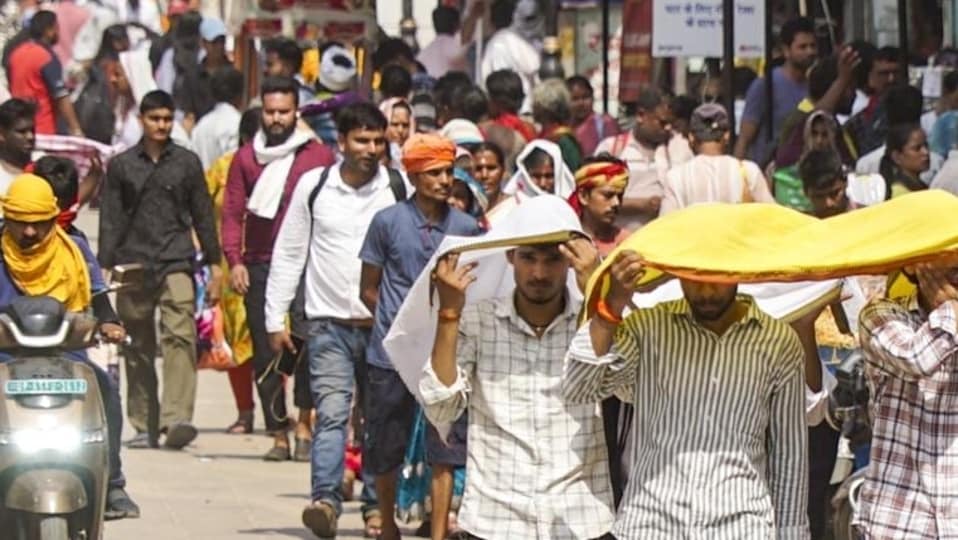
Even when compared to other extreme weather events, heatwaves stand out for taking a huge toll on people's everyday lives, particularly their ability to work, earn, and provide for their families. The Lancet Countdown estimated that heat cost India around 247 billion potential labor hours in 2024, amounting to $ 194 billion in lost income. A more recent study by researchers at the India Energy and Climate Center at the University of California suggests that a single day of extreme heat can cause as many as 3,400 additional deaths across India.
As temperatures approaching 50 degrees Celsius become a regular feature across South Asian plains, there is a great need to understand how extreme heat affects people and identify safeguards against it.
People who work outdoors or perform manual labour, are responsible for children or elderly family members, live in densely populated urban areas, or lack adequate health care, are most vulnerable to extreme heat — one UNEP estimate found that around 82% of India’s informal workforce is unprotected.
Take construction workers, for example. In many cases, workers must work a fixed number of hours and so bring their whole families to construction sites, even as their children risk dehydration, heat stroke, injury, and other hazards. Their own well-being is at risk too: One BBC report on heatwaves mentioned that road workers decided against bringing cooked vegetables for lunch because the heat would spoil them before noon. No food on the table could potentially be the cost for not being able to work due to illness or childcare.
We can also look at those running households, who are forced to make increasingly difficult decisions — deciding to send their children to school during a heatwave, spending long hours in queues for water, and even deciding what to cook all come with added stress.
When millions of people face similar issues at the same time, it puts pressure on health systems, urban infrastructure, and the economy. Solutions that address individual challenges while strengthening larger systems rthat can help communities become more resilient are the need of the hour.
As communities consider ways to reduce the impacts of extreme heat, protecting against the loss of livelihoods is a clear priority. Parametric insurance, for example, pays out based on a specific trigger event rather than assessed damages — offering fast, predictable relief rather than compensation for the full extent of loss.
Health systems can strengthen preparedness before temperatures peak. Early warning systems are most effective when linked to local health responses instead of being limited to public alerts. Primary health centres should be equipped to identify and treat heat exhaustion, dehydration, and heat stroke, and frontline workers should be trained to respond. Rising temperatures are also expanding the range of vector-borne diseases such as dengue and malaria, so heat preparedness should feed into broader disease surveillance.
As one example: SEWA’s parametric insurance programme, developed for informal women workers in India, provides automatic payouts when extreme heat persists for two days. As SEWA and the Better Than Cash Alliance reported in 2025, each woman contributes ₹250 annually, and when temperatures exceed 40°C, insured women receive direct cash assistance to help them manage income loss, buy essentials, or recover without falling into emergency debt.
Another example is the South Asia Climate-Health Desk, launched through the WHO-WMO Climate and Health Joint Programme, which aims to help meteorological institutions and health partners develop decision-support tools. Implemented with partners including IITM and IMD, the initiative translates climate and weather information into timely health action so vulnerable communities, health authorities, and services can respond before and during dangerous heat events.
Every solution must address a single underlying reality: Preparedness needs to respond to how people live through heat. While many receive warnings for heat alerts on their phones, staying at home is rarely an option. Preparedness, therefore, must help those who are most exposed and least protected. Getting this right means workers can earn a living without risking their lives, children and older people stay safe, and cities keep functioning without shifting the cost of heat onto those who can least afford it — that is the safeguard worth building now.
(The views expressed are personal)
This article is authored by Deepali Khanna, senior vice president and head, Asia, The Rockefeller Foundation.


