
 E-Paper



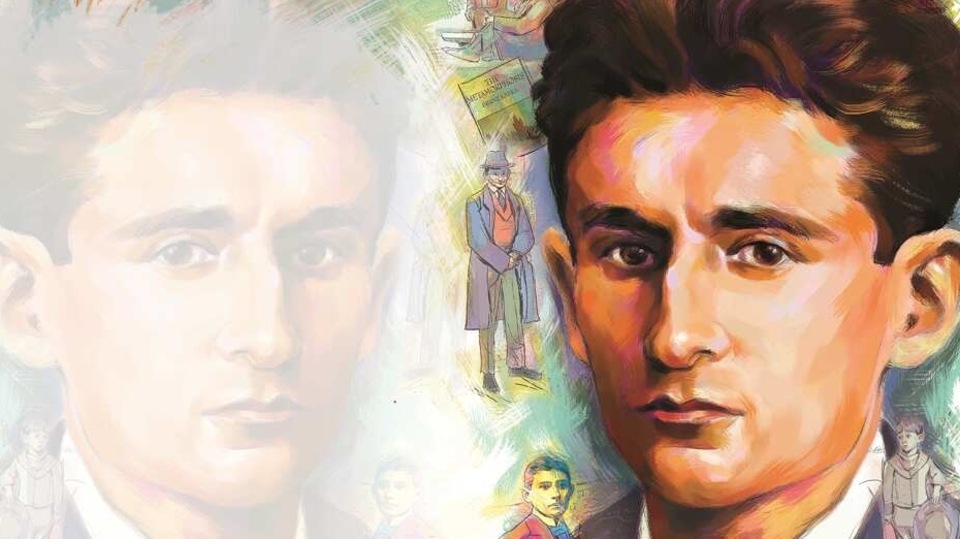
Franz Kafka: Great novelist and titan of 20th century literature
German-language novelist Franz Kafka blended realism with fantasy. His stories evoke the anxieties felt by many in 20th-century Europe and North America.

 Prefer HTon Google


Born on July 3, 1883 in Prague, Bohemia, now the Czech Republic, then part of the Austro-Hungarian Empire, Kafka was the eldest of six in his family who were German-speaking middle-class Ashkenazi Jews. His father, Hermann Kafka, was a fashion retailer and mother, Julie, was the daughter of Jakob Lowy, a merchant.
Education
From 1889 to 1893, Franz attended the Deutsche Knabenschule, an elementary school for boys in Prague. In 1901, he graduated from the Altstadter Deutsches Gymnasium, the rigorous classics-oriented secondary school with eight grade levels. He did well in school, taking classes like Latin, Greek and history. Admitted to the Deutsche Karl-Ferdinands-Universitat of Prague in 1901, Kafka began studying chemistry but switched to law. Kafka was awarded the degree of Doctor of Law in 1906 and performed an obligatory year of unpaid service as law clerk for the civil and criminal courts.
At the end of his first year of studies, Kafka met Max Brod, a fellow law student who became a friend for life. Brod emerged as the promoter, saviour, and interpreter of Kafka’s writings and also as his most influential biographer.
Career
On November 1, 1907, Kafka was hired at the Assicurazioni Generali, an insurance company. He was unhappy with a work schedule as it made it extremely difficult to concentrate on writing, so he resigned. He found an employment more amenable to writing when he joined the Worker’s Accident Insurance Institute for the Kingdom of Bohemia. He worked there until July 1922.
Literary works
Sought out by leading avant-garde publishers, Kafka reluctantly published a few of his writings during his lifetime. These publications included sections from Beschreibung eines Kampfes (Description of a Struggle, 1936) and Betrachtung (Meditation, 1913), a collection of short prose pieces. They also included works representative his maturity as an artist: The Judgment, written in 1912 and published a year later; long stories The Metamorphosis (1915) and In der Strafkolonie (In the Penal Colony, 1919) and a collection of short prose, Ein Landarzt (A Country Doctor, 1919). Ein Hungerkunstler (A Hunger Artist, 1924).
Style of writing
Kafka looked upon his writing and the creative act it signified as a means of redemption, a form of prayer through which he might be reconciled to the world or transcend his negative experience of it. The lucidly described but inexplicable darkness of his works reveal his frustrated personal struggles, but through his powerless characters and the strange incidents that befall them the author achieved a compelling symbolism that signifies the anxiety and alienation of the 20th-century world itself. Kafka, in two notes, asked Brod to destroy all unpublished manuscripts and to refrain from republishing the works that had already appeared in print. Brod took the opposite course, and thus the name and work of Kafka gained worldwide posthumous fame.
Personal life
In 1923, Kafka went to Berlin to devote himself to writing. During a vacation on the Baltic coast he met Dora Dymant (Diamant), a Jewish socialist. They lived in Berlin until his health worsened in 1924. He died of tuberculosis at a clinic near Vienna.
Interesting Facts
Franz’s two brothers, Georg and Heinrich, died in their infancy. His sisters, Gabriele, Valerie and Ottilie were murdered in the Holocaust of World War II. Ottilie was Kafka’s favourite sister.
Kafka’s troubled relationship with his father is evident in his Brief an den Vater (Letter to His Father). The dominating figure of Kafka’s father had a significant influence on the author’s works.
The word ‘Kafkaesque’ refers to concepts and situations reminiscent of Kafka’s works. Instances where bureaucracies overpowering people leads to senselessness, disorientation, and helplessness. His characters often lack a clear course of action to escape a situation. Kafkaesque elements often appear in existential works. The term has transcended to real-life complex, bizarre, or illogical situations.
Kafka considered Fyodor Dostoyevsky, Gustav Flaubert, Nikolai Gogol, Franz Grillparzer, and Heinrich von Kleist his “true blood brothers”. He was interested in Czech literature and was fond of the works of Goethe.
SOURCE: Wikipedia, britannica.com, kafka-online.info


