
 E-Paper



French luxury: A dialogue of craftsmanship and innovation
Guest columnist Thierry Mathou, Ambassador of France to India, writes on legacy, artistry and shared values for HT Showstoppers

 Prefer HTon Google


French luxury has always transcended mere objects to shape experiences, aspirations, and culture itself. Its story began in the seventeenth century, when King Louis XIV elevated craftsmanship to a matter of national pride, turning artisans’ skills into symbols of influence, refinement, and identity.
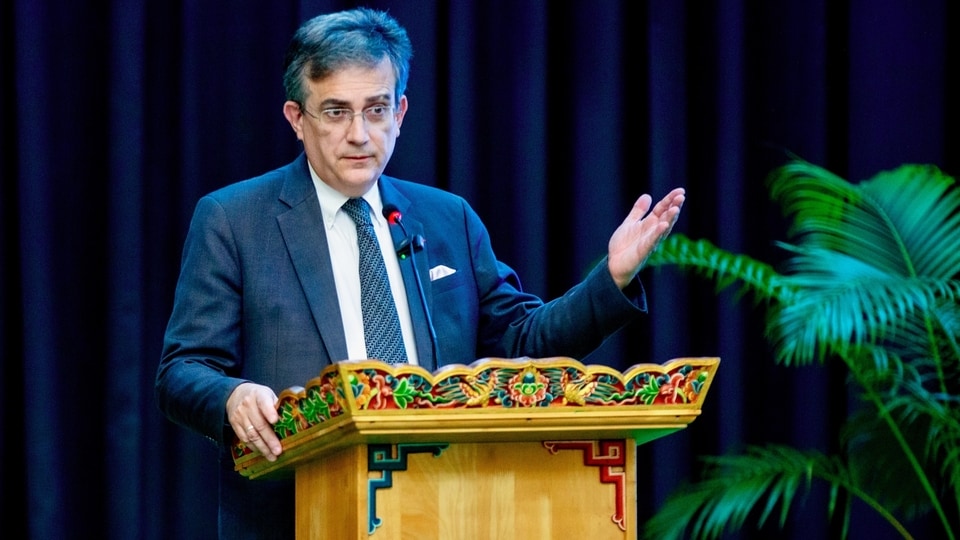
This ambition found concrete expression in the creation of royal manufactories, such as Manufacture des Gobelins, Manufacture de Sèvres, and what would later become Mobilier national, which stand as a uniquely French model combining the preservation of savoir-faire with the active support of contemporary creation and international outreach. This commitment to excellence, and meticulous attention to detail laid the foundation of French luxury, enabling it to endure and evolve over centuries.
Today, French maisons operate in approximately 180 countries, including India, generating a quarter of global luxury sales. The sector accounts for 1.7 percent of France’s GDP, rising to 3.1 percent when including indirect effects, and grows steadily at four to five percent annually.
Maintaining this global leadership demands constant engagement with new markets and partnerships that share the French values of creativity and mastery. Among the most dynamic opportunities today is India. According to Bain & Company, India’s luxury market is expected to maintain a solid long-term growth of around 5 percent annually, potentially reaching almost 90 billion dollars by 2030, making it one of the fastest-growing markets worldwide.
Beyond consumption, India offers a rich artisanal heritage, from handwoven silks to intricate jewellery techniques, complementing French standards of precision, patience, and imagination.
To foster this cultural and professional exchange, the Embassy of France in India has mobilised a network of organisations, including its cultural wing the French Institute, the trade agency Business France, and the Indo-French Chamber of Commerce and Industry (IFCCI). Together, they support a wide range of initiatives that place culture at the heart of economic and creative cooperation.
Among them, is the exhibition “Textile Matters: Woven Stories between India and France”, in Paris, which was graced by Dr S. Jaishankar, Minister of External Affairs of India, on January 4, 2026. This unprecedented project, announced by President Emmanuel Macron in 2024 during his visit to India, brings into conversation French and Indian textile savoir-faire across fields as diverse as visual arts, fashion, and interior design, inviting audiences to travel through nearly four centuries of exchanges between our two countries.
The vitality of this dialogue is embodied by a curatorial duo, Indian textile specialist Mayank Mansingh Kaul and famous fashion designer Christian Louboutin, whose long-standing relationship with India is well-known.
This conversation also finds tangible expression in the retail experience with the recent opening of Galeries Lafayette in Mumbai in the iconic Turner Morrison Building in the heart of Kala Ghoda. Galeries Lafayette’s ambition is to offer the city a dynamic platform with a strong cultural identity, which is vastly different from conventional departmental stores. They echo the philosophy of the Comité Colbert, a professional organisation bringing together luxury houses to promote French savoir-faire internationally through a collective and culturally grounded strategy. Together with IFCCI, Comité Colbert initiated a Luxury Working Group in 2022, acknowledging the importance of this sector in our bilateral economic relations.
Poised to inaugurate the India-France Year of Innovation in early 2026, we cannot speak of luxury without sustainability, which has become a central pillar, especially for millennials and GenZ. Today, sustainability is not only a moral imperative, but also a strategic growth driver for the sector. It is our role and duty to work hand in hand with key Indian players and initiatives: France will be the partner country in 2026 of the next Circular Design Challenge (CDC) led by Reliance to promote young designers in innovative and sustainable fashion, involving for the first time the Fédération de la Haute Couture et de la Mode.
Beyond production, sustainability also requires transmission and professional training. France has taken a leading role in revalorising artisanal professions, investing in education and skills development to attract new generations and ensure the continuity of rare know-how. This transition resonates strongly with the Indian context, looking to preserve extraordinary traditions while enabling innovation and economic opportunity for younger generations.
France’s strength lies in having understood that India is not merely a market, but above all a land of culture, memory, and dialogue. As the history of textile exchanges reminds us — from Bengal muslins to printed Indian textiles that transformed European fashion — our relationship has always been reciprocal. This growing dialogue shows that the legacy of French luxury is not static: it is shared, transmitted, and constantly renewed. Its future will be written through mutual curiosity, respect for craftsmanship, and a conviction that true luxury lies not only in objects, but in the cultural exchanges that give them meaning.
(By Thierry Mathou, Ambassador of France to India)


