
 E-Paper



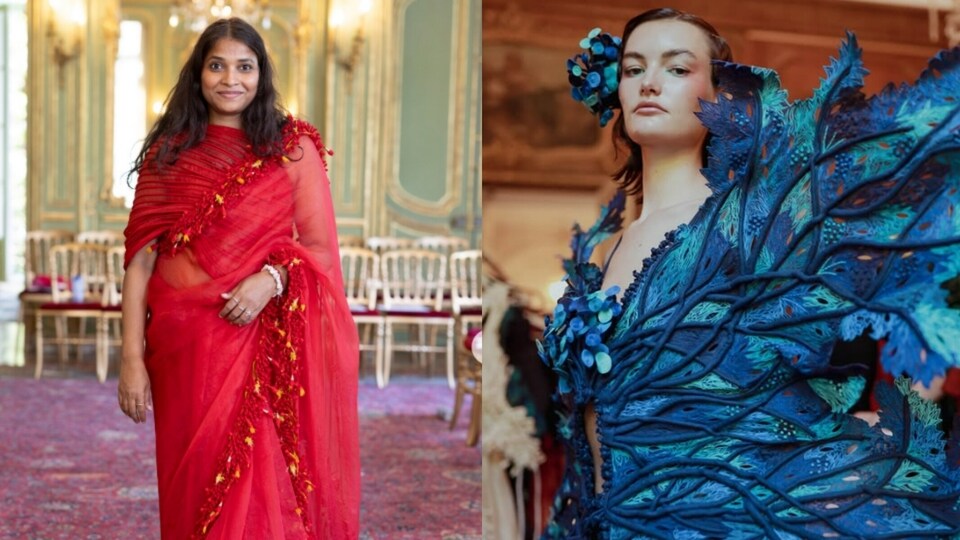
She left home at 17 and went on to revive India’s dying weaves; a look at designer Vaishali Shadangule's empire
Vaishali Shadangule’s journey is a reminder that fashion can be both deeply personal and powerfully political

 Prefer HTon Google


The resilience of a woman can often be seen in the way she dresses and the way she holds herself. If we are lucky, we get to observe, in our lifetime, a fashion designer who amplifies the strength behind femininity, through pieces that highlight not only the softness, but the strength of womanhood. Vaishali Shadangule is that artist, and her journey into fashion began with a quiet, persistent calling when she was just seventeen.
These boots were made for walking
Vaishali’s story begins long before Indian handloom weaves went global. “I was really young, at 17, and I never thought that I would create something like this. It was just a thought! Sometimes you have a very strong calling, and you just have to follow it. I just wanted to do something really meaningful, and that's why I left,” she says.
After leaving her hometown in Vidisha, Madhya Pradesh, Vaishali took up a series of odd jobs to support herself. "I left home with a drive to study, completing my degree in engineering. My early career was a true struggle for livelihood—I started with just ₹500 and built my life step by step. Even then, my instinct was always toward design; in every job, I found myself advising people on how to style and dress. Eventually, they began bringing me dress materials, trusting my eye.
In 1997, someone suggested I look into fashion in Bhopal. At that time, fashion wasn't considered a 'real' subject, but my curiosity pushed me forward. I only had enough money for 3 or 4 days of exposure, but in that short window, I learned the language of design: how to draw, how to translate a vision onto paper. It became my favourite subject.”
It was during this time that a senior woman at the gym in Mumbai spotted a spark in Vaishali that she herself was too young to recognise. "I used to carry my portfolio everywhere. A woman asked, 'Why don't you open a store?' I told her I didn't have the money; I didn't even have a bank account. She told me to wait while she spoke to her husband. I couldn't sleep that night. That faith she showed, how she believed in me... it changed my life," said Vaishali, a catch in her voice.
This act of female solidarity led to a ₹50,000 loan and the opening of Vaishali’s first 100-square-foot store in Mumbai. As she searched for the right fabrics for her new venture, her thoughts returned to the first woman who influenced her life, her mother.
A mission to remember
Growing up in a small town in Madhya Pradesh, Vaishali says those roots have always stayed with her. Memories of watching her mother wear handloom sarees slowly guided her back to the craft. She said, “I grew up watching my mother wear Chanderi sarees, and eventually, I stumbled back upon the weavers themselves. There is something truly beautiful in the work they are doing; it’s a craft that connects my past to the present.”
Now the job is to preserve. Instead of simply designing clothes, Vaishali looks to unearth stories the world might have forgotten. “My mission is to bring lesser-known weaves into the spotlight. In Assam, I discovered a beautiful weave called Kesa Paat. After walking nearly four hours into remote villages, I met around 400 women who finish their day’s household work and then sit at the loom. My goal is to bring their dedication—and these beautiful, often unseen textiles—the recognition they deserve,” she says.
Perhaps her most profound impact is seen in the revival of the 400-year-old Khun weave. "My favourite weave is the Khun—a treasure from Madhya Pradesh that lived in my earliest memories. I remember my grandmother wearing Khun blouses and offering these sacred fabrics to the goddesses. But when I went searching for the source, it took me nearly three days of crossing remote fields and farms to find the right village.
When I finally arrived, I found only one or two families left... They had stopped weaving; they felt it had become a 'shame' to continue a dying trade. It was a difficult conversation, but I convinced them of the value of their heritage. What started with one family grew to two, and today, we have converted 50 handlooms back to this craft. We didn't just find a weave; we restored a community's pride."
For Vaishali, her engineering background isn't a separate life; it’s the skeleton of her art. She sees the mechanics of the loom, but she knows that science alone is hollow. "The weavers are the true heroes. To the weavers, that thread is more than a material; it is their breath. I have learned that while engineering provides the framework, it is their spirit that gives the fabric life," she says.
Vaishali Shadangule’s story is a testament to the fact that you can travel across fields, farms, and continents, but the strongest threads are the ones that lead you back to your mother’s saree and the quiet breath of the weaver.


