
 E-Paper



When a saree becomes a “draped maxi dress”
Los Angeles-based label JW PEI has listed a pre-draped saree on its website as the ‘Botanical Embellished Draped Overlay Maxi Dress’, priced at ₹22,000

 Prefer HTon Google


A fresh wave of social media backlash has hit the fashion world after Los Angeles-based label JW PEI faced online outrage for stripping the classic Indian saree of its traditional name.
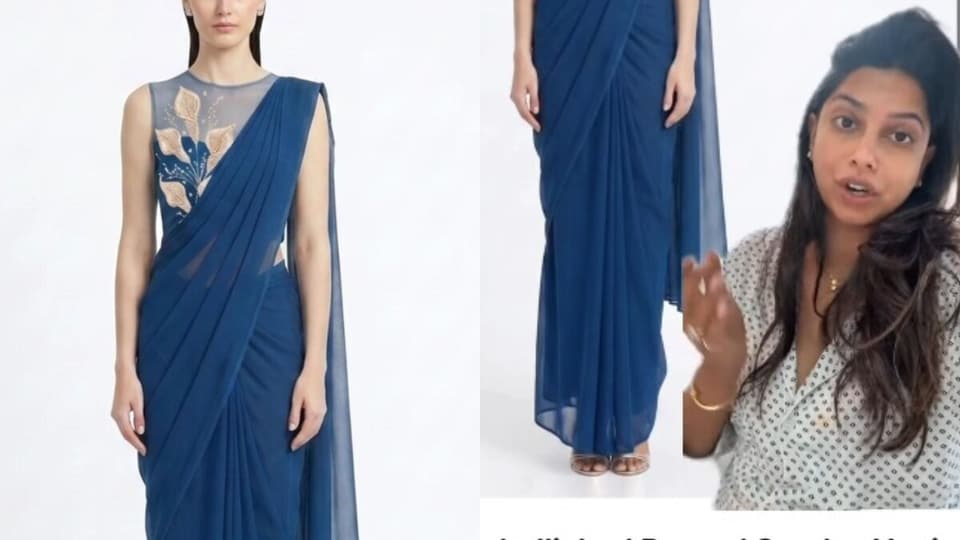
In a screenshot circulating across Instagram and X, highlighted in a video by entrepreneur and content creator Arshia Moorjani, the brand listed a pre-draped saree on its e-commerce platform as the ‘Botanical Embellished Draped Overlay Maxi Dress’, priced at €198 (approx ₹22,000).
Moorjani’s Reel questioning why the garment was marketed as a “dress” when it clearly resembles a saree quickly went viral (347K views), and sparked widespread criticism of the label.
The controversy has sparked fury across the internet and among Indian fashion designers.
The brand is founded by husband-and-wife duo Yang Pei and Stephanie Li and is known to focus on “vegan, accessible and inclusive fashion.”
Despite the backlash, the brand has not issued any official statement.
Heritage deserves respect
“We have such a rich culture and history, and the saree is an integral part of that heritage. So why can’t they just call it a saree? It is simply misleading and offensive. As an Indian and as a designer, this deeply hurts our pride,” shares designer Payal Jain.
Lapse in judgement
Designer Rina Dhaka says, “The saree has existed for centuries, and it’s not as though the world is unaware of it. This is a clear lapse in judgment on the brand’s part; they must use the correct terminology.”
Cultural credit matters
“Culture is free-flowing and no individual ‘owns’ a saree, but what we see here is cultural erasure. Fashion houses have long drawn from other cultures, however, taking a silhouette without giving credit crosses the line,” shares designer Nachiket Barve.
Cultural borrowing?
Dior: The brand faced backlash in June 2025 after Jonathan Anderson debuted a gold-and-ivory coat made by 12 Indian artisans using traditional Lucknowi mukaish but failed to credit them. In March 2026, model Kendall Jenner wore a narrow neck drape marketed as a “Scandinavian scarf” that Indian internet users noted resembled a traditional dupatta.
Prada: In June 2025, the brand debuted flat, T-strap leather sandals that were identical to Maharashtra’s Kolhapuri chappals, sparking online backlash. Prada later acknowledged the footwear’s roots in western India.
Ralph Lauren: In March 2026, models wore bell-shaped, domed earrings resembling Indian jhumkas, labelled by the brand as “authentic vintage accessories.”
Dolce & Gabbana: In July 2025, the label presented a Trevi Fountain-inspired handbag with relief patterns and brass-latch construction echoing Saharanpur and Kashmir woodcarving techniques, prompting discussions on uncredited artisanal craft.


