
 E-Paper



Jaffna travel guide: Why Sri Lanka's northern city deserves a spot on your itinerary
If your vision of Sri Lanka revolves around emerald tea plantations and ancient stupas, a journey to Jaffna will transform your perspective, says Kalpana Sunder

 Prefer HTon Google


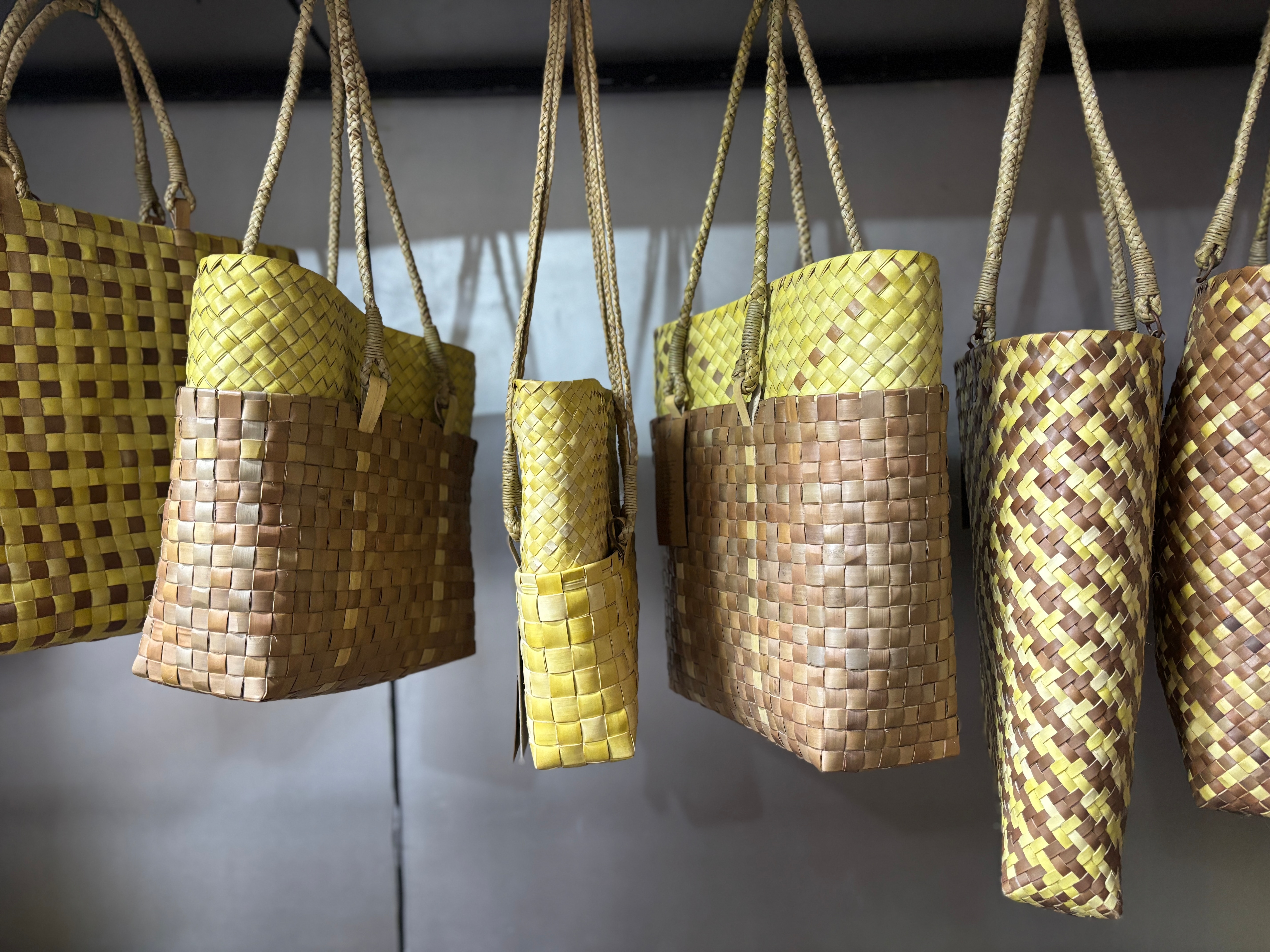
Women in sarees, Tamil film music playing, heaps of mangoes, rambutan, bananas, pineapples, massive jackfruit, brinjals, and other vegetables — the whole scene washes over me with a familiar déjà vu. Friendly shopkeepers try to sell me local specialities like packets of dried fish and chunks of jaggery made from palm sugar. Palmyra is everywhere in jaggery, flour, chips, and even woven household items. The tree is central to the peninsula's identity.
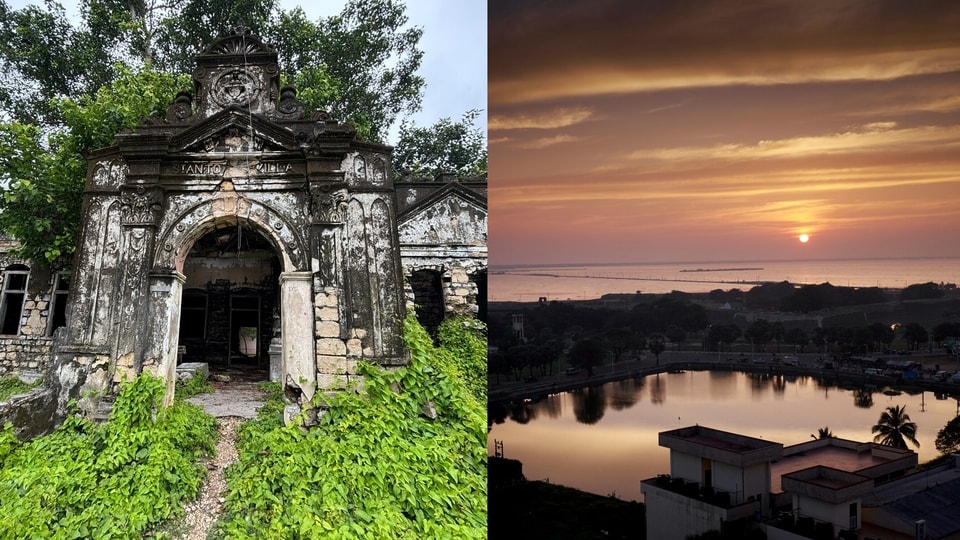
If your idea of Sri Lanka is emerald tea plantations, beaches and stupas, then a visit to Jaffna in the country's far north will change your perception. Jaffna, also called Yalpanam in Tamil, was for decades at the heart of the devastating civil war and, therefore, long cut off from the mainland. After more than twenty-five years of war and isolation, and the scars of the 2004 tsunami, it's slowly coming out and welcoming tourists, buzzing with cafes and art spaces, for those who want to experience a Sri Lanka vastly different from the south.
Jaffna is closer to India than to the Sri Lankan capital and is strongly influenced by Tamil culture and traditions. It was once known for its excellent universities, and families would send their kids here for the best education. Our drive from Sigiriya in the heart of the country, towards the north, passed emerald paddy fields, palm trees and towns like Kilinochchi, that reminded us of the tragic civil war that devastated the country.
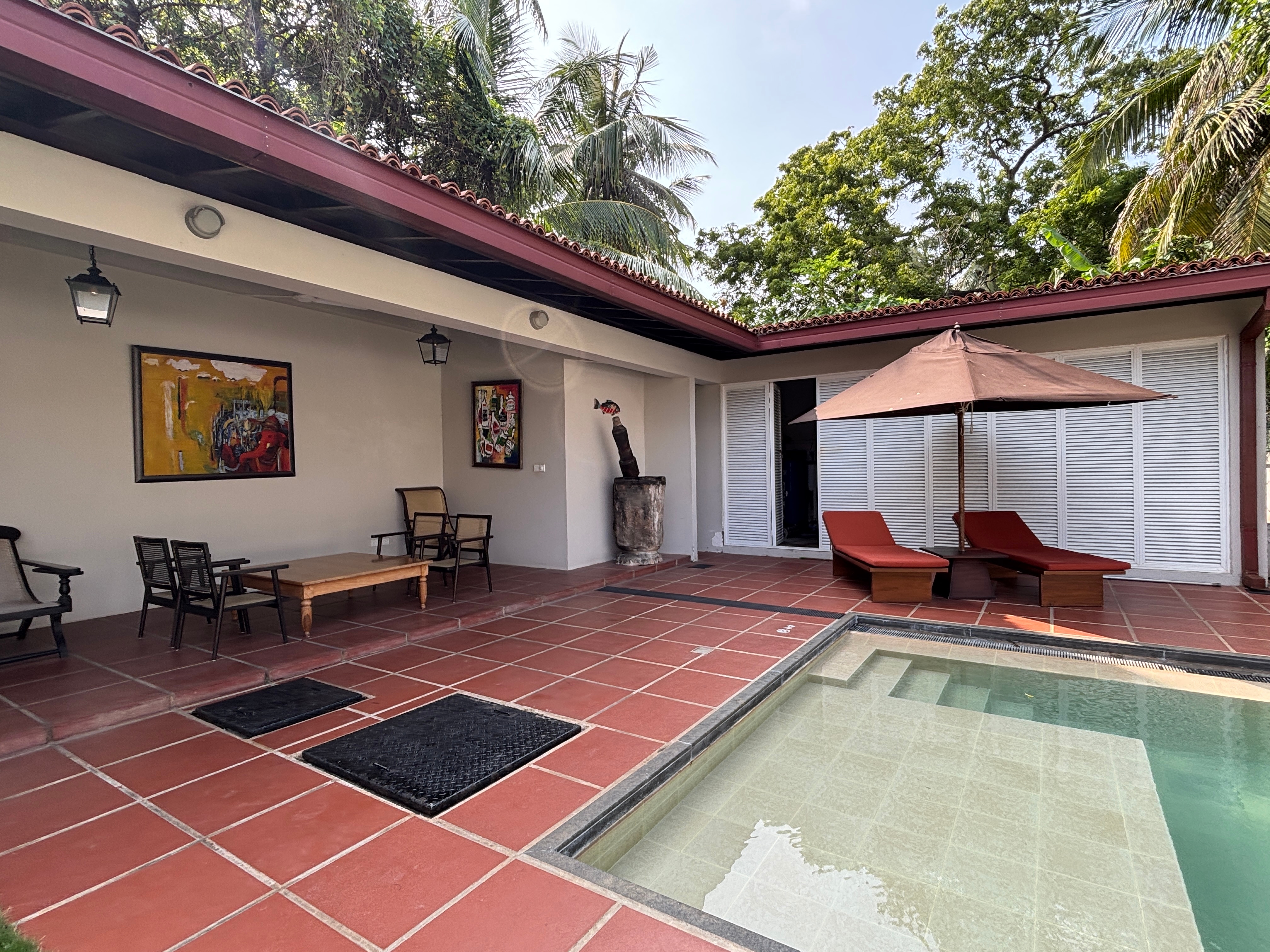
Today, Jaffna is a laid-back town, lined with old colonial buildings, faded churches, Hindu temples and heritage bungalows. Cycles and tuk-tuks outnumber cars, and small stalls sell local snacks like vadais. Our home away from home is the boutique hotel, Jetwing Mahesa Bhawan, set in a restored 1930s Jaffna-style, whitewashed two-storey villa, with stocky columns and surrounded by large trees.
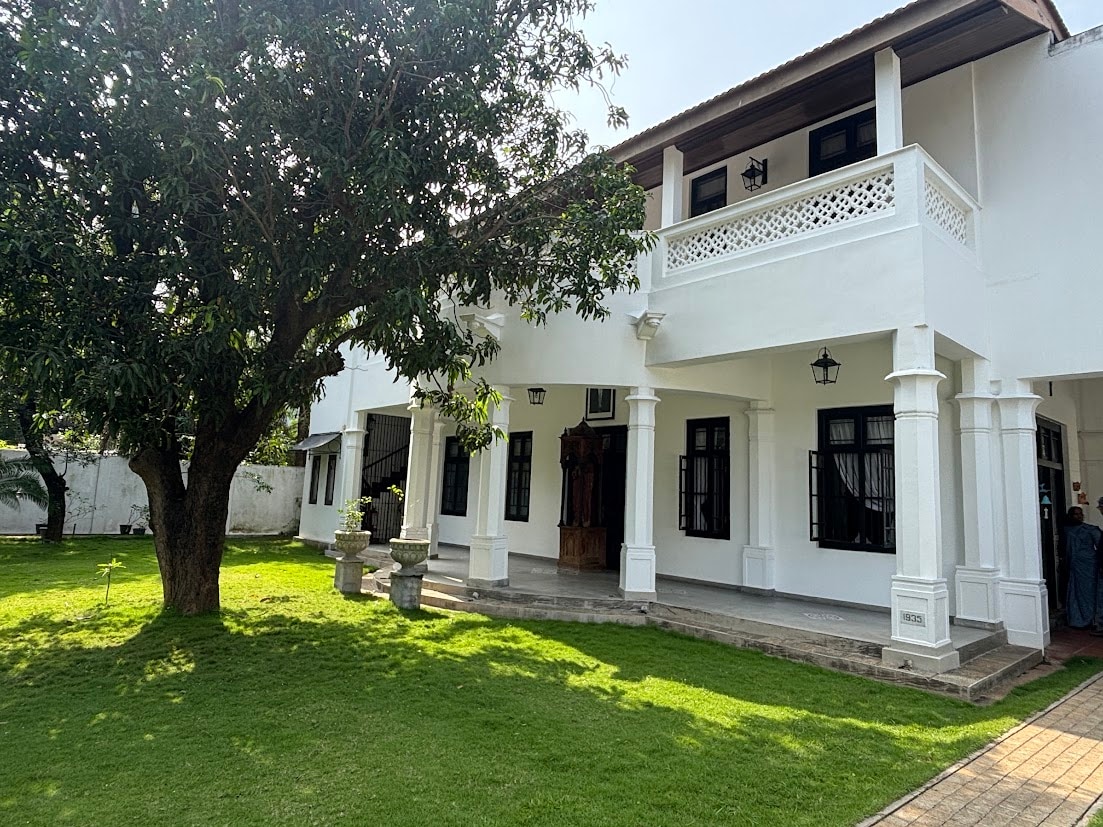
It has four suites with sprawling balconies, rooms with four-poster beds named after Sri Lankan birds and animals, dotted with vintage art and antiques, with a large swimming pool, set on a quiet lane with old mansions and Dutch churches. Janka and Megala, the couple who look after the villa, provide us with local fare and glimpses into local culture.
Jaffna's population is predominantly Tamil Hindus who once migrated from the mainland. As we drive through the city and its surrounding areas, it reminds me a lot of interior Tamil Nadu in South India, with temples with brightly coloured gopurams, emerald paddy fields, palmyra trees with fan-shaped leaves and lagoons. A British-era clock tower stands tall, which commemorates the visit of Albert Edward, Prince of Wales, to Ceylon in 1875.
Modern hotels lie cheek to jowl with crumbling bungalows while Hindu temples and pastel churches lie on the same stretch. At the heart of the town is the sprawling Portuguese-built pentagon-shaped fort, standing sentinel on the edge of the Jaffina peninsula, which was later enlarged by the Dutch, ringed by a moat, with sweeping views of the Jaffna lagoon from its ramparts. The fort which was also a British garrison, was constructed using stone and huge chunks of local coral and one can still trace the delicate patterns of corals on its walls and floors. Years of civil war had left the port dilapidated, and many buildings were destroyed or damaged. One of the best places to watch the sunset is from its ramparts, from where we get a panoramic view of the scrublands, glistening lagoons and mudflats.
History echoes from every corner of the city. We visit the white Indo-Saracenic Jaffna Public Library, designed by a Chennai architect, with domes and white walls which housed countless rare Tamil literature and ancient manuscripts and was destroyed in a fire by angry Sinhalese mobs in 1981. The government began the process to rebuild it with contributions from across the world and the project was completed in 2001.
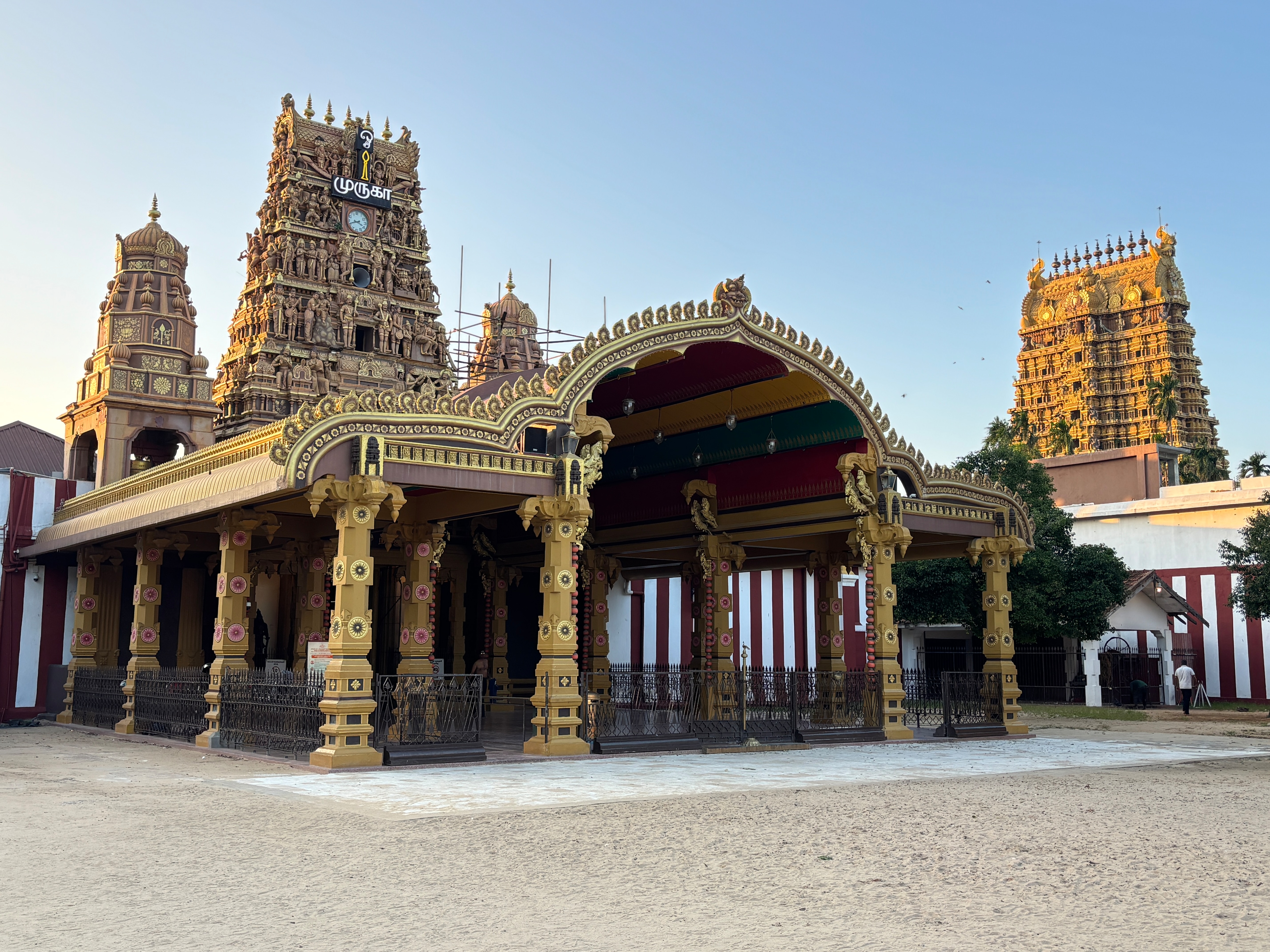
The heart of spiritual life in the city is the Nallur Kandaswamy Temple with vibrantly coloured gopurams, dedicated to Lord Murugan, originally from 948 AD which has been destroyed and rebuilt several times in its history. With Dravidian architecture, lite size murals and vibrant sculptures of deities, it is the spiritual heart of the city. The evening puja is popular with oil lamps and the gods being taken in procession around the temple to drumbeats.
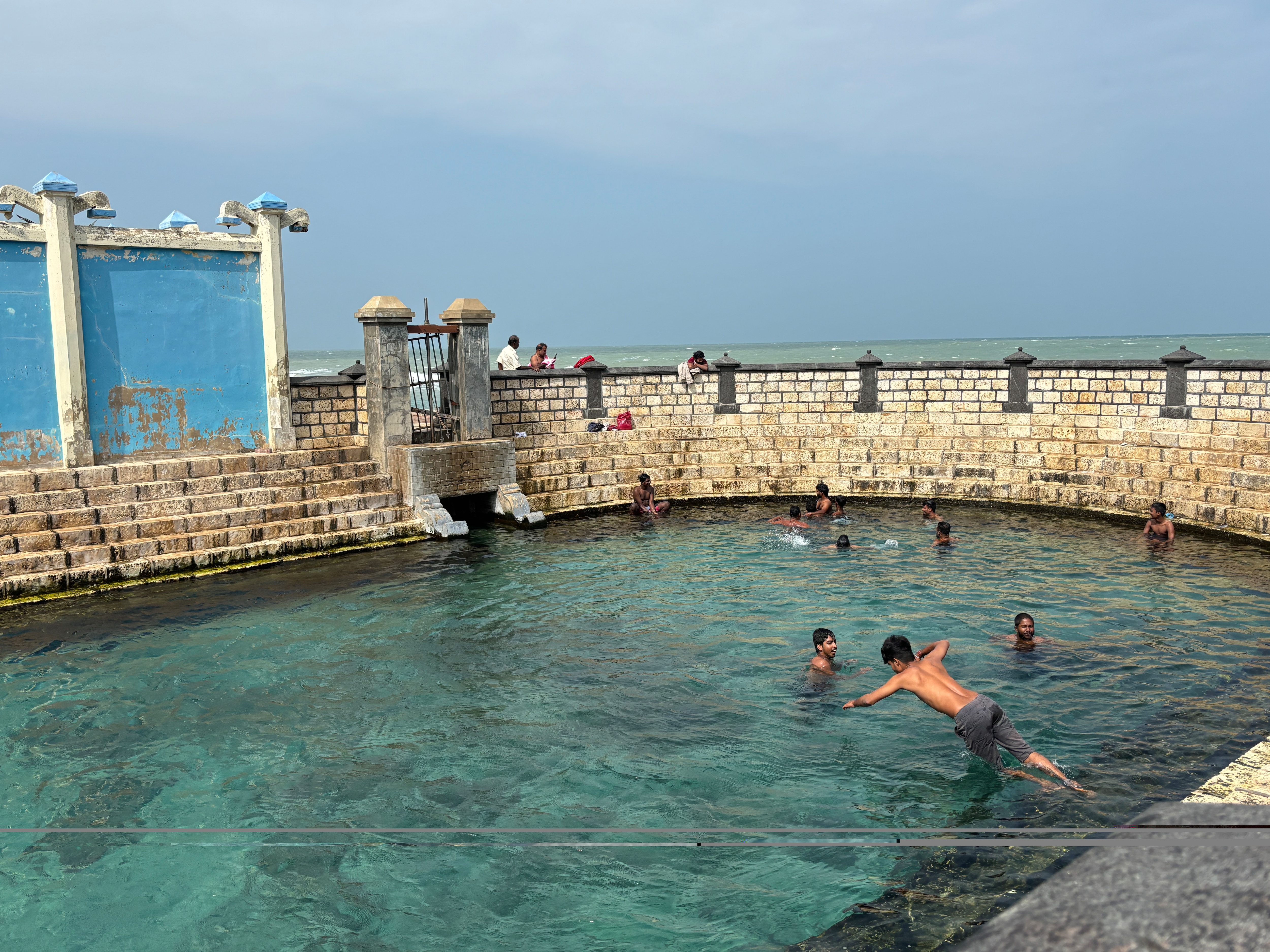
Just northeast of the Nallur Temple are remains of Jaffna's ancient royal palace, where a dilapidated ministers house called Mantri Manai stands forlorn and neglected. For a slice oflocal life, we visit the Keerimalai Springs 25 km from Jaffina, set against the backdrop of serene Keerimalai Bay, a site that is mentioned in ancient Tamil Sangam literature and famous for its healing spring waters. We see bathing sections for men and women just next to the sea, separated by a wall. Locals splash around in its waters, watched by curious visitors.
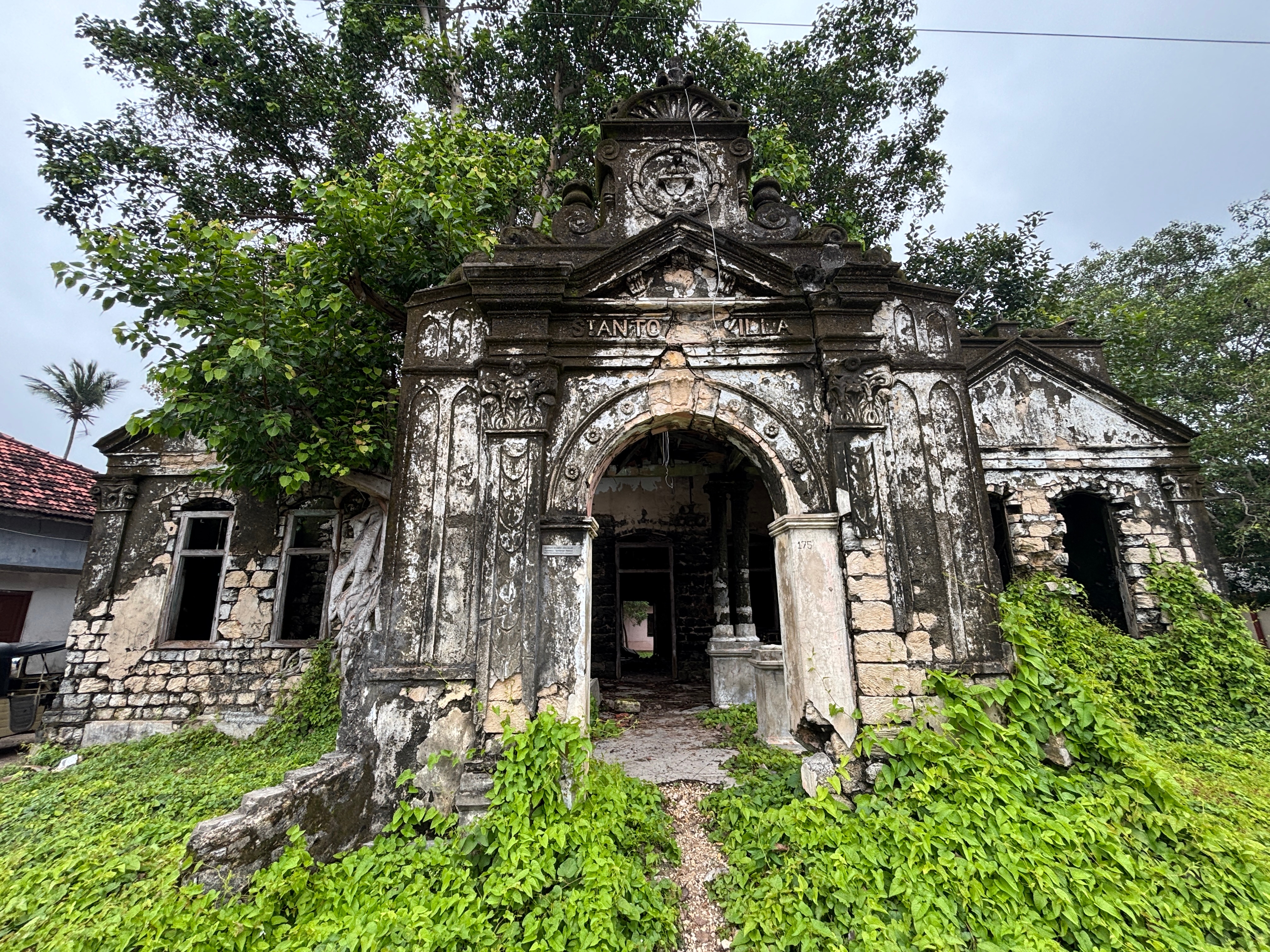
Outside Jaffna, is an archipelago of islands that can be reached by ferries. We drive across a across a maze of causeways, lagoons with pink flamingos sandy roads and islands. Salt flats glisten in the sun and cows and goats wander freely in these sparsely populated parts. A crowded public ferry takes us to Nainativu island that has both the Hindu Naga Pooshani Amman Temple and a Buddhist temple, which Buddha is said to have visited. Kayts island is lined with old heritage houses pockmarked with bullet holes, and trees growing their roots into walls.
My favourite is the peaceful Casuarina Beach on Karaitivu lined with casuarina trees, dotted with cement benches and colourful fishermen's boats where the waters are calm and shallow. Jaffna is famous for its distinctive cuisine largely influenced by South India, with the use of lot of spices and coconut. Jaffna curry powder is a rich blend of fennel, red chillies, fenugreek, coriander and cumin, used to flavour local fish and meat curries.
At Jetwing Jaffna, the city's first luxury hotel, we feast on a brinjal and chickpeas curry with red rice and rasam and Jaffna style dosas laced with turmeric and served with chutneys and sambar. Sea food is the star of Jaffna food. It is famous for its aromatic Jaffna crab curry with coconut milk, and kool, the the hearty seafood broth, packed with crab, prawns, fish, and vegetables. We also feast on buffalo curd with palmyra palm treacle and kottu roti, vegetables minced with bits of parotta and spices with a distinctive rhythmic preparation. A rite of passage is the visit to Rio Ice creams, close to Nallur Temple, which has been a local institution for over 40 years through the years of conflict and stride famous for its gargantuan sundaes and ice creams.
Come evening we have snacks and a cocktail at Jetwing Jaffna's rooftop bar which is the perfect place to catch a sunset. We drive to Point Pedro, 30 km from Jaffna, the geographical milestone marking the northernmost point in Sri Lanka, with an end of the world feel.
Once it was the hub of cotton trade, but today it's a fishing village fringed by a coral reef, bullet ridden houses, a solitary lighthouse and an empty beach lined with nets and fishermen's boats and vast stretches of drying fish laid out on huge tarpaulins. Few tourists come up so far north, and that itself makes it attractive. This part of the country is still healing from the trauma of war, and when you are travelling here, remember that sensitivity matters.


