
 E-Paper



HTLS 2019| ‘We’re becoming more Indian, it’s just the start’: Netflix CEO Reed Hastings
Netflix currently has about 160 million subscribers worldwide. Hastings has previously said the Indian market could deliver a bulk of the next 100 million subscribers to the platform.

 Prefer HTon Google


Netflix co-founder and CEO Reed Hastings said on Friday the streaming service will spend about Rs 3,000 crore in the country over the next year as the company tries to become “more Indian” in its content offering, a remark that comes amid increasing competition in the online entertainment industry with the entry of new players.
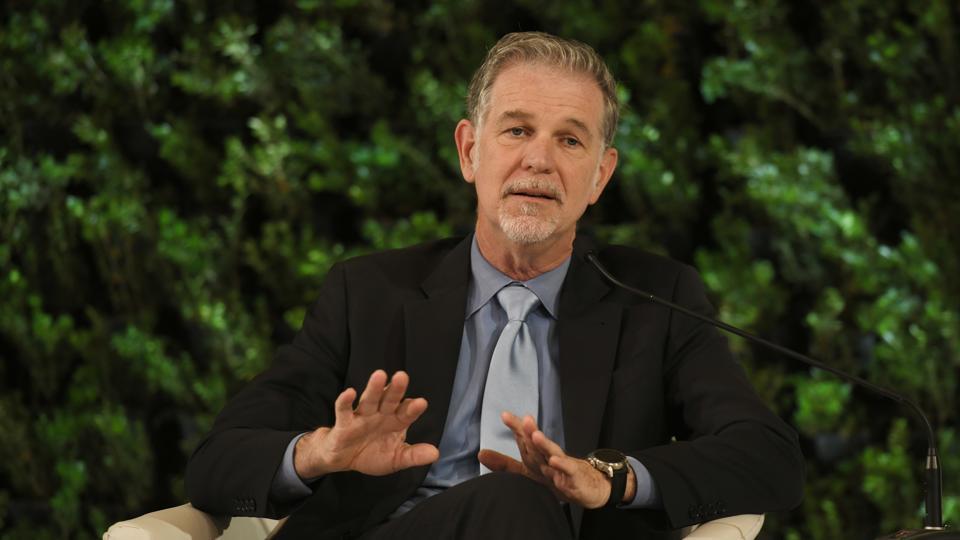
Netflix currently has about 160 million subscribers worldwide. Hastings has previously said the Indian market could deliver a bulk of the next 100 million subscribers to the platform. “We are developing our Hindi and local content here. This year and next year, we will spend about Rs 3,000 crore developing content. So you will start to see a lot of stuff hit the screen. We have got about 100 employees in Mumbai… We are really trying to invest in becoming more Indian in the content offering,” Hastings said at the 17th Hindustan Times Leadership Summit.
“We are just getting started here in India,” he added during a session moderated by Hindustan Times editor-in-chief Sukumar Ranganathan.
The US-based entertainment firm began as a rental service for DVDs but went on to become one of the largest streaming services in the world.
“The most important thing is steadily learning… Artistic success is very subtle,” Hastings said.
He said the next “five or 10 years are really going to be the golden age of television”. “You are seeing unbelievable and unrivalled levels of investment… We are seeing more content made than ever before,” he added.
“The internet has the possibility to transform the Indian content market to be export-driven. So far, we have had some amazing successes. Sacred Games travelled around the world, people were really interested and excited around those stories… We have Mighty Little Bheem… over the last year, over 27 million households outside of India have started watching it,” the Netflix CEO said.
Netflix, which plans to spend about $15 billion in the near future, remains the streaming industry leader. It is, however, increasingly facing pressure from its competitors. While Apple recently launched its streaming video service for $5 per month, Disney’s new $7-a-month platform offers family-friendly shows and movies.
Hastings said Netflix, YouTube and Amazon have been competing for about 13 years globally. “Now, there’s Disney and Apple, and many more. But we are very used to all that competition. We are constantly, all of us, trying to figure out how to please consumers. And that is what is creating investment,” the 59-year-old said.
He added that the creative agenda of his firm was “to please all of you [viewers]”.
Hastings has said in the past that India was a key market to the company’s future, and that he intended on getting every smartphone user in the country to have the Netflix app.
When asked about privacy protection norms, he said: “The great thing about Netflix is we just do one thing, which is series and films and entertainment, so we are not importing data, we are not sharing data; your data is completely safe. It’s not mixed with anybody else; it doesn’t have other purposes. We are not in the advertising business where we are trying to exploit different behaviours to sell you things.”
On the issue of regulation, he said every country was “wrestling with some aspects of the internet, particularly social media”. “For the curated entertainment, there are fewer issues… Some people do think that the broadcast standard should apply to YouTube or Netflix or Amazon but it doesn’t really make sense… On the internet, you click and you choose each show, so there is much more openness to content that way. The people in homes are in control of that,” Hastings said.
“What the government has done is that it has asked the industry to put together a self-regulation code which everyone has been working on and I think that will be a very pragmatic middle ground,” he added.
“We have to comply with all of the local laws and local codes, but there’s no tremendous variation,” Hastings said on being asked whether Netflix planned to have different self-regulation codes for different countries.
He said in the creative process of making content, his platform tried not to manage creators.
Hastings said that while technology had brought the entertainment industry to big innovations, the manner of storytelling retained its style.
“Storytelling has been similar because humans are similar.”
When asked about the pricing of Netflix in India, the CEO of the entertainment giant said that they had an aggressive pricing of Rs 199 per month for the mobile platform. The monthly premium subscription plan of the service, which has ultra High Definition content with four screens allowed at the same time, costs Rs 799.


