
 E-Paper



200-metre tunnel used by Jaish terrorists to sneak into India nails Pak role
The tunnel, according to top security officials, had been newly dug and appeared to have been used for the first time by the four Jaish suicide attackers.

 Prefer HTon Google


The Border Security Force (BSF) found clinching evidence that the four Jaish-e-Mohammed (JeM) terrorists killed in the November 19 Nagrota encounter had indeed travelled to Jammu and Kashmir from Pakistan with the discovery of a 200-metre-long and almost 8-metre-deep professionally engineered underground tunnel on the international border early on Sunday.

The location of the tunnel, with a diameter of 12-14 inches at the Indian end, was nearly 160 metres long from the international border and estimated to be around 40 metres long on the Pakistani side. The tunnel, according to top security officials, had been newly dug and appeared to have been used for the first time by the four Jaish suicide attackers.
“ It appears that proper engineering effort has gone into construction of the tunnel and the hand of the establishment is quite evident,” a senior counter-terrorism official said on condition of anonymity.
Watch l BSF officer enters tunnel used by Jaish terrorists, nails Pakistan role
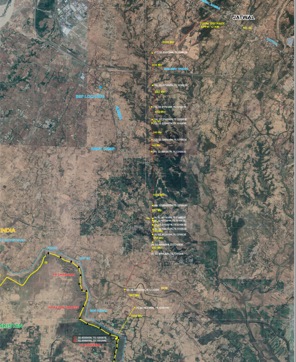
With the help of a Taiwan-made, hand-held eTrex 20X Garmin global positioning system (GPS) device carried by the terrorists, Indian security agencies and the BSF were able to track the exact route the jihadists followed after entering India through the tunnel and boarding a truck 12 kilometres away from the border. Data was recovered from the GPS device despite the terrorists trying their best to destroy it before getting killed by security forces.
While the location of the tunnel exit in India is at latitude 32. 45648 N and longitude 75.121815 E, the entry point in Pakistan is near three Ranger outposts called Chak Bura, Rajab Sahid and Asif Sahid. The tunnel was detected by a team of seven BSF personnel led by Deepak Rana of 48 batallion who conducted search between 5.40 am and 7.50 am on Sunday morning.
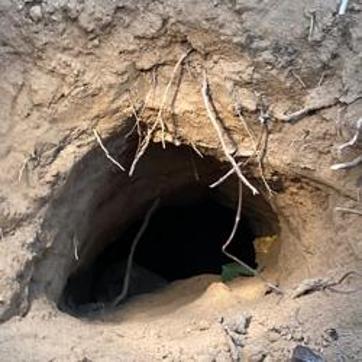
The underground tunnel was difficult to locate as its mouth had been carefully concealed and meticulously covered with soil and wild growth with Pakistani Engro Urea Fertilizer sand bags used to strengthen and reinforce the infiltration route for the Jaish terrorists.
Data collected from the GPS indicates that the terrorists entered India just next to the 189 boundary pillar and close to BSF border outpost Regal, which is located near pillar 193. The first way-point on the GPS is nearly a kilometre from the border. The terrorists then walked approximately 12 kilometres to national highway number 44 after bypassing an Army camp and a railway track, and boarded the truck around midnight on November 19.
Also Read | India summons Pak high commission official over Nagrota encounter, conveys strong concern
Security agencies have been able to plot the exact route with all the way-points to Jatwal village next to the highway. The truck then took them towards Nagrota where the four were gunned down in an intelligence-led operation. Repeated attempts to capture one of the terrorists came to naught as the Jaish killers had been commando-trained.
While intelligence agencies are now trying to decipher the recovered mobiles from the terrorists, security agencies have now foolproof evidence to nail Pakistan and the handlers of the Jaish attackers. India will also lodge a strong protest with Pakistani Rangers, who allowed the infiltration under their watch.
Although the Financial Action Task Force (FATF) is expected to give relief to Pakistan by removing it from the Grey List in February 2021, the evidence collected by India clearly shows that Islamabad continues to sponsor terror against India with its deep state harbouring proscribed groups such as the JeM, whose entire leadership is based in Bahawalpur.
According to officials familiar with the development, the Narendra Modi government plans to prepare a full dossier on the foiled attack and send it to all friendly countries and financial institutions.


