
 E-Paper



21k with links to Jamaat event quarantined
As of Sunday morning, at least 1,023 cases in 17 states and Union Territories, or over 30% of India’s total Covid-19 infections, could be linked to the mid-March gathering that has prompted authorities to launch a complex exercise to trace the footsteps of those who fanned out across the country.


About 21,200 people linked to a gathering of the Tablighi Jamaat in the Capital’s Nizamuddin Basti, which has emerged as a hot spot of the coronavirus disease (Covid-19), have been quarantined in India, according to government officials. The number includes 2,000 foreigners.
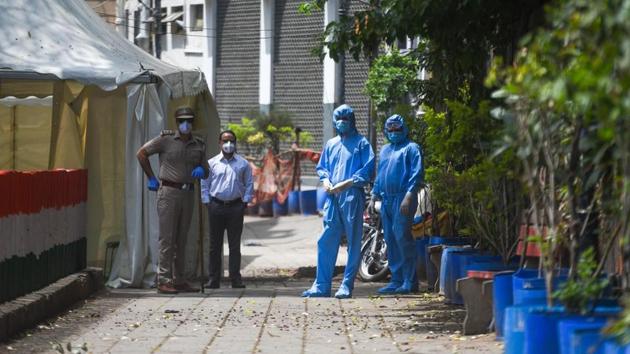
As of Sunday morning, at least 1,023 cases in 17 states and Union Territories, or over 30% of India’s total Covid-19 infections, could be linked to the mid-March gathering that has prompted authorities to launch a complex exercise to trace the footsteps of those who fanned out across the country.
Click here for the complete coverage of the Covid-19 pandemic
The foreigners’ register maintained by the Jamaat headquarters, also known as the Markaz, has been seized by the Delhi Police’s crime branch. Also, the Jamaat head Maulana Saad has been booked for defying restrictions on public gatherings. Police stations in other states, too, have registered cases under relevant laws.
In an operation that began on March 29 and ended on March 31, the police and health authorities evacuated over 2,300 people, including about 250 foreigners, from the Jamaat’s headquarters in the Capital. They were taken to hospitals and quarantine centres. Of the 503 positive cases in Delhi till Sunday evening, 320 were linked to the Jamaat markaz, which also has a large following in states such as Telangana, Andhra Pradesh, Tamil Nadu, Delhi and Rajasthan.
As Jamaat workers were agitated when authorities moved in to vacate the six-storey building on March 28, national security adviser (NSA) Ajit Doval put to the test his relationship with the influential Darul-Uloom, Jamiat-e-Ulema Hind and Al-Hadees to convince the Tablighi leadership. It was only after that the Jamaat workers came out and boarded the buses lined up for them.
The home ministry has already blacklisted and cancelled the visas of 960 foreigners from over 40 countries who participated in Jamaat activities in India. As HT reported last week, most of them came to the country on tourist visas when they should have applied for conference or missionary visas.
Faced with legal proceedings, some foreigners linked to the Jamaat were also found trying to escape India through special flights being run to evacuate Malaysian and Indonesian nationals. On Sunday, Indian immigration officials stopped Jamaat workers from boarding such flights at the Mumbai, Delhi and Chennai airports.
Questions are also being raised on whether due diligence was followed while giving tourist visas to Jamaat workers by Indian missions abroad, and how such a large movement escaped the knowledge of law enforcement agencies. Similar Jamaat congregations have been blamed for driving up cases in Malaysia and Pakistan.


