
 E-Paper



36th Rafale to get India specific enhancements
While 26 of the 4.5 generation fighter jets are already operational from Ambala in the western sector and Hashimara in the eastern sector, three more Dassault-manufactured fighters will be landing at Jamnagar base after refuelling mid-air over UAE on October 13.

 Prefer HTon Google


France will deliver three Rafale fighters a month to India for the next three months with the last of the 36 contracted omni-role fighters carrying all 13 India specific enhancements to be delivered in January 2022, HT learns.
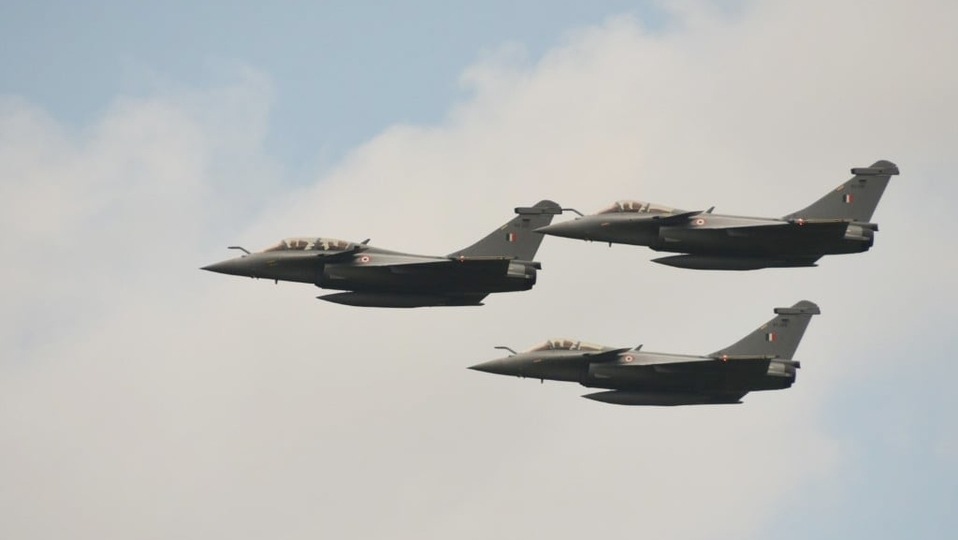
While 26 of the 4.5 generation fighter jets are already operational from Ambala in the western sector and Hashimara in the eastern sector, three more Dassault-manufactured fighters will be landing at Jamnagar base after refuelling mid-air over UAE on October 13. Three more are expected to be delivered in November and another three in December.
However, it is the 36th Rafale fighter that will be equipped with all India specific enhancements to make the platform more lethal. India specific enhancements have been included in Hammer air to ground, SCALP land attack and Meteor air to air missiles used by Rafale with more range, and accuracy, but it is only after the 36th fighter has landed after testing all India specific enhancements with some technologies having Israeli origins that the previous 35 fighters will be fitted with all the enhancements.
While the India specific enhancements remain classified, they are understood to be related to a more powerful radio altimeter, radar warning receiver, low band jammer, flight data recorder, high-altitude engine start-up, synthetic aperture radar, ground moving target indicator and tracking, infra-red search and track, helmet-mounted display, missile approach warning systems and very high-frequency range decoys.
France, one of India’s closest strategic allies, has already sent the enhanced missiles and ammunition for Rafale to IAF. While the Meteor missile is best in its category in the Indian subcontinent, the Hammer and SCALP have pinpoint accuracy with last-minute target adjustment capability and radar avoidance. These weapon systems have multiple guidance facilities so that the enemy has no chance of jamming the missile either in the air to air or land-attack mode; they can be used in stand-off mode for land targets over 70 kilometres away.
While the Indian Navy is also believed to be examining the option of a Rafale-Maritime fighter for its indigenous aircraft carrier INS Vikrant, to be launched next August, IAF has been asked to rationalize its fighter squadron strength due to the enhanced capability of Rafale.
Experts say that one squadron of Rafale is equivalent to 2.5 squadrons of Russian Su-30 MKI in terms of turnaround and maintenance. IAF’s capability will further be multiplied with the addition of the S-400 air defence system to the Indian fighting capability, they add.


