E-Paper



5 factors that helped BJP trounce Cong in Madhya Pradesh
The BJP has appeared to shrug off any effects of anti-incumbency, despite ruling Madhya Pradesh for 18 of the past 20 years

 Prefer HTon Google


The Bharatiya Janata Party (BJP) is on the verge of returning to power in Madhya Pradesh, in a resounding victory that appears to have left the Congress with only a fraction of the state’s 230 seats.
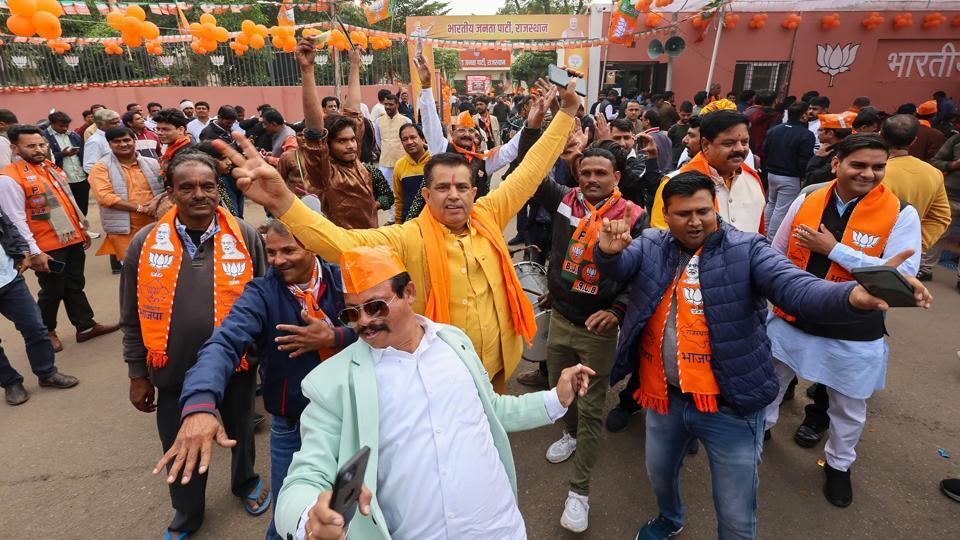
Though just around 42% of the votes were counted till 1.30pm on Sunday, the BJP was leading in 163 seats in the state, as against 64 for the Congress.
The BJP has appeared to shrug off any effects of anti-incumbency, despite ruling the state for 18 of the past 20 years. Here are five factors that helped the party storm to power in Madhya Pradesh:
Modi-centred campaign
The BJP’s spirited “Modi ke Mann mein MP, MP ke Mann mein Modi” campaign, driven by a bouquet of leaders, dented the Congress’ welfare promises. Prime Minister Narendra Modi, through his flurry of 14 rallies, was able to convince voters that he had a special focus on Madhya Pradesh.
Welfare programmes
The Madhya Pradesh election campaign became a battle of welfare programmes, one that the BJP looks to have won. The ruling party’s Ladli Behna and Kisan Samman Nidhi programmes played an instrumental role in buoying public trust. Beneficiaries of the two schemes received ₹1,250 and ₹10,000 respectively in their accounts this November, boosting voter confidence weeks ahead of the vote. The BJP was also able to create an image that helped it with women, poor voters, as well as Dalits and tribal people.
The double-engine promise
An aggressive campaign by state and central leaders was able to push through the message that a “double-engine” government (the BJP’s terminology for its governments at the state and Centre) would deliver better for residents of the state, just as it had for a bulk of the past nine years.
Fractured Congress campaign
The Congress campaign on the ground was invisible and leaned heavily on social media. As a result, the party seems to have failed to keep its ear to the ground, with the party depending on candidates to reach the voter. In contrast, the BJP cadre was able to connect with results directly, well before the election dates were announced in October. Essentially, despite having the Congress failed to convey much of its 1,200 manifesto promises to the people.
BJP out-strategised Congress
The BJP started working on the elections in mid-2022 and announced candidates for seats it lost in the previous elections early. Union home minister Amit Shah held meetings with workers in each division of the state and his team followed up with the leaders on instructions given closely. This helped to beat the anti-incumbency against the BJP.