
 E-Paper



5 facts about Abhinav Chandrachud, lawyer representing Ranveer Allahbadia in Supreme Court
Abhinav Chandrachud is the son of DY Chandrachud, who served as the Chief Justice of India.

 Prefer HTon Google


The Supreme Court on Tuesday rapped podcaster and influencer Ranveer Allahbadia for his remarks on the show 'India's Got Latent'. The top court criticised Allahbadia for his vulgar remarks on the show, saying such behaviour should be condemned. But, the bench has granted him interim protection from arrest in the case and asked him to cooperate with the ongoing probe.
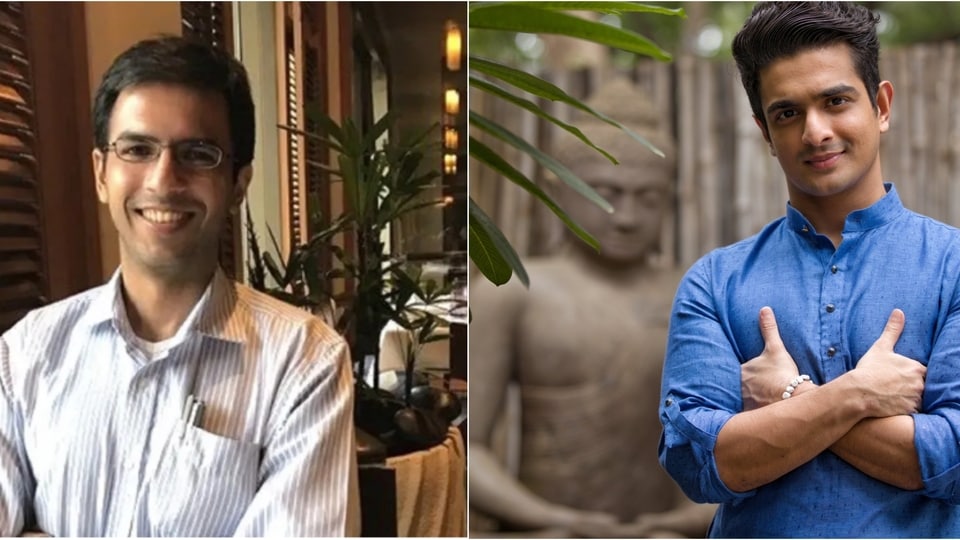
Podcaster Allahbadia's remarks on parents and sex on comedian Samay Raina's YouTube show 'India's Got Latent' triggered a controversy and several FIRs have been lodged against him and others in various parts of the country.
Besides Allahbadia and Raina, others named in the case in Assam are Ashish Chanchlani, Jaspreet Singh and Apoorva Mukhija.
In the Supreme Court, Allahbadia was represented by senior advocate Abhinav Chandrachud, son of former Chief Justice of India DY Chandrachud.
Here are 5 facts about Abhinav Chandrachud
- Abhinav Chandrachud is the son of DY Chandrachud, who served as the Chief Justice of India. His brother, Chintan, is also a practicing advocate. In his farewell speech, DY Chandrachud shared how Abhinav and Chintan declined to argue cases in the Supreme Court during his tenure, citing concerns for professional integrity and the desire to uphold personal values over personal gain.
- He graduated from the Government Law College in Mumbai in 2008, securing both LLB and BLS degrees. He was a rank-holder at Mumbai University and won the Honourable Justice DP Madon Prize in Constitutional Law.
- Chandrachud then pursued an LLM at Harvard Law School in 2009, where he was awarded the Dana Scholar title. He later earned both the Master of the Science of Law (JSM) and Doctor of the Science of Law (JSD) degrees from Stanford Law School, being honored as a Franklin Family Scholar.
- Abhinav Chandrachud is a practising senior advocate at the Bombay High Court. He has an extensive legal background, having worked at the international law firm Gibson, Dunn & Crutcher before taking on significant roles in India’s legal landscape.
- Chandrachud has also written several books. Among his publications are Supreme Whispers: Conversations with Judges of the Supreme Court of India 1980-1989 (2018) and Republic of Rhetoric: Free Speech and the Constitution of India (2017).


