E-Paper



5 injured while escaping half tranquillised elephant during radio collaring
Soon after the mishap, the forest department put out a press release saying the tranquillising operation will remain suspended for the time being and will be assessed at a later stage


Odisha forest department’s maiden attempt at radio collaring a wild tusker that had caused much destruction in villages of Khurda district was halted on Monday morning after five forest officials, including two from Karnataka, were injured when the tusker suddenly woke up from tranquillised state and charged towards them.
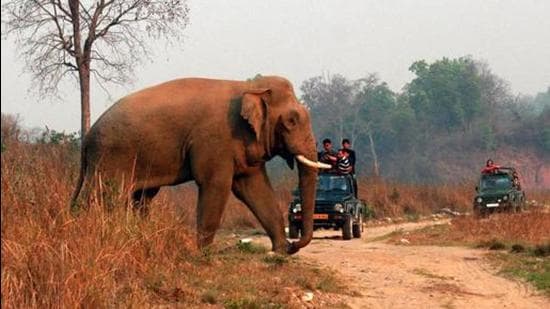
Senior forest officials said the full-grown elephant which is at least 9 feet tall and “problematic”, suddenly charged at the team of forest officials who thought it had been sedated with a tranquilliser shot fired from a dart gun a few minutes ago.
“The tusker was spotted at Gayabandha village under Jankia police station limits in Khurda district on Sunday and the team of forest officials decided to tranquillise it to be able to fit a radio collar around its neck for better monitoring of its movement. Several minutes after the tranquilliser dart was fired, the tusker did not seem to be completely sedated and suddenly charged at the officials including an Indian Forest Service officer and two from the Indian Institute of Science, Bangalore. As everyone started running helter-skelter they received injuries as they fell in nearby ditches or tripped on hard objects,” said Bhubaneswar regional chief conservator of forest, Manoj Mohapatra.
He, however, added that none of the forest officials were physically attacked by the elephant that later went into the nearby forest. Officials said the team was attempting to tranquillise the elephant for the last 3 days.
Also Read: 6 inmates escape Odisha juvenile home after attacking guard
The injured included Khurda divisional forest officer (DFO) Poornima Pandian, two experts from the Indian Institute of Science (IISc), Bangalore, assistant conservator of forests, Khurda and forester of Bhushandpur section in Khurda Forest Division. Everyone except the forester was discharged from hospital after initial treatment.
The radio collaring being done by the state forest department in association with the Asian Nature Conservation Foundation and IISc, Bangalore entails fitting a lightweight belt around the neck of problematic elephants so that they can be tracked easily. The collar is fitted with a GPS device and it relays realtime data helping the forest department do real time monitoring of the animal.
Soon after the mishap, the forest department put out a press release saying the operation will remain suspended for the time being and will be assessed at a later stage. Had Monday’s tranquillization been successful, the department would have sedated 7 more difficult elephants in Chandaka sanctuary near Bhubaneswar, four in Similipal National Park, and one in Dhenkanal district.
In September, the department had decided to tranquillise Ramu, a 30-year-old male elephant in Bharatpur reserve forest of Chandaka Wildlife Sanctuary, but rains prevented the attempt.
This tusker was chosen for radio collaring as it caused crop damage on a daily basis and its interaction with the human habitations had led to death and injuries too.
Over last decade, the human-elephant conflict has been rising steadily in Odisha with elephants ravaging ripened paddy crop in search of food. At least 204 elephants have died since April 2019 while 294 human deaths have been reported during the period.
This month, there have been several cases of wild elephants damaging standing paddy crops in Sonepur, Mayurbhanj and Sundargarh districts, forcing farmers to spend sleepless nights.