
 E-Paper





Follow the latest breaking news, major developments and agenda-setting stories from India and around the world with the newsdesk at Hindustan Times. Operating round the clock, the desk brings together experienced editors, reporters and correspondents to deliver fast, accurate and contextual reporting across subjects that influence public policy, governance, business, society and international affairs. The HT News Desk covers politics, elections, government policies, the economy, business and markets, science and technology, the environment, law and order, infrastructure, education, climate issues and geopolitics, while closely tracking developments across states, institutions and global capitals. The team also leads coverage of major breaking news events, policy announcements, court proceedings, natural disasters, public emergencies and significant international developments. Reports published by the newsdesk are based on information gathered from reporters on the ground, official statements, government agencies, court records, regulatory filings, recognised institutions and other authoritative sources. Stories undergo editorial scrutiny and verification processes to ensure accuracy, fairness and relevance, and are updated as events evolve and additional information becomes available. Whether covering a key political decision in New Delhi, an economic policy shift affecting millions, a landmark court ruling or a major global event, the HT News Desk aims to provide readers with reliable, fact-based journalism that delivers not only the latest developments but also the context and analysis needed to understand their wider implications.
500-year-old Odisha temple submerged under Mahanadi river reappears
A 500-year-old ancient temple of Lord Vishnu that was submerged in Odisha’s Mahanadi river sometime in 19th century due to change of course of the river, has resurfaced after 15 years.


A 500-year-old ancient temple of Lord Vishnu that was submerged in Odisha’s Mahanadi river sometime in 19th century due to change of course of the river, has resurfaced after 15 years.
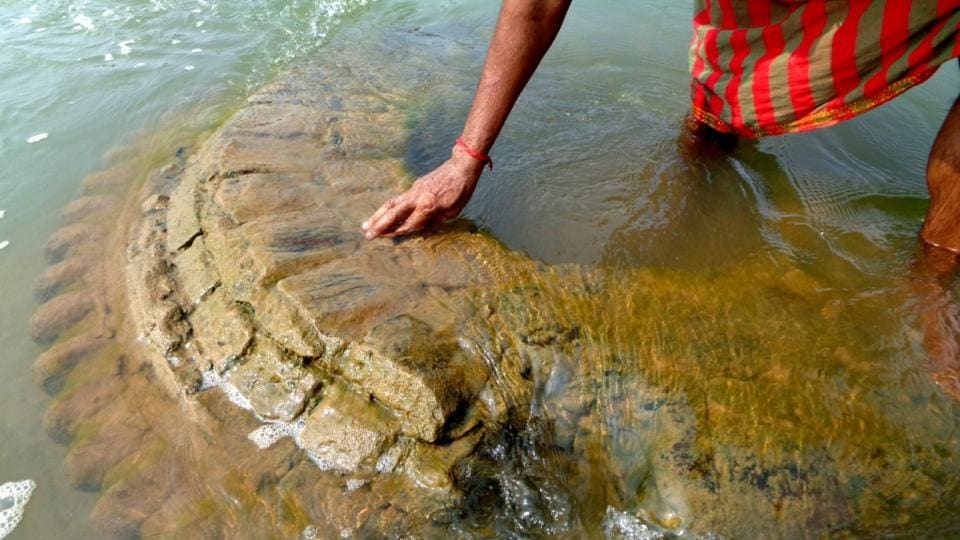
An archaeological survey team from the Indian National Trust for Art and Cultural Heritage that visited the village in Nayagarh district, said the top of the Gopinath Dev temple was visible due to the reduction in the water-level of the river.
Anil Dhir, project coordinator, Mahanadi Project (INTACH), said the top of the submerged temple was discovered in the mid-river near Baideswar in the Padmavati area near Nayagarh district.
“The 60-ft tall submerged temple dates back to late 15th or early 16th century, considering the construction style of the Mastaka and the materials used for the construction. It is made of sandstone and among the oldest temples that have been submerged in Mahanadi,” said Dhir.
The 60-ft temple made of sandstone belongs to Lord Gopinath, an incarnation of Lord Vishnu. The temple used to be visible frequently 15 years ago, but due to release of water at Mundali barrage the temple was not visible to fishermen.
In the last one and half years, INTACH team led by Dhir has documented submergence of 65 such temples in Mahanadi river that runs through much of western Odisha before draining into Bay of Bengal.
“Whatever heritage has been submerged, we are documenting it. People already knew there was a shrine submerged in the river, but it had not resurfaced in years,” said Dhir.
Sometime in the middle of the 19th century, the Gopinath Dev temple as well as the village named Padmabati was located submerged when Mahanadi River changed its course after 1933 flood.
“The village was submerged under the waters and the villagers moved to higher places to set up a new village renamed as Padmabati. However, the deity of the temple was taken by the villagers and installed in another temple in their present village,” said heritage enthusiast Rabindra Rana.


