
 E-Paper



5,000 cyber commandos will be ready in 5 ys to fight cyber threats: Amit Shah
Terming cyber security as part of the national security, Shah said “country’s growth is not possible without ensuring cyber security”

 Prefer HTon Google


New Delhi A core group of about 5,000 highly trained police officers — or cyber commandos — who instantly respond to and prevent cyberattacks across the country will be ready in the next five years, Union home minister Amit Shah said on Tuesday while launching the special wing.
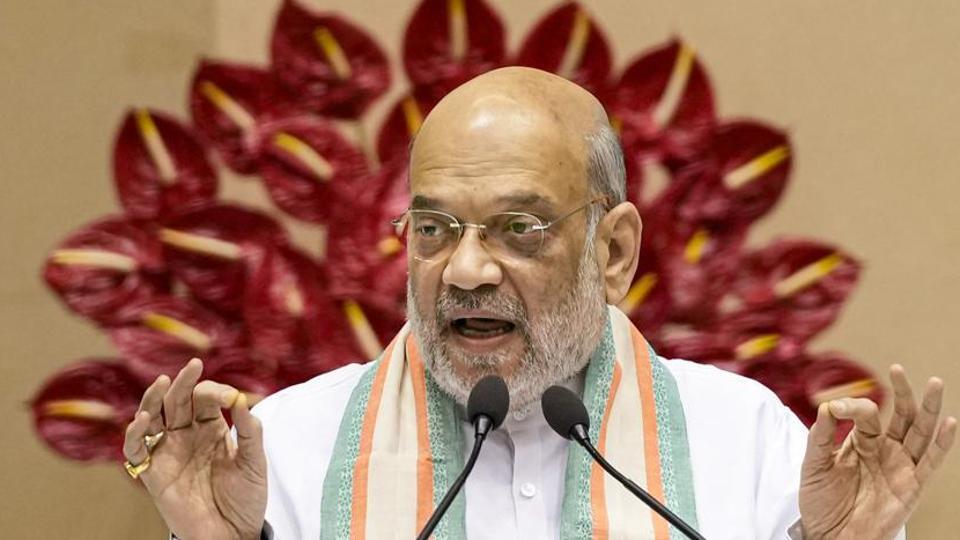
“We will have 5,000 cyber commandos in five years. These commandos will respond to cyber threats swiftly,” Shah said at the first Foundation Day of I4C, the Indian Cyber Crime Coordination Centre. These commandos will handle IT infrastructure security, digital forensics and incident response, he added.
The home minister termed cybersecurity as part of national security, and said that the “country’s growth is not possible without ensuring cybersecurity”.
Shah inaugurated a “suspect registry”, or a centralised database of suspicious bank accounts and related identifiers that will be shared with banks and financial intermediaries in a secure manner, Vishal Dhiman, deputy director, I4C, said at the event.
The database will be populated and accessed by banks, financial institutions and law-enforcement agencies that will also use it to strengthen risk-management.
“If the states/Union territories have data in silos, then it won’t help us in the fight against cyber criminals who have no boundaries. The time has come that a common registry for suspects is there,” Shah said, adding that all stakeholders will have to come together to deal with the menace.
Explaining how the registry will work, an SBI assistant manager said that the system can be used to look up the details of any suspicious account or person. “This will allow banks to trace suspicious transactions and related individuals in real time,” a video played at the event said.
The home minister launched two other portals that consolidate I4C’s existing activities -- the Samanvaya platform, a joint cybercrime investigation facilitation system and the Cyber Fraud Mitigation Centre (CFMC). The Samanvaya platform is a web-based module that acts as one-stop data repository of cybercrime, data sharing, crime mapping, analytics, cooperation and coordination for LEAs across the country. Housed within I4C’s offices in New Delhi, CMFC aims to serve as a “war room” or “coordination room” to monitor high-priority cases involving large amounts of money. The CFMC is linked to the 1930 control rooms of the 36 states and UTs, Roopa M, director of threat analysis unit (TAU) of 14C, said.
The Union home ministry approved of I4C as a central scheme within the ministry’s Cyber and Information Security (CIS) Division with an outlay of ₹491 crore on October 5, 2018. Its primary objective was to establish a national-level coordination centre to address all issues related to cybercrime across the country. On 10 January 2020, I4C and National Cybercrime Reporting Portal (NCRP) were inaugurated by Shah.
Since July 1 this year, I4C has been functioning as an “attached office” of the home ministry. This means it is now a separate entity under the ministry, instead of a scheme or a project. Schemes and projects, unlike attached offices, are timebound and require approvals for their continuation.


