E-Paper



8 SIMI activists killed after Bhopal jailbreak: What we know, don’t know
A daring jailbreak in Bhopal by eight suspected activists of the banned SIM) early on Monday ended hours later when they were tracked and killed in an alleged encounter by police. Here are what we know and don’t know so far.

 Prefer HTon Google


A daring jailbreak in Bhopal by eight suspected activists of the banned Students Islamic Movement of India (SIMI) early on Monday ended hours later when they were tracked and killed in an alleged encounter by Madhya Pradesh Police.
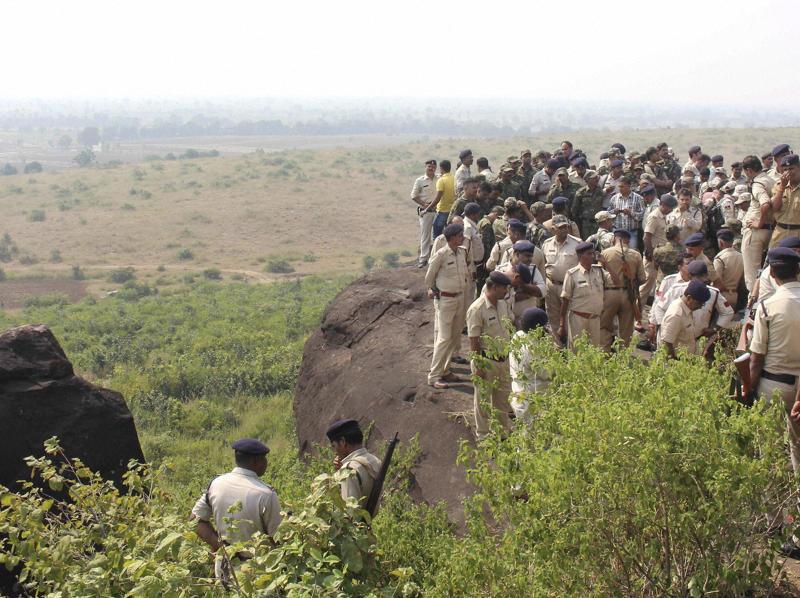
But details of the police operation remained unclear. Chief minister Shivraj Singh Chouhan blamed the incident on criminal negligence by jail staff and said it will be investigated by the National Investigation Agency. He also said some jail staff had already been suspended for dereliction of duty.
He, however, refused to take any questions on the alleged encounter in which the escapees were killed.
Here are five things we know and five things we don’t know about the “encounter”:
1) KNOW: Eight SIMI members killed a jail guard with a knife fashioned from a spoon and held another prison staff member hostage for hours, before using bed sheets to climb out of the premises.
DON’T KNOW: Why all eight stuck together after escaping from jail and didn’t disperse to avoid detection.
2) KNOW: Bhopal inspector general of police Yogesh Chaudhary said the police acted on local intelligence. Chouhan also said villagers informed the police about the suspected SIMI men.
DON’T KNOW: Did the police have informants? Early TV pictures depicted a deserted stretch as the “encounter” site with little noticeable human activity for miles.
3) KNOW: The jailbreak began at 2am on Monday when the eight men overpowered jail guard Ramnaresh Yadav and killed him.
DON’T KNOW: Why the men chose a day when festivities stretch late into the night to make the daring escape bid.
4) KNOW: The suspected SIMI members were found at the site after the police operation with jeans and sports shoes.
DON’T KNOW: Whether the eight men were wearing jail uniforms or civilian clothes (as they were undertrials). If they changed after escaping from prison, how or where did they get the jeans and sports shoes.
5) KNOW: Police said they had come under attack from the fleeing men.
DON’T KNOW: How the alleged SIMI operatives got arms after escaping from the jail.
Read: How SIMI evolved from moderate students’ organisation to banned militant group
Read: Digvijaya calls for probe, says ‘someone’ behind escape of SIMI activists