
 E-Paper



Supreme Court seeks fresh report from AIIMS ahead of decision on abortion plea
The woman had approached the top court earlier this month, saying she was unaware of her third pregnancy due to a disorder

 Prefer HTon Google


NEW DELHI: The Supreme Court on Friday called for a fresh medical report to indicate the foetal health and medical conditions of a married woman, who stood firm on her plea for immediate termination of her 26-week pregnancy, a day after the 27-year-old mother of two was advised by the Court to reconsider her decision.
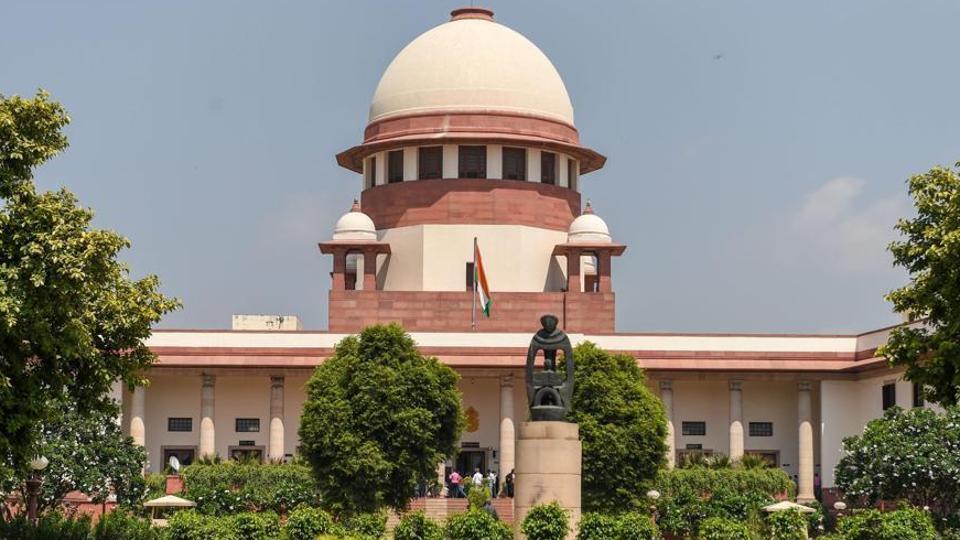
The next hearing of the case will now be on October 16, a week after the Court first permitted the abortion but later put it on hold due to divergence of opinion of a two-judge bench.
On Friday, a three-judge bench led by Chief Justice of India (CJI) Dhananjaya Y Chandrachud noted that a fresh medical opinion was required before taking the final call because the woman’s previous medical reports did not comment on the impact of the drugs that she was taking for her postpartum depression nor were her medical prescriptions impeccable.
The woman had approached the top court earlier this month, saying she was unaware of her third pregnancy due to a disorder called lactational amenorrhea and suffered from postpartum depression and poor financial conditions. The bench, also comprising justices JB Pardiwala and Manoj Misra, however, pointed out that her medical prescriptions placed on record were silent on the diagnosis of her medical conditions, the nature of the ailment and the conditions for which the drugs were advised.
Observing that the nature of the prescriptions put on record cast a cloud over their genuineness as well as demonstrate the absence of a proper diagnosis of the woman, the bench said that the facts of the case make it imperative for the Court to call for a comprehensive report from a panel of doctors at All India Institute of Medical Sciences (AIIMS) to understand the health conditions of the petitioner, the impact of the drugs on her pregnancy and its possible effect on the foetus.
“The AIIMS board will give a report on whether the foetus is suffering from any substantial abnormality so as to place the matter beyond any doubt...The report shall indicate whether the continuance of pregnancy to full term by the petitioner would be jeopardised by the drugs prescribed to her. The report shall also suggest if there can be alternative medication consistent with the pregnancy in order to neither jeopardize the health of the petitioner nor the health of the foetus,” recorded the Court in its order.
On Thursday, the bench had given the woman 24 hours to reconsider her plea for immediate abortion, observing that the highest Court of the land cannot overlook the rights of an unborn child when it has to deal with cases of abortion.
“Cognisant as we are of a woman’s autonomy in these cases, we cannot be oblivious to the rights of an unborn child...We cannot kill the child,” said the bench, as it asked the woman’s lawyer Amit Mishra and additional solicitor general Aishwarya Bhati, who appeared for the Union government, to explain the Court’s preliminary views to the woman and come back with her answer on Friday. On the day, the Court took note of a report by AIIMS, stating the “foetal heart” would have to be stopped as part of the procedure and that there were still high chances of the foetus being born with serious mental and physical abnormalities.
The three-judge bench had to be set up on Thursday, a day after a bench comprising two women judges delivered a split verdict on the Centre’s plea to recall an order passed on October 9, which allowed the married mother of two to end her pregnancy owing to her vulnerable physical and psychological conditions.
Justices Hima Kohli and BV Nagarathna had, on Monday, allowed the woman to end her pregnancy, but two days later, sharply differed on whether the abortion could go forward after the medical report sought the Supreme Court’s approval to put an end to the foetal heart.
Justice Kohli said she was not willing to proceed with the earlier decision and wondered which Court would ask to stop the “heartbeat of a foetus that has life”. But Justice Nagarathna remained firm on the October 9 order, prioritising the woman’s decisional autonomy in matters of pregnancy. Following the divergence of views, the matter was referred to the CJI on the administrative side to set up a larger bench.
Also Read: Supreme Court bench divided on abortion case, matter will be heard afresh
On Friday, the Court was informed by ASG Bhati that the woman has remained firm on her decision to abort even as the law officer pressed for a recall of the October 9 order citing the legal regime in India that does not permit abortion beyond 24 weeks unless there are serious threats to the life or well-being of a woman or substantial foetal abnormalities.
Bhati maintained that the present disputation cannot be about “pro-choice vs pro-life” because India has a “pro-choice” law in the form of the Medical Termination of Pregnancy Act, which permits all women to abort up to 20 weeks.
“Certain categories of vulnerable women, such as rape survivors, minors and mentally infirm women, can undergo abortion up to 24 weeks under the law. And there is no cut-off when there are threats to a pregnant woman’s life. Scheme of the MTP Act is pro-choice but it cannot mean extinguishing life in contravention of law,” she added.
At this, the bench said that the question of whether a foetus can be treated as life outside the womb could be a debatable issue otherwise but that does not need to be argued in view of the scheme of the MTP Act.
“We may not need to make that determination since the legislature has already done that. Legislature says we permit termination for foetal abnormality because once the child is born the parents will be affected too since they have to look after, and that the child will have no quality of life. At the same time, it says there’s no cut-off to save the life of a pregnant woman,” it added.
Responding to the Centre’s plea for recall, the woman’s lawyer, Amit Mishra, contended that the woman was suffering from postpartum psychosis and had been in constant care of a psychiatrist since October last year. He added that she has tried to commit suicide in the past and has also harmed her children due to her vulnerable state of mind. Mishra pressed for allowing her plea, adding there is a medical opinion to state that the drugs she has been taking could be harmful to the foetus.
At this point, the bench went through her medical prescriptions to notice that none of these documents mentioned how she was diagnosed with postpartum depression or psychosis or the reasons why she was prescribed those drugs.
“Are such prescriptions to be believed by the Court or have they come up only for these proceedings? Even the handwritten prescription does not mention when she was diagnosed, what the symptoms or the nature of her ailments were. It casts doubt on the genuineness of these prescriptions. Was it all done in September 2023 to bolster the case here? So, let AIIMS find out for how long she has been taking these prescriptions and what’s the status of these drugs on the foetus and on her own health,” said the bench.
As the hearing drew to a close, the bench agreed with Bhati that India has a modern and forward-looking abortion law. “We are far ahead of many other countries. We have a very liberal and forward-looking law,” it commented.
Under the MTP Act, first enacted in 1971, a pregnancy could only be terminated if it did not exceed 20 weeks. The 1971 law restricted the applicability to married women, except in cases where courts passed orders.
The 1971 law failed to meet the needs of the changing times and advancements in medical science as several women, including rape survivors, mentally incapacitated and women undergoing unwanted pregnancies due to contraceptive failures, started approaching courts to seek approval for terminating their pregnancy beyond the prescribed gestational period of 20 weeks.
The Act was finally amended in 2021, allowing both married and unmarried women to access safe abortion for up to 20 weeks. Between 20 and 24 weeks, women can terminate their pregnancy on account of mental anguish, rape, assault and health complications, among other reasons.
A spate of recent cases before the Supreme Court has underscored the complex labyrinth of laws and the barriers faced by women in accessing safe and legal abortions. In an array of judgments, the top court has marshalled women’s right to reproductive and decisional autonomy. In September 2022, the top court ruled that the rights of reproductive autonomy, dignity, and privacy under Article 21 give an unmarried woman the right to choice on whether or not to bear a child, on a similar footing to a married woman. In August this year, the top court held that there must be a “sense of urgency” instead of a “lackadaisical attitude” in attending to the cases of termination of pregnancy, as it asked all courts to grant immediate hearings to such cases.



