
 E-Paper



Adverse events post Covid-19 immunisation: Here’s all you need to know
Close to 250,000 healthcare workers were immunised on day one of India’s vaccination drive, of which 447 suffered adverse event following immunisation


India on Saturday launched world’s largest Covid-19 vaccination drive. Close to 250,000 healthcare workers were immunised on day one, of which 447 suffered adverse event following immunisation (AEFI). Three needed hospitalisation. While it is being investigated in detail what caused the adverse reaction, here is a look at what World Health Organisation (WHO) defines as AEFI, and all other the terms associated with it.
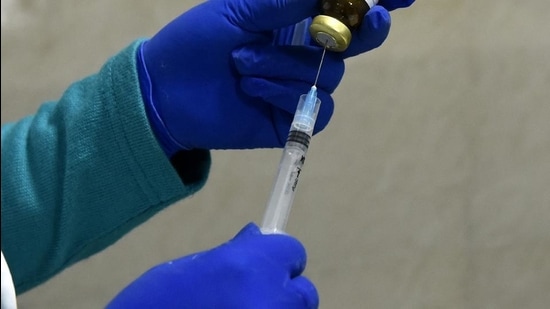
*Vaccine: A biological preparation that elicits immunity to a particular disease. In addition to the antigen, it can contain multiple components, such as adjuvants, preservatives, and stabilisers, each of which may have specific safety implications.
*Immunisation: Immunisation is the process whereby a person is made immune or resistant to an infection, typically by the administration of a vaccine. Vaccines stimulate the body’s own immune system to protect the person against subsequent infection.
Also read: 10 Indian states with the highest Covid-19 vaccine beneficiaries
*Adverse event following immunisation (AEFI): Any untoward medical event that follows immunisation and that does not necessarily have a causal relationship with the usage of the vaccine. The adverse event may be any unfavourable or unintended sign, abnormal laboratory finding, symptom or disease.
*Non-serious AEFI: An event that is not serious and does not pose a potential risk to the health of the recipient. Non-serious AEFIs should also be carefully monitored because they may signal a potentially larger problem with the vaccine or vaccination or have an impact on the vaccination acceptability, in general.
*Serious AEFI: An event that results in death, is life-threatening, requires in-patient hospitalisation or prolongation of existing hospitalisation, results in persistent or significant disability/incapacity, or is a congenital anomaly/birth defect. Any medical event that requires intervention to prevent one of the outcomes above may also be considered as serious.
*Severe vaccine reaction: Vaccine reactions can be mild, moderate or severe. Severe reactions may include both serious and non-serious reactions.
*Immunisation stress related responses (ISRR): Stress response to immunisation that may manifest just prior to, during, or after immunisation.
Also read: 52 people develop allergic reaction, one severe after receiving Covid-19 vaccine
*AEFI by cause (coincidental events): An AEFI that is caused by something other than the vaccine product, immunisation error or immunisation anxiety.
*AEFI by cause (immunisation anxiety-related reaction): An AEFI arising from anxiety about the immunisation (See immunisation stress related responses).
*AEFI by cause (immunisation error-related reaction): An AEFI that is caused by inappropriate vaccine handling, prescribing or administration, that, therefore, is preventable.
*AEFI by cause (vaccine product-related reaction): An AEFI that is caused or precipitated by a vaccine due to one or more of the inherent properties of the vaccine product, whether the active component or one of the other components of the vaccine such as adjuvant, preservative or stabiliser.
*AEFI by cause (vaccine quality defect-related reaction): An AEFI that is caused or precipitated by a vaccine due to one or more quality defects of the vaccine product, including its administration device as provided by the manufacturer.
*Adverse event of special interest (AESI): A pre-identified and predefined medically significant event that has the potential to be causally associated with a vaccine product that needs to be carefully monitored and confirmed by further specific studies.
*Causal association: A cause-and-effect relationship between a causative (risk) factor and an outcome. Causally-associated events are also temporally associated (i.e; they occur after vaccine administration), but events that are temporally associated may not necessarily be causally associated.
*Causality assessment: In the context of vaccine AEFI surveillance, a systematic review of data about the AEFI case to determine the likelihood of a causal association between the event and the vaccine received.
*Cluster: Two or more cases of the same or similar events related in time, geography (place), and/or vaccine administered. AEFI clusters are usually associated with a particular supplier/provider, health facility, and/or a vial of vaccine or a batch of vaccines.
*Contraindication: A situation where a particular treatment or procedure, such as vaccination with a particular vaccine, must not be administered for safety reasons. Contraindications can be permanent (absolute), such as known severe allergies to a vaccine component, or temporary (relative), such as an acute/severe febrile illness.
SOURCE: WHO


