E-Paper



Affordable cinema matter of public interest: Karnataka justifies ₹200 ticket cap
The court was hearing a batch of petitions filed by the Multiplex Association of India, some film production companies, and a shareholder of PVR Inox

 Prefer HTon Google


The Karnataka government on Tuesday asserted that ensuring affordable access to cinema was a matter of public interest, justifying its decision to impose a cap of ₹200 on movie ticket prices.
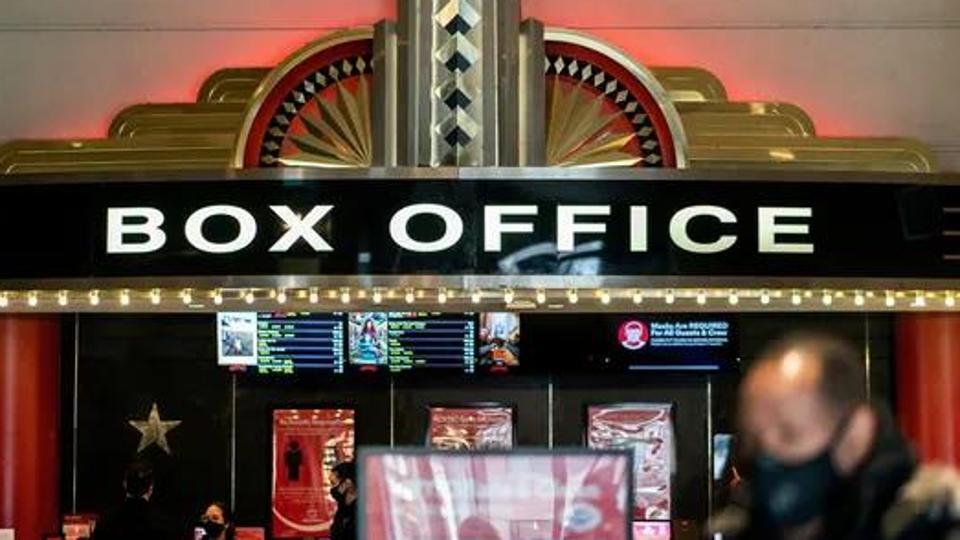
Arguing that theatres and entertainment fall squarely within the State List under the Constitution, the government told a bench of Justice Ravi Hosmani that the recent amendment to the Karnataka Cinemas (Regulation) Rules, which brought in the change in prices, was a valid exercise of statutory power aimed at guaranteeing cinema for all at reasonable rates.
The court was hearing a batch of petitions filed by the Multiplex Association of India, some film production companies, and a shareholder of PVR Inox challenging the state’s decision to impose a maximum limit on the price of movie theatre tickets in Karnataka. The court reserved its orders on the plea after the day-long hearing.
Also Read: Karnataka fixes cinema ticket price at ₹200, with small premium theatres exempted: Report
The price ceiling was introduced through a government notification issued last week, amending the Karnataka Cinemas (Regulation) Rules, 2014, to impose a uniform ticket cap of ₹200 (excluding taxes) across the state. The new rules, now called the Karnataka Cinemas (Regulation) (Amendment) Rules, 2025, took immediate effect, with an exception carved out for boutique or premium-format theatres with 75 seats or fewer, which have been allowed to retain their existing pricing.
Senior advocate Mukul Rohatgi, who appeared for the petitioner association, argued that the ticket price cap of ₹200 introduced through the amendment was “arbitrary, baseless, and wholly without legislative authority.” He submitted that the amendment, by inserting a proviso to Rule 55(6) of the Karnataka Cinemas (Regulation) Rules, overstepped the scope of the parent provision, which dealt only with the functioning of ticket booths and not with price fixation.
Rohatgi argued that the state’s decision to regulate ticket prices was unconstitutional and breached one’s fundamental right to carry on business under Article 19(1)(g).
Rohatgi further contended that a uniform ceiling ignores differences in cinema formats and investments. “Luxury theatres and IMAX screens cannot be equated with ordinary halls,” Rohatgi said.
“We have spent huge sums of money on creating cinema halls. There can not be a direction that all your tickets should be at ₹200. It is like forcing airlines to operate only economy class or hotels to charge only budget rates,” Rohatgi argued.
Senior counsels Dhyan Chinappa and Uday Holla, who also appeared for the petitioners, cited previous judgements where the Supreme Court held that cinema halls were private properties in the context of food policies. Ticket pricing too, they argued, was a “matter of private business discretion.”
The state government, through Additional Advocate General Ismail Zabiulla, defended the ticket price cap as a policy decision made in the “interest of the general public.”
Zabiulla argued that the State has clear competence under the Constitution to regulate theatres, entertainment, and amusement “under Entry 33 of List II (State List)” that pertains to theatres and dramatic performances, cinemas etc.
By exercising this legislative domain, the government was entitled to introduce a cap aimed at ensuring affordable access to cinema for the general public, the AAG argued.
“This is done in the interest of the general public. Consequently, annexure A (the said notification) came to be passed. My right to regulate flows from the Constitution,” AAG Zabiulla said.
The AAG argued that courts can strike down a state government’s policy decision only on limited grounds such as “lack of legislative competence, violation of fundamental rights, or manifest arbitrariness.”
“In this case, the impugned rule meets none of those thresholds. Accordingly, the impugned notification (capping the price) cannot be interfered with, at the interim stage,” he argued.