
 E-Paper



Afspa covers areas where insurgency still active, say police forces
On Thursday, the Central government had removed Afspa from large swathes of Assam, Manipur and Nagaland.


Silchar: The regions still under Armed Forces Special Powers Act (Afspa) in Assam, Manipur and Nagaland are still under influence of insurgents, police officials in the states said.
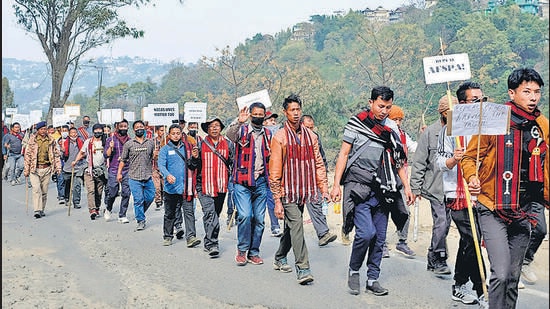
On Thursday, the Central government had removed Afspa completely from 23 districts and partially from one district of Assam; fully from 3 districts and partial from 4 in Nagaland; and from 15 police stations in 6 districts of Manipur.
Also Read | Forces need to revise SOPs after Afspa move: Experts
In Assam, officials said the Afspa will remain in districts of Upper Assam where United Liberation Front of Asom-Independent (ULFA-I) is still active and in the hill districts of the state, where the Dimasa National Liberation Army (DNLA) has a presence.
On Friday, Assam chief minister Himanta Biswa Sarma appealed to militant organisations including the ULFA-I to give up arms. “I appeal to ULFA-I and other militant organisations which are still in their arms movement, to come forward and take part in the peace process so that we all can make Assam a powerful state of the country,” said Sarma in the state Assembly.
But like Manipur, Assam didn’t witness prolonged protests against Afspa. Senior journalist Rajeev Bhattacharya said the situation in the state in the 1990s demanded the implementation of Afspa. “There were protest in particular cases in Assam. People came on the street to protest, but it wasn’t like Manipur or other parts of the country,” he said.
In Mon district of Nagaland, where 13 civilians were killed at Oting on December 4 and 5, 2021, in a botched military operation, Afspa remains in place. Districts along the border with Myanmar -- Noklak, Kiphire and Phek -- will also remain under the controversial law.
Also Read | Centre extends AFSPA in 3 districts of Arunachal Pradesh
The law was repealed completely from Tuensang, Shamatore and Tseminyu districts and will be partially removed from Kohima, Wokha, Longleng and Mokokchung districts.
“Removing Afspa would not had been possible as insurgency activities still happen on the porous Myanmar border. People living on two sides of the border have cultural and ethnic bonding,” said a senior government official, who was not willing to be quoted.
He added that the other side of the border is the stronghold of the Yung Aung faction of the NSCN (K), the only Naga nationalist group which is not in ceasefire with the Central government.
The other districts still under the Act remain so because of the designated camps of the Naga political groups that are currently in ceasefire with the Centre, the official said.
In Manipur, Afspa will be completely lifted from 15 police stations — Sekmai, Lamsang, Patsoi, Lamlai, Irilbung, Bishnupur, Thoubal, Kakching, Jiribam, Imphal West, Lamphel, Singjamei, Porompat, Heingang and Imphal City police stations — in 6 districts.
Significantly, most of the areas in Manipur from where Afspa has been lifted fall in the Imphal Valley or urban areas where terrorist groups don’t have much influence. In the hill districts, where NSCN-IM and other factions are still active, the Act will continue to remain in force, a senior police official said.
(With inputs from Sobhapati Samom in Imphal)


