
 E-Paper



Forces need to revise SOPs after Afspa move: Experts
On Thursday, the Union government removed the Armed Forces Special Powers Act (Afspa) from several parts of the region.


The army has been realigning its counter-insurgency strategy in the North-East because of a considerable improvement in the security situation in most parts of the region, and sharpening its focus on the borders with China and Myanmar, officials familiar with the matter said a day after the Union government removed the Armed Forces Special Powers Act (Afspa) from several parts of the region.
Also Read | Afspa covers areas where insurgency still active, say police forces
The controversial legislation bestows sweeping powers on the security forces.
The security forces will have to revise their standard operating procedures (SOPs) for conducting operations in areas that are no longer under the purview of Afspa, top experts following developments in the region said on Friday.
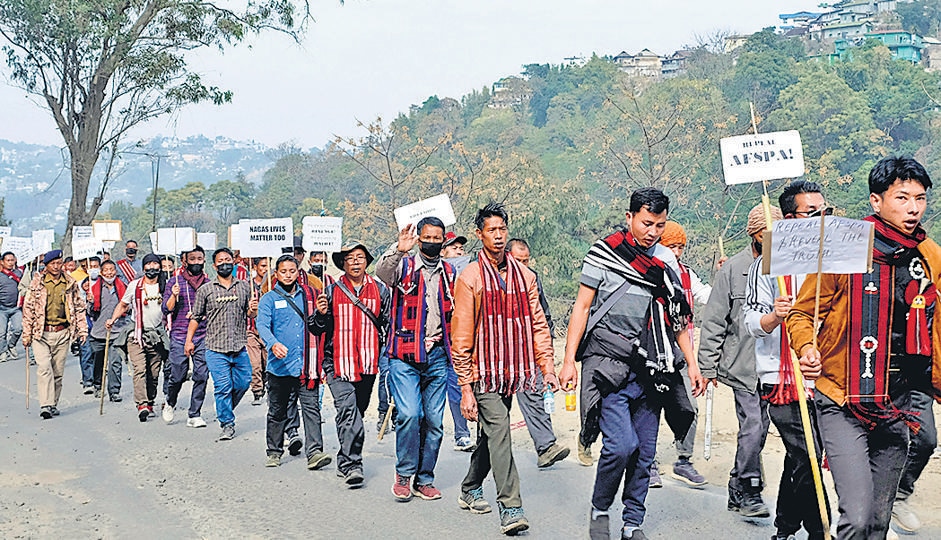
The government has reduced the controversial legislation’s footprint in the North-east following a significant improvement in the security situation, several agreements to end insurgency and months of protests against Afspa on the back of a botched operation in Nagaland that resulted in the deaths of 14 people in December 2021.
“After the incident in Nagaland, it was only a matter of time that AFSPA was removed from areas where no incidents had taken place over the last few years. It will require the security forces to change their SOPs and launch operations with a humane face so that they can deal with insurgents as well as address the concerns of the people of the North-east,” said Lieutenant General Shokin Chauhan (retd), who headed the Assam Rifles in 2017-18.
Also Read | Centre extends AFSPA in 3 districts of Arunachal Pradesh
Chauhan, a counter-insurgency expert who understands the security dynamics of the region, retired in 2020 as the chairman of the Ceasefire Monitoring Group responsible for implementing ceasefire ground rules between the Centre and Naga insurgent groups.
Afspa prohibits prosecutions from being initiated without the go-ahead from the Centre, if the allegations are linked to the public duty of the accused.
The army has often called the legislation an enabling instrument for conducting operations in disturbed areas. The districts from which Afspa has been removed have been peaceful for several years and the decision to remove it has been taken after extensive discussions among the stakeholders.
“The decision of the government to reduce areas notified as ‘disturbed’ in Nagaland, Assam and Manipur is based on assessments from various security and intelligence agencies, with the security situation being assessed to be within the capabilities of the existing law and order mechanism to handle,” said one of the officials cited above, asking not to be named.
Removing Afspa from several parts of the three states was the need of the hour, said Chauhan. “You can’t fight the need for more openness and transparency, and have to move towards more humane operations. We will have to adapt as the security forces will continue to operate in these areas. Ultimately, Afspa has to be removed from the entire region,” he said.
Once any area is no longer assessed to be “disturbed” and the law-and-order situation is not in a “dangerous condition,” then the applicability of Afspa is not extended following which the army can be withdrawn, said a second official.
Chauhan said the pressure would now be on insurgent groups to ensure that the areas from where the law has been removed stay peaceful as Afspa can be restored if the situation deteriorates.
Restricting the scope of the legislation in the North-east is a step in the right direction, said Lieutenant General Konsam Himalay Singh, who retired in 2017 and was then the first army officer from the North-east to reach the three-star rank.
“It’s good that Afspa has been removed from several districts. The security forces will have to rework their operating procedures. Also, the army may go in for readjustment of forces to focus on areas where the threats remain, especially the India-Myanmar border,” Singh said.
In the army’s assessment, the situation in the North-east has improved significantly over the years, and a planned and gradual drawdown of soldiers is underway there.
In February 2021, army chief General Manoj Mukund Naravane said two army divisions had been pulled out of counter-insurgency and internal security duties in the North-east, and were solely focused on their operational role along the China border.


