
 E-Paper



VIP flying norms under review after Ajit Pawar's death in Baramati crash
Officials said recent regulatory observations have pointed to instances of aircraft operating below prescribed weather minima.

 Prefer HTon Google


The government has initiated a review of VIP flying guidelines, at least two officials aware of the development said, the latest in a series of regulatory measures prompted by the Baramati crash that killed five people, including Maharashtra deputy chief minister Ajit Pawar, last month.
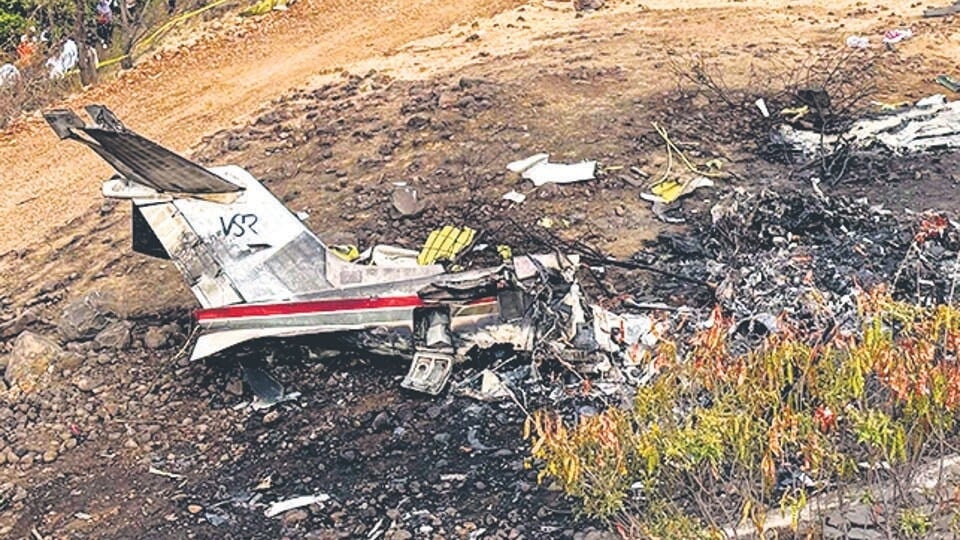
An order reviewing jets used for VIP movement was issued last week, an official told HT. “The exercise aims to identify gaps in the standards maintained by operators flying VIPs,” the official said.
The review follows the Directorate General of Civil Aviation’s recent decision to conduct phase-wise special audits of all non-scheduled operators, beginning with larger operators. The DGCA also initiated a separate special audit of VSR Ventures, the operator of the crashed Learjet 45.
Also Read | After Naravane memoir controversy, govt weighs 20-year publishing curbs on former officials
A second official confirmed that the review pertains to flying undertaken for VIPs as declared by the government of India.
Officials said recent regulatory observations have pointed to instances of aircraft operating below prescribed weather minima, particularly during operations into uncontrolled airfields. “There have been cases where landings were concluded despite poor visibility,” an official close to the matter said.
Aviation safety experts have previously called for enhanced oversight of non-scheduled operators beyond periodic spot checks, including systematic audits of maintenance practices, flight hour logging verification, structural corrosion checks, and engine overhaul tracking. Critics have argued that the current regulatory approach relies too heavily on compliance certification rather than continuous monitoring of operational standards.
Also Read | India has 25,001 licensed pilots, civil aviation minister tells Lok Sabha
Flying below minima refers to continuing an approach when visibility or cloud ceiling is below the minimum limits prescribed for that airport and type of operation, whether under Visual Flight Rules, which require adequate visibility, or Instrument Flight Rules, where landings are carried out using instrument guidance systems.
Uncontrolled airports do not have instrument approach procedures or air traffic control services. Operations at such airfields are therefore conducted under VFR conditions, which generally require a minimum visibility of 5km. Many of these airfields witness increased VIP movement during election periods.
Air Safety Circular 2 of 2014 (revised April 10, 2018), which governs VIP and SPG-protected flying in small aircraft and helicopters operated by private and non-scheduled operators, mandates strict adherence to weather minima, crew flight duty time limitations, weight and balance requirements, and adequate fuel planning.
The circular provides for enforcement action in cases of non-compliance. Depending on the severity of the violation, the DGCA may issue warnings, suspend pilot or engineer licences, suspend operations, or in serious cases suspend or cancel an operator’s Air Operator Permit.
The civil aviation requirement, or CAR, identifies a number of dignitaries as VIPs, including “state minister of cabinet rank” — which would cover Ajit Pawar.
“The move to revisit VIP flying rules is being positioned as part of a broader structural reset of safety oversight across the NSOP sector,” the official said.
Five people were killed in the January 28 crash: Ajit Pawar, his personal security officer Vidhit Jadhav, pilot-in-command Sumit Kapoor, first officer Shambhavi Pathak, and cabin crew member Pinky Mali.


