E-Paper



After Naravane memoir controversy, govt weighs 20-year cooling-off before publishing for senior ex-officials
A formal order on the 20-year cooling-off period is likely to be issued soon, top officials aware of the matter said.

 Prefer HTon Google


New Delhi: The government may consider introducing a cooling-off period of 20 years for senior officials in positions of power, including military officers, before they can author books after retirement, top officials aware of the matter said on Friday.
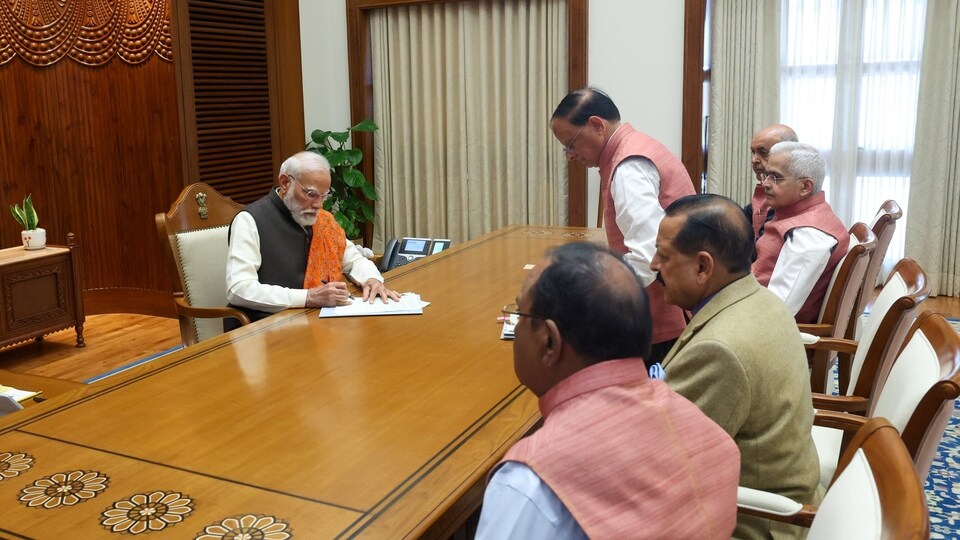
The developments come against the backdrop of a raging political firestorm over former army chief General (retired) Manoj Mukund Naravane’s unpublished memoir Four Stars of Destiny. His claims on one of the most delicate moments during the India-China military standoff in eastern Ladakh in August 2020 has roiled Parliament over the past two weeks.
The controversial book came up at the Union cabinet meeting on Friday, and several ministers were of the view that there must be a cooling-off period after retirement for people who have held positions of power to write a book, the officials cited above said, asking not to be named.
A formal order on the 20-year cooling-off period is likely to be issued soon, they added.
To be sure, this issue wasn’t part of the official 27-point agenda of the cabinet but came up as a part of the general discussion, said the officials cited above.
Another issue that came up during the meeting was the controversy surrounding the recently released US Department of Justice files related to disgraced American financier Jeffrey Epstein, HT learnt. Ministers were of the opinion that the government should maintain its stance on the issue, and not respond to continued allegations by the Opposition, said the officials cited above.
The Opposition has repeatedly linked Union minister Hardeep Puri to Epstein, citing multiple emails, but the minister has rejected the allegations, saying his meetings with the sex trafficker were part of an official delegation of the International Peace Institute, and that he did not visit Epstein’s private island, Little St. James, and cut off contact when he “realised what the guy was”.
The row around Naravane’s manuscript erupted on February 2 when Leader of the Opposition in the Lok Sabha Rahul Gandhi attempted to refer to events detailed in the memoir in the Lower House, and the government vehemently objected to it because the book was not published.
Gandhi later brought a copy of the book to Parliament, seeking to buttress his claim that the book existed. Soon, the book’s PDF was widely circulating on social media.
“Any copies of the book currently in circulation, in whole or in part, whether in print, digital, PDF, or any other format, online or offline, on any platform, constitutes an infringement of PRHI’s copyright and must immediately be ceased. Penguin Random House India shall be exercising remedies available in law against the illegal and unauthorised dissemination of the book,” the publisher said in a statement on Monday.
It came hours after Delhi Police registered an FIR and launched a probe into the alleged illegal circulation of the manuscript in digital and other formats.
On Tuesday, Naravane broke his silence on the controversial autobiography and endorsed his publisher’s stand that the book was not published and no copies were “published, distributed, sold or otherwise made available to the public” either in print or digital form.
His account of the developments that took place on the Kailash range on the southern side of Pangong Tso on August 31, 2020, and a purported lack of an immediate political directive on how the Indian Army should respond to the Chinese provocation lie at the centre of the controversy.
To be sure, the book was to be published in January 2024, and news agency Press Trust of India carried an excerpt from it in December 2023. Around the same time, Naravane also tweeted that his book “is available now” and pointed to a pre-order link from Amazon.
But the PTI excerpt, on the Agniveer scheme, created a controversy and the defence ministry wrote to Naravane and the publisher to submit the book for clearance to the army before publishing it. The army went through the book in detail, recorded its observations on the subjects covered in it, and sent it to the defence ministry to take the final call. The defence ministry has thus far not given its clearance to the former chief’s book.