
 E-Paper



After surrender, Maoists line up to have vasectomies reversed
Officials said that in the last six months, at least 50 surrendered Maoists have undergone the reverse procedure; they call it ‘nas jodna’ (rejoining the tubes)


For the last two months, the family of Tati Gandhi aka Arab (35), a former Maoist who carried a reward of ₹8 lakh on his head until his surrender in January 2025, has been seeking a bride for him. His initial work as an informer (post surrender), assisting security forces in anti-Naxal operations helped him become a sahayak (assistant constable) in the district reserve guards (DRG). Once a wanted divisional committee member, Arab is now a free man, no longer wanted by the forces, and is looking forward to marry and have a family.
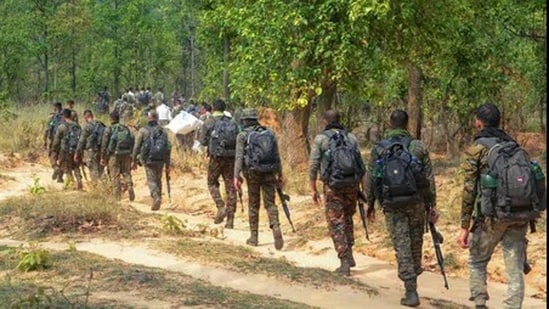
Once that would have been a dream; sometime around 2014, a trained doctor who was part of the Maoists performed a vasectomy on him.
But in October last year, doctors at a hospital in state capital Raipur, reversed his vasectomy.
Arab’s story is not unique.
The surrender of a record number of Maoists has thrown up an unusual challenge for security forces – surrendered cadres in large numbers are approaching security forces seeking medical help to reverse vasectomies performed on them during their years in the jungle. While cadres were permitted to marry within ranks, they were prohibited from having children, so trained doctors performed vasectomies inside the jungles.
Officials in the security forces said that in the last six months, at least 50 surrendered Maoists have undergone the reverse procedure; and there are dozens waiting in line. The cadres call this procedure — nas jodna (rejoining the tubes).
In a vasectomy, the vas deferens that transports the sperm is cut or sealed. It is a process that is quick, painless and effective. The reversal, called vasovasostomy, simply involves connecting or unblocking the vas deferens.
Arab, who underwent a vasectomy in the jungles of Bastar sometime around 2014, said: “There were 10 of us who were operated on by the doctors at the RamaKrishna Care hospital in Raipur on October 12. We were admitted to the hospital for three days. We want to make up for the years spent in the jungle. My elder brothers in Dantewada are helping me find a wife.”
Arab’s former partner was killed in an anti-naxal operation last year. “Marriage among Naxals in jungles is a different concept. You are allowed to live together but only for a few days and are soon separated and assigned duty in different areas. You hardly meet each other. Permission is required to meet and work in the same camp for a few days once in a while,” he said.
A Maoist marriage is not a formal or religious ceremony — all they have to do is give their consent in front of their divisional commanders. And then the men have to undergo vasectomy. This is when medically trained self styled Naxal doctors such as Sukhlal Jurri step in.
Jurri, a surrendered Maoist, who carried a reward of ₹8 lakh until his surrender said: “There were many doctors like me in the jungle. When two cadres fall in love and want to get married, they have to inform their superiors. The superiors then check with both of them if they want to get married. Consent is taken before a vasectomy procedure, which is mandatory. In the jungles, we had makeshift dispensaries where cadres would stay under tents for a few days after the procedure.”
Jurri surrendered in August last year, and now works with the security forces, but not as a doctor.
He lives in Narayanpur along with his wife (another surrendered Maoist) and has undergone the reverse procedure himself.
“It is possible to join the tubes back biologically. Many cadres approached me for help and we communicated their request to the senior government officers. I live with my wife here. We do not have children yet. There are many like us who want to live better and normal lives now,” Jurri added.
Jurri, better known as Dr Sukhlal within Maoist ranks across Bastar worked with the proscribed CPI (Maoist) for almost 20 years since 2006, treating the injured and the ill and also performing the occasional but mandatory vasectomy.
Over the last one year, there has been a record number of surrenders; 2,167 cadres surrendered across the country (1,590 in Bastar alone) as the government launched a massive crackdown to eliminate left wing extremism from the country. To put this in context, there were 881 surrenders in 2024, 376 in 2023 and 496 in 2022.
There are 60 days left for the Centre’s proposed deadline of March 31, 2026 to end Left Wing Extremism in the country.
Bastar zone’s inspector general, P Sundarraj, confirmed the surge in surrendered cadres requesting a reversal of their vasectomy. “There are many cadres making such requests. It is the first time, many of them are leaving the jungles. We will help them medically, professionally and psychologically to live a peaceful life. But if the remaining Naxals refuse to surrender then our strategy has not changed and we will meet the deadline. It is their choice.”
On Friday, four more cadres surrendered before the security forces in Sukma.
At a camp for surrendered Maoists in Jagdalpur, the nodal officer has received a fresh list of surrendered cadres, who want to undergo the procedure.
Among them, Deva Kunjam, a former area committee member, will soon be called to the hospital. He is excited , but also worried. “Getting the nerves cut inside the jungle was painful but we were used to the pain during our life in the jungle. Our friends say the surgery is painless. Pain is not a worry but there are many like me wondering if we will be able to have children after all these years. Most of us are in our 30s and 40s and had vasectomies performed on us 10-15 years ago. We believed we would always live in the jungle.”


