E-Paper



Curtains come down on campaigning in Meghalaya, Nagaland
Curtains come down on campaigning in Meghalaya and Nagaland. Polling on February 27; 370 candidates in Meghalaya, 195 in Nagaland


Campaigning for the February 27 assembly polls in Meghalaya and Nagaland ended on Sunday afternoon with candidates making a final push to woo voters in the two Christian-majority northeastern states, where the BJP is trying to extend its footprint.
In Meghalaya, it’s a three-cornered battle between the ruling Congress, a resurgent BJP and regional player National People’s Party.
Independents and a regional alliance between the United Democratic Party, Hill State People’s Democratic Party and Garo National Council could prove crucial in government-formation if no party secures a majority in the 60-member assembly.
A total of 370 candidates are in the fray in Meghalaya, although only 32 of them are women in a state with a matrilineal society.
Polling has been countermanded for the Williamnagar seat after the death of Nationalist Congress Party candidate Jonathone N Sangma in a militant attack. His wife Krinilla R Marak will contest from the seat.
The BJP, which rules Assam, Arunachal Pradesh and Manipur, has several Congress and Independent legislators on its side this election. The party set off its campaign with a rally by Prime Minister Narendra Modi in Shillong in December.
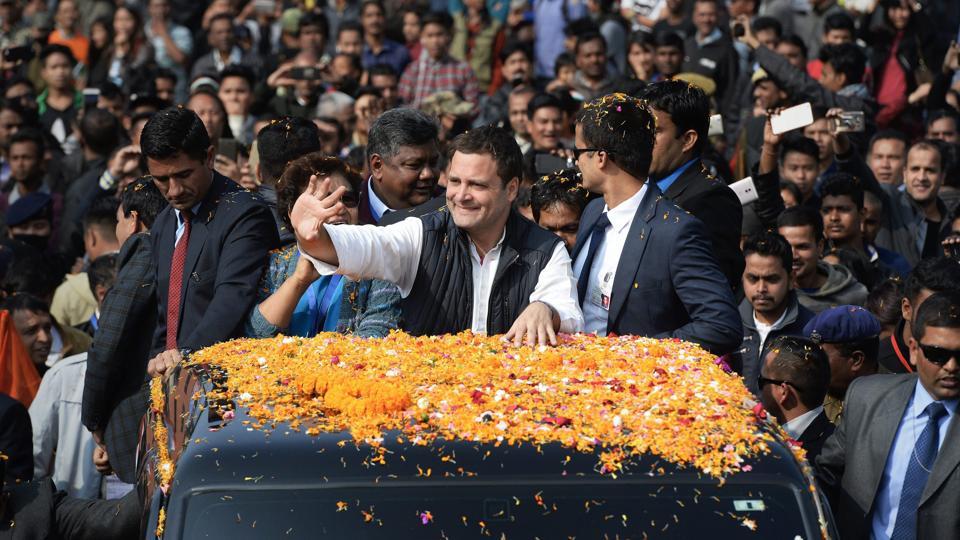
But by the time campaign came to a close, the Congress was able to swing some of the momentum with rallies and road shows of party president Rahul Gandhi witnessing good turnouts.
The Congress is contesting all 60 seats, while the BJP has fielded candidates in 47 and the NPP in 52. The UDP-HSPDP-GNC alliance has put up candidates in 54 seats. There are 84 Independents in the fray.
In 2013, the Congress won 29 seats; Independents came second with 13, followed by UDP with eight and HSPDP won four. The BJP didn’t win any and the NPP secured only two.
The NPP is an ally in the NDA government and part of the BJP-led North East Democratic Alliance. It also shares power with the BJP in Manipur. But the two parties are contesting independently in Meghalaya.
More than 1.8 million voters are expected to vote in 3,083 polling stations across Meghalaya on Tuesday. The votes will be counted in both Meghalaya and Nagaland on March 3.
In Nagaland, the contest is between the BJP’s old and new allies. Till the beginning of February, there was uncertainty over the polls as tribal councils and civil society groups wanted the elections postponed until the Naga peace talks to end decades of insurgency in the state came up with a final solution.
Altogether 11 parties, both national and regional, had agreed to boycott the polls. But with the BJP backing off and deciding to contest, the agreement fell through, and others joined the election process.
The contest is generating interest as the BJP broke its 15-year alliance with the ruling Naga People’s Front (NPF) and stitched a friendship with the newly formed Nationalist Democratic Progressive Party (NDPP).
The BJP is contesting 20 seats and the NDPP has 40 candidates for the 60-seat House. The contest will be mainly between the NPF and NDPP-BJP combine with both sides engaged in a two-sided contest in 18 seats.
The Congress, once the most powerful party in the state, failed to find enough candidates and is contesting only 18 seats.
In a bid to woo Christian voters, the BJP and Congress promised free or subsidised trips to Jerusalem if voted to power. The influential church has opposed the BJP, saying it is influenced by the Rashtriya Swayamsevak Sangh (RSS).
There are 195 candidates for 59 seats after NDPP leader and former chief minister Neiphiu Rio won uncontested from Northern Angami-II constituency. Also, five women are contesting the polls this year in a state that has never elected a woman legislator in 55 years since it was formed in 1963.
Polling will take place in 2,156 stations across Nagaland.