
 E-Paper



Amid FCI row, lessons for Karnataka from other states on rice scheme
The new government in Karnataka promised to provide 10kg of rice a month to each member of families living below the poverty line.


Karnataka could take a cue from other states on providing rice to people under its promised Anna Bhagya scheme beyond what is mandated under the national food security law, officials in these states said.
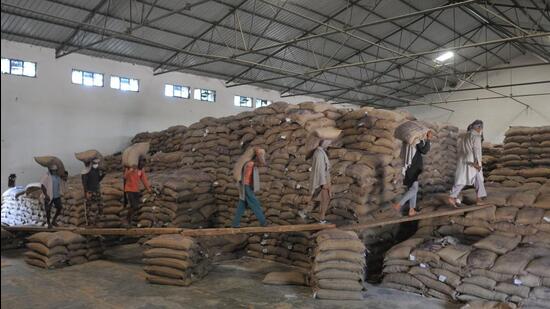
The new Congress government in Karnataka has promised to provide 10kg of rice a month to each member of families living below the poverty line, in addition to the 5kg a month mandated by the National Food Security Act.
Read | To guarantee food security, a decentralised PDS is key
States such as Odisha, Chhattisgarh, West Bengal, Andhra Pradesh and Telangana provide additional rice to the poor from their own resources without seeking additional grains from the Food Corporation of India (FCI), the country’s food grain stockist, the officials said. Tamil Nadu provides additional rice but procures it from the FCI.
The Karnataka government began scouting for rice from states and other agencies after FCI discontinued the sale of rice and wheat from the central pool under the open market sale scheme (OMSS) to state governments soon after the southern state announced its Anna Bhagya scheme’s launch from July 1.
“The sale of wheat and rice under the OMSS (domestic) for state governments is discontinued,” the FCI said, adding that sale of rice under the OMSS will continue for northeastern and hilly states, and those facing law and order situations and natural calamities at the existing rate of ₹3,400 per quintal.
Because of the FCI order, the scheme will now be launched from August 1, Karnataka food minister KH Muniyappa said on Thursday.
Except Karnataka, no other state has raised a hue and cry over the FCI order. Officials in these states said they procure paddy directly from farmers to sustain their grain delivery schemes after providing FCI the grains as per its quota for central procurement from each state to maintain the national food buffer stock.
Odisha, for instance, provides 5kg per person free rice to eight lakh beneficiaries under the state food security scheme. They are people not covered under NFSA. To provide them free rice, the Odisha government procures paddy directly from farmers and distributes rice to the poor through the public distribution system.
“The Odisha State Civil Supplies Corporation procures paddy from farmers, mills the same through custom millers and uses the milled rice to meet the state’s public distribution system’s needs, which includes providing rice to NFSA, SFSA and other beneficiaries, said Rajendra Mishra, Odisha’s special secretary for food supplies and consumer welfare.
The role of FCI has been reduced to accepting surplus rice from the state, he said. The FCI ending the OMSS will not affect Odisha as it has been rice surplus since 2009, Mishra added.
Similarly, West Bengal does not seek rice from the FCI for providing food grains to 3.3 lakh families under Khadyasathi scheme that Mamata Banerjee government launched in 2016. the state government procures food grains from registered farmers by fixing a minimum support price (MSP) every year through cooperative societies, self-help groups and farmers’ organisations, a state official said, seeking anonymity.
The MSP fixed in last paddy season was ₹2,040 per quintal and 49.39 million tonnes of paddy was procured. West Bengal supplies free rice to 88.9 million beneficiaries, including 60.1 million under the NFSA. Each member of the family gets 5kg of rice and wheat for free, besides pulses, under the scheme.
Chhattisgarh also provides free rice to 64.25 lakh families, with 35kg of rice provided every month to a family at ₹1 per kilogram to below poverty line families. The state procures food grains from farmers under the decentralized procurement scheme (DCP), the government said in a response to to HT’s queries.
“The rice is procured for National Food Security Act (NFSA) and state scheme. States provides 14 lakh metric tonnes of rice to FCI and keeps another 16 lakh metric tonnes rice for welfare schemes. Rest is sold through open market,” the statement said.
Telangana provides 5kg of rice to every poor person, in addition to 5kg it receives from the central government under NFSA. The state procures paddy directly from farmers. As per official figures, paddy production in the state has increased to 20.2 million tonnes in 2021-22, which was 4.57 million tonnes in 2015-16, enough to supply the additional rice.
“In fact, the state has surplus rice, with Telangana producing more rice than Punjab this year, and we are looking for measures to sell it in the open market,” a Telangana government official said, declining to be named.
Similarly, Tamil Nadu has been giving 5kg of additional rice per person to NFSA covered families since June 1, 2016. It used to procure additional rice from the FCI under its OMSS, in which rice was sold for ₹34 per kg as compared to ₹3 per kg under NFSA.
Tamil Nadu buys 2.4 lakh tonnes of rice from the FCI to supplement its free ration scheme through fair price shops. “As of now, we have enough stocks. We are in talks with agencies to get paddy for the scheme,” said a state government official, not willing to be named.
Many states ruled by the Bharatiya Janata Party, such as Uttar Pradesh, does not provide additional rice and wheat to subsidised food scheme beneficiaries and, therefore, officials said they will not face any problem because of the end of the OMSS.
“Since Uttar Pradesh has no food distribution scheme in addition to the PDS under the NFSA, FCI’s decision to bar states from bidding for wheat and rice auctioned from the central pool will not hit it,” said Rajat Sharma, general manager, FCI. The grain stockist has enough stock to provide food grains to the northern state for another six months, by when the next paddy procurement will start, Sharma added.
Karnataka was not in the position to procure rice directly from farmers to provide free rice under Anna Bhagya scheme. The state government was looking to purchase rice at ₹34 per kilogram along with a transport cost of ₹2.6 per kilo, which is the cost at which it had bought rice from the FCI, an official said, requesting anonymity. Rice grown in Raichur in the state is being sold at ₹55 per kiol, which is beyond the state’s budget, they added.
In a bid to procure rice, Karnataka plans to seek rates from the National Cooperative Consumers’ Federation of India and Kendriya Bhandar to see whether these organisations would be willing to sell rice to the state government at an affordable price. Chief minister Siddaramaiah on Monday said ₹10,092 crore is required every year to implement the scheme if the state has to procure rice at FCI rates.
As of now, NFSA beneficiaries buy food grains at a subsidised rate — rice at ₹3 per kg, wheat at ₹2 per kg and nutria cereals at ₹1 per kg. The NFSA covers about 81.35 crore people and the Centre bears the cost of ₹2 lakh crore to provide them with food security. Many states further subsidise the cost of grains provided under the NFSA.
(With inputs from state bureaus)
 ABOUT THE AUTHORChetan Chauhan
Chetan Chauhan is the National Affairs Editor looking into all aspects of news and features from across India. A Chevening scholar with over three decades of experience in reporting and news management, Chetan has extensively covered all important aspects of the social sector, political economy, environment and climate change nationally and internationally. He did a journalism course at the Reuters Institute of Journalism in Oxford and Digital Media training at Nanyang Technological University in Singapore. He started as a reporter with The Statesman in 1996 and joined the Hindustan Times in 2000 in the metro bureau covering environment, crime and Delhi politics. He covered hot local news, from the Jessica Lal murder case to the rebellion of Delhi Congress MLAs against then Chief Minister Sheila Dikshit, to the replacement of toxic vehicle fuel with cleaner compressed natural gas (CNG) in the national capital. Some of his stories on air pollution became part of the Supreme Court’s landmark MC Mehta versus Government of India case in the National Capital Region (NCR), forcing the government to take corrective measures. As part of the national political bureau since 2004, he covered important central sectors such as environment, education, social justice, labour, rural development, water resources, renewable energy, agriculture, broadcasting and the Planning Commission for more than a decade producing several exclusive and investigative breaking stories. His specialisation is the environment, having covered at least a dozen United Nations global conferences on climate change, biodiversity and wildlife including climate summits in Paris, Copenhagen and Bali. He also covered India’s two five-year plans ---11th and 12th and reported on drafting and execution of right based laws such as Right to Education, Right to Information and rural job guarantee law, MG-NREGA, now being introduced in new format as VG-RAM-G Act. He has in-depth knowledge of social sector issues. He was one of the first to report on tigers vanishing from Sariska and Panna wildlife reserves in 2004 and 2008, respectively, leading to the setting up of the National Tiger Conservation Authority (NTCA) and the introduction of stringent penal provisions for poaching. He has written extensively on the rising human-animal conflict in India and the degradation of India’s biodiversity hotspots because of mining and other activities. Since 2004, Chetan has covered Parliament comprehensively and participated in training on the nuanced coverage of Parliament proceedings. He has travelled extensively across India to cover national and provincial elections since 1998, especially in the Hindi heartland states, considered India’s road to power. He writes a regular column for Hindustan Times, Ecostani, on important national politics, economy, Himalayan ecology and environmental issues. His other responsibilities include providing inputs for edits and edit page articles for the publication, apart from managing news flow from across India.Read More


Stay updated Bengaluru Weather Live and with all the Breaking News and Latest News from Bengaluru. Click here for comprehensive coverage of top cities including Delhi, Mumbai, Hyderabad, and more across India . Stay informed on the latest happenings in World News.


