
 E-Paper



An Activist and an Aesthete: A tribute to Kamaladevi
On November 1, Karnataka celebrates its unification; remember Kamaladevi Chattopadhyay, a trailblazing figure in women's rights and culture.

 Prefer HTon Google


On Saturday, November 1, Karnataka will burst into joyful celebration, commemorating that day in 1956 when all the Kannada-speaking lands were brought together within the newly-drawn borders of Mysore State. That makes this week a particularly good time to remember, Kamaladevi Chattopadhyay, an extraordinary daughter of the soil who died on October 29, 1988; a woman that the Hassan-born Indian-American novelist, Raja Rao, described in his preface to her 1986 memoir as “perhaps the most august woman on the Indian scene today”, and her recent biographer, American historian Nico Slate, believes is probably “the most important woman of the 20th century.”
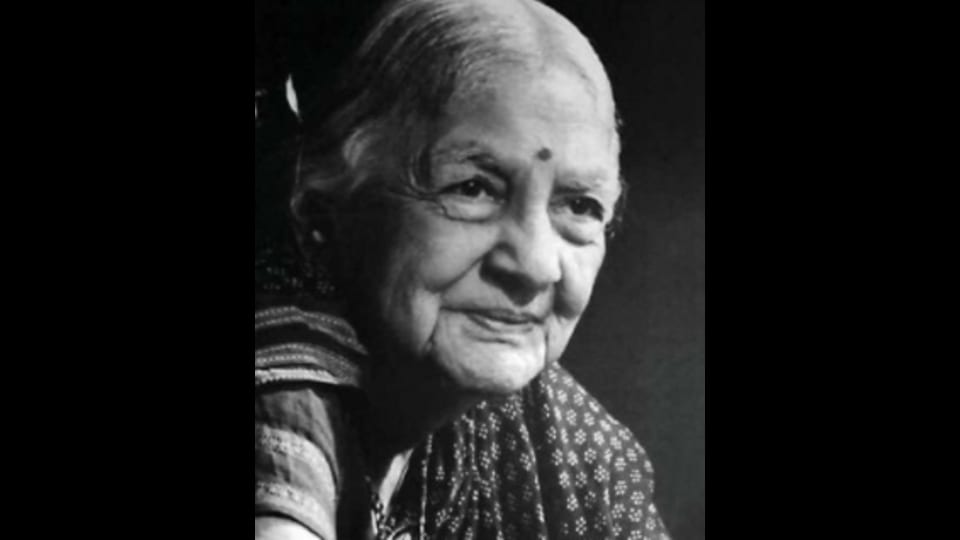
Perhaps because we are misled by her married name, or because her life’s work was done outside Karnataka, Kamaladevi Chattopadhyay, who was born in 1903 in Mangalore to a Chitrapur Saraswat family, is not much known in her home state – an unconscionable amnesia on our part given her trailblazing contributions.
Widowed at 14, Kamaladevi fell in love with and married Sarojini Naidu’s brother, Harindranath Chattopadhyay, at 20, against all social norms of the time (a decade later, sick of his infidelity, she filed for and obtained India’s first court-granted legal divorce).
At 23, inspired by the Irish-Indian suffragette Margaret Cousins, who founded the All-India Women’s Conference (AIWC), she became the first Indian woman to contest a legislative seat (she lost). (P.S. Margaret’s husband, the Irish-Indian poet and theosophist James Cousins, was the one who, in 1924, gently nudged Kannada Poet Laureate Kuvempu away from writing in English to writing in his mother tongue.)
At 24, Kamaladevi was elected to the All-India Congress Committee.
At 27, she bullied 60-year-old Gandhiji, whom she adored but did not hesitate to cross swords with, into allowing women to join the 1930 Salt Satyagraha, by the simple expedient of showing up enroute and refusing to leave.
At 28, she starred opposite Kannada playwright TP Kailasam in the 1931silent film Mrchhakatika, the first ever by the Kannada film industry.
During WWII, she travelled the world extensively – Britain, Egypt, America, Japan and China – drumming up support for the Indian freedom struggle while delivering speeches against British and Japanese imperialism and resisting Jim Crow in the US with as much fire as she did patriarchy and casteism back home.
Given her impressive political work and global connections, Kamaladevi was offered a choice of diplomatic positions at India’s independence. She declined, saying that she had decided to leave the “highway of politics to step into the side lane of constructive work.”
To our collective good fortune, the constructive work she chose was the revival, protection and promotion of indigenous handicrafts, textiles, and traditional performing arts, which had all been systematically devalued by the colonial regime. Kamaladevi was the force behind such towering cultural institutions as the National School of Drama (1944), the Central Cottage Industries Emporium (1948), the Sangeet Natak Academy (1952), and the Crafts Council of India (1964).
She was also instrumental in rehabilitating refugees of the Partition in a new township on the outskirts of Delhi, Faridabad. The township was raised through the efforts of the Indian Cooperative Union (ICU), an organization she founded, whose chief adviser, the German architect Otto Koenigsberger, had been Government Architect of the Kingdom of Mysore since 1939 (he designed several iconic buildings for the Indian Institute of Science, the Krishna Rao Pavilion in Basavanagudi, and the Bal Bhavan building in Cubbon Park).
But that isn’t Kamaladevi’s only Bangalore connection. A cultural institute that she founded in Delhi in 1964, along with Kathak exponent, Guru Maya Rao, moved to Bangalore in 1987.
It continues to serve the community today from its home on 17th Cross, Malleswaram, as the Natya Institute of Kathak & Choreography.
Roopa Pai is a writer who has carried on a longtime love affair with her hometown Bengaluru


