
 E-Paper



An Anglo-Indian corner of a Bengaluru field
Whitefield was conceived as a home for Bangalore’s Eurasian and and Anglo-Indian communities

 Prefer HTon Google


Another new year is upon us. As always, the coming of a new year, especially one with an extra day in it, brings on the collective delusion that old slates can be wiped clean and brave new beginnings made. As. If.
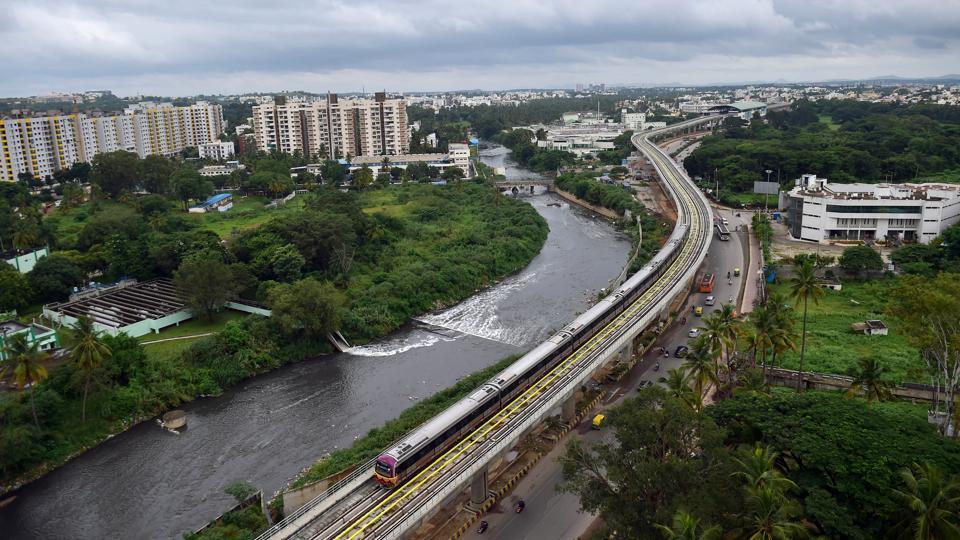
It has to be said, though, that one new beginning was certainly made this just-past New Year’s Eve – for the first time, residents of Whitefield could travel to the epicentre of the old Cantonment – MG Road, Brigade Road, Church Street – where the city’s biggest annual street party happens each December 31st, without worrying about the traffic. In October last year, the metro line connecting the far-flung eastern suburb to the city centre was finally completed.
When it was first dreamt up in the 1880s by David Emmanuel Starkenburgh White (that’s where the name comes from, nothing racist about it!), Whitefield was conceived as a home for Bangalore’s Eurasian (children of mixed Indo-British parentage) and Anglo-Indian (originally, British people who had made their homes in India) communities, which, it was hoped, would sustain themselves through agriculture. In 1882, White, the Founder-President of the newly constituted Eurasian and Anglo-Indian Association of South India, convinced Chamarajendra Wadiyar X to grant 3900 acres of land to the east of the Bangalore Cantonment, ‘at very favourable terms’, to establish the settlement.
White was himself a Eurasian. Born in 1832, he had borne the brunt of the gradual decline in his community’s status in Indo-European society, as a result both of Lord Cornwallis excluding Eurasians from civil and military appointments in 1791, and the British Crown’s Charter Act of 1813, which allowed Christian missionaries to officially work in India. Cleverly avoiding the subject of race, missionaries marginalized Eurasians for ostensibly social reasons – Eurasians found it difficult to integrate into English society, they claimed; they were lazy and lacked education; and they had many moral shortcomings because of their heathen Indian mothers.
At the same time, having fought on the Company’s side during the 1857 ‘Mutiny’, Eurasians were shunned equally by Indian society. Once the Crown took over in 1858, and the opening of the Suez Canal in 1869 brought young British women to Indian shores in droves, the number of inter-racial marriages, and the number of wills in which British men left everything to their Indian wives, had dropped steeply.
It was against this background that Whitefield was created. A pretty, well-planned settlement set around two concentric circles containing a village green, a Protestant church, and a club, it had an inn – The Waverly – and large wedge-shaped plots for homes outside the outer circle, with fields beyond. The dream of converting city-bred Eurasians into farmers, however, died quickly. Luckily, with the red, sandy, loamy soil lending itself nicely to horticulture, most of the 2000 acres of farmland were turned into mango orchards and flower farms whose produce was popular as far afield as Madras, or casuarina plantations, whose timber was sold to the railways for sleepers. As time went by, many residents took up work at the Kolar Gold Fields, only 30 miles away and connected by railroad.
With the British residents of Whitefield departing en masse in 1947, many Eurasians (by then, they were called Anglo-Indians) left as well, migrating to the UK, Australia and New Zealand. In 1960, the spiritual guru Sathya Sai Baba established his ashram in the area, making Whitefield synonymous with the Ashram itself. In 1996, in the wake of liberalization, the still sleepy village that lay well outside the Bengalurean imagination exploded into the Whitefield we know, with the opening of the International Tech Park, the petri-dish in which Bengaluru’s – and India’s – transformation into a global tech hub was brewed.


