
 E-Paper



An ode to ‘number wali kulfi’
A vanishing summer tradition that could not surface this season


The lockdown-stained summer has deprived the city of its street life. Especially the Walled City’s street life, full of wondrous sights. The more wonderful of these would be chanced upon in the summer months with the arrival of kulfi carts. Not the kulfi stalls scattered across the capital (though they have been greatly outnumbered by refrigerated carts selling industrial ice-creams), but the so-called number wali kulfi.
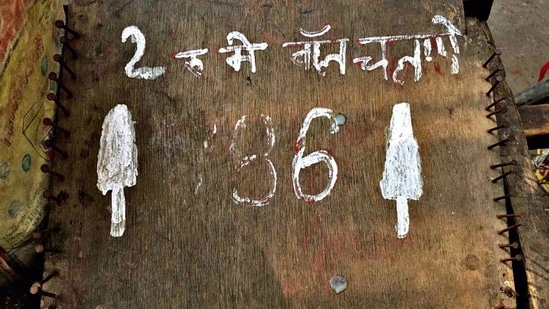
Even in the pre-pandemic era, it was a rare sight. Although if an aficionado of vanishing traditions could while away the hot afternoons around Old Delhi localities like Bulbuli Khana, it was inevitable to come across at least one such cart in some street turning.
The thrill has nothing to do with kulfi. The cart is fitted with a roulette wheel. Drop a coin in the cart’s spinning wheel and you win as many kulfis as the number on which the coin comes to rest. Sometimes the cart is equipped with a kind of pinball game, and if that’s the case, then you ought to manoeuvre a green glassy kancha ball into the highest value square. If the ball lands in number five, you get five kulfis. If it lands in number two, then you are fared for two kulfis. (You give the vendor a 5 or 2 rupee coin to play the gambler).
The lanes around Mohalla Qabristan too would host a number wali kulfi cart. This one was fitted with the most basic version of the pinball game: there was no spring to hit the kancha, and no kancha either. The player would get a teenie-weenie plastic ball, while lots of nails would be stuck up at one end of a creaky wooden block with numbered spaces between them. Aspiring for the greatest number of kulfis, the player would hit at the ball with full concentration. The ball would tumble down into the array of nails and one would follow its zigzagging progress with bated breath.
This summer the streets are empty except for carts selling baingan and stuff. A disappearing phenomenon totally disappeared this summer. If the pandemic situation improves, next May and June might be the season of claiming back something that is anyway almost gone.


