
 E-Paper



Andhra Pradesh: Hamlet nestled in Eastern Ghats a popular winter getaway
Officials, however, say that the heavy tourists’ inflow over the last few years — on an average, nearly 2,000 tourists a day during the winter, compared to the 300 to 400 during the normal days — has been disturbing the climatic conditions in Lambasingi

 Prefer HTon Google


Lambasingi, a tiny tribal hamlet tucked amid the picturesque Eastern Ghats of Andhra Pradesh’s Alluri Sitarama Raju district, has been attracting a large number of tourists over the last few years, not only because of its scenic beauty, but due to its Kashmir-like climate.
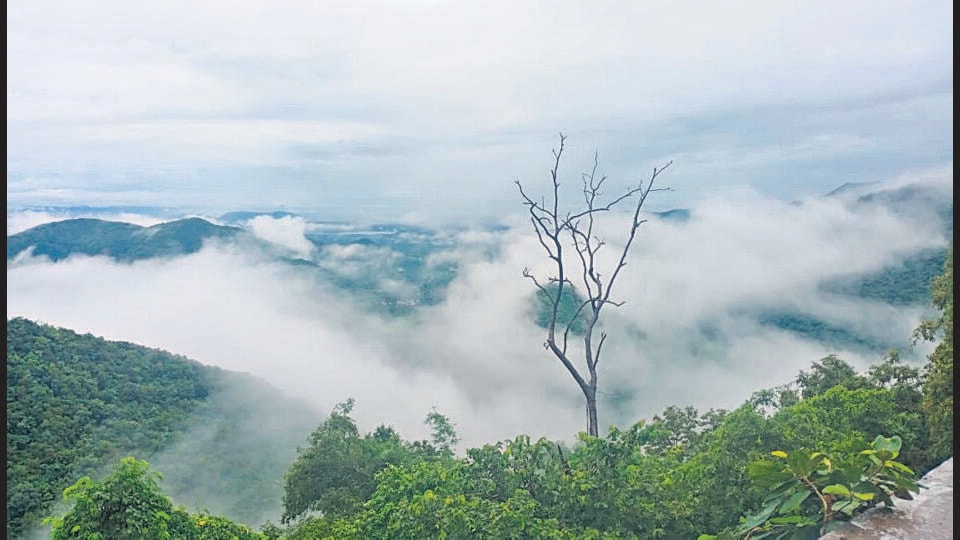
Located at about 120 km and a three-hour drive from the coastal city of Visakhapatnam, which is known for its sultry weather and dusty atmosphere, Lambasingi presents a completely different picture with misty mountains, dense forests, picturesque valleys, and waterfalls.
Unlike the other hill stations in South India like Ooty or Kodaikanal, which are popular tourist destinations during summer, Lambasingi, has turned into a sought-after tourist destination during the winter. The mercury here drops down to as low as 2°C and occasionally even records up to 0°C (as recorded in December 2012), because of which it is often referred to as Andhra Kashmir.
The cold climate at Lambasingi is still a mystery, though the scientists at the Regional Agriculture Research Station (RARS) at Chintapalli, about 5km away from Lambasingi, attribute the same to its location — at a height of 1,025 metres above the sea level, the highest point in the region.
“There are many other hills in and around this place which are located at almost the same height, but somehow, Lambasingi presents entirely different climatic conditions, particularly in December and January,” said a regular visitor Pavan Kumar from Visakhapatnam.
Owing to the cold climate, the local tribals also refer to the place as ‘Korra Bayalu’ in local parlance, which means a stick in the open – indicating that if a person stays outside the house, he will freeze like a stick.
“During this season, one can’t see sunlight even till 10am and by 3 to 4pm, the entire area turns dark and the temperature of the area starts dropping,” Kumar said.
Tourist inflow disturbing natural climate
Officials, however, say that the heavy tourists’ inflow over the last few years — on an average, nearly 2,000 tourists a day during the winter, compared to the 300 to 400 during the normal days — has been disturbing the climatic conditions in Lambasingi.
“In 2022, there has been a steady increase of tourists for the last two weeks, making the climate a little hotter,” Dr M Suresh, environmental scientist and associate director of research, RARS said.
He said that the lowest night temperature recorded this season at Lambasingi was only 4.5°C, as against the average minimum temperature of 2°C, recorded in the past. “At present, the minimum temperature is hovering around 10-13°C, which is a little alarming,” he added.
He also attributed the increasing temperature during the winter to the “recent cyclonic storms in Bay of Bengal”, apart from an increase in the tourist flow. “Going by the change in climatic conditions, I don’t think Lambasingi will ever witness zero or sub-zero temperature,” Suresh said.
Former tribal welfare minister of Andhra Pradesh Pasupuleti Balaraju, who had earlier represented Paderu assembly constituency which covers Lambasingi, also expressed regrets that the increasing tourist flow has damaged the natural beauty of the area.
“During my childhood, Lambasingi used to have a serene atmosphere with dense forests and wild animals. The water in the streams used to be clean. But the area has been virtually plundered, particularly in the last three years,” Balaraju said.
He said there has been an increase in vehicular pollution in the area. “Since the area turns very cold during the nights, tourists prefer to come only at that time. They put up tents, camp fires and open bars and barbecues. Since there are no toilet facilities in the area, they resort to open defecation. No official bothers to look into these issues,” the former minister lamented.
The locals, too, have started exploiting the situation to make money during this season.
“Several bar and restaurants have come up in the last couple of years, offering liquor and bamboo chicken to the tourists. One can witness plastic water bottles and food packets strewn all around the area,” Balaraju said.
“The pathway to the highest point has not been developed and one has to walk on rocky terrain to reach the viewpoint. All along the route, tourists throw water bottles and leftover food, making the area dirty,” a local NGO activist Raja Rao said.


