
 E-Paper



APJ Abdul Kalam’s birth anniversary: 10 things about the ‘People’s President’
On Dr APJ Abdul Kalam’s birth anniversary, here are 10 things to remember the ‘People’s President’ by.

 Prefer HTon Google


The legacy of the late president Dr APJ Abdul Kalam is more relevant than ever today. His words: “Dream, dream, dream” resound, two years after his death. He was an ace scientist and a missile technologist, but perhaps, he was best known as the ‘People’s President’ whose personality and humility were admired as much as his contributions to the country.
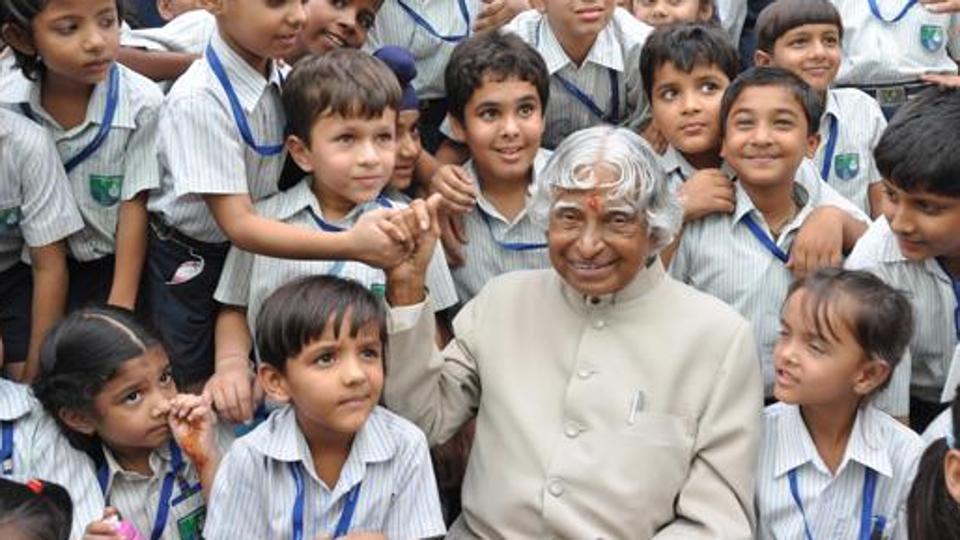
On Dr APJ Abdul Kalam’s birth anniversary, here are 10 things to know about him:
• Avul Pakir Jainulabdeen Abdul Kalam was born on October 15, 1931 in a poor Tamil Muslim family in Rameswaram. He started earning at the age of 8 by selling newspapers in his neighbourhood, reported The Indian Express .
•In his book, Kalam spoke about having a syncretic childhood in which, as a 10-year-old, he was witness to conversations between a temple priest, a reverend and his father, who was an imam at a mosque. The late president used to quote from the Quran and the Bhagavad Gita, although he did not observe religious rituals.
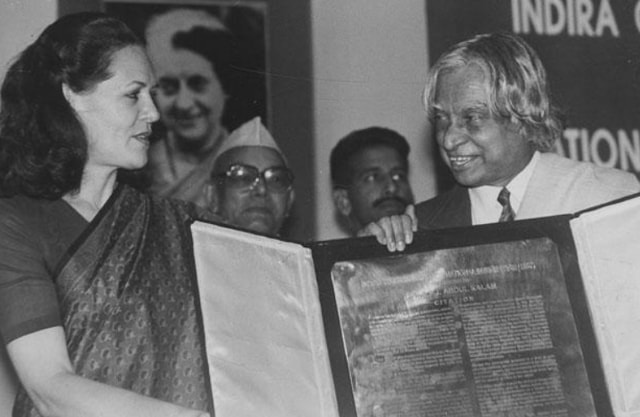
• A graduate of the Madras Institute of Technology in Chennai, Dr Kalam studied physics and aerospace engineering. But his first choice wasn’t to become a defence scientist. Kalam had dreamt of becoming a fighter pilot but secured the ninth position, when there were eight slots open for selection in the Indian Air Force.
• In his lifetime, he received doctorates from 48 universities, including the University of Edinburgh and the Carnegie Mellon University.
• Kalam joined DRDO as a scientist and started his career by designing a small helicopter for the Indian Army. In 1969, Kalam was transferred to ISRO and went on to be closely involved in the country’s civilian space programme and military missile development efforts, earning him the sobriquet ‘India’s Missile Man’.
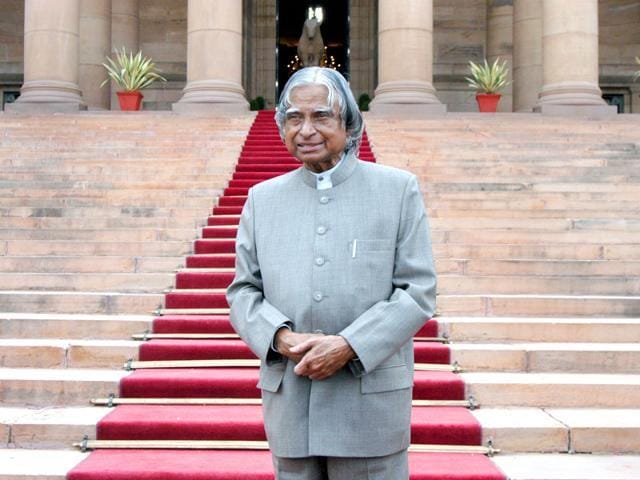
He served as the chief scientific adviser to the Prime Minister and the secretary of the DRDO from July 1992 to December 1999.
• A Bharat Ratna-recipient before he was elevated as president, he succeeded KR Narayanan and served a full five-year term from 2002 until 2007 after he won the presidential election in what was a one-sided contest against Lakshmi Sahgal, a revolutionary of the Indian Independence movement. Kalam secured the backing of all political parties.
•The bachelor president held strong beliefs against death penalty and had spoken out against it on at least on three occasions. Kalam was the only president to send back petitions from 50 death row prisoners to the government in 2005, listing out reasons why the UPA government should consider clemency in each case.
• He began a trust ‘Providing Urban Amenities to Rural Areas’ (PURA) and gave away all his salaries and savings to after he found out the government takes care of presidents, a Business Insider report said.
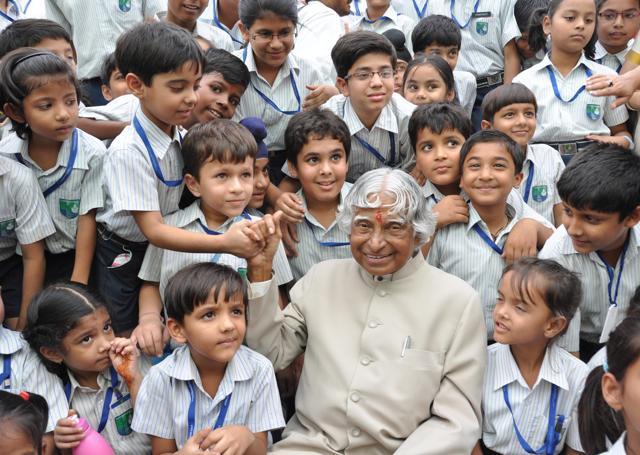
Dr Avinash Chander, former DRDO chief, recalled his association with the late president:
“The human side of Kalam’s personality was as legendary as his scientific acumen. One of the scientists working with us was suffering from a life-threatening liver disorder. Kalam went out of his way to get clearances for the scientist to be treated abroad,” he said, telling of Kalam’s nature.
• Kalam played a pivotal role in India’s Pokhran-II nuclear tests in 1998. To deceive American intelligence agency CIA, the teams mostly work night shifts and wore Indian military uniform as scientists in plain clothes at an army area could have raised suspicions. They also calculated the time CIA satellites would pass over India, according to the Insider.
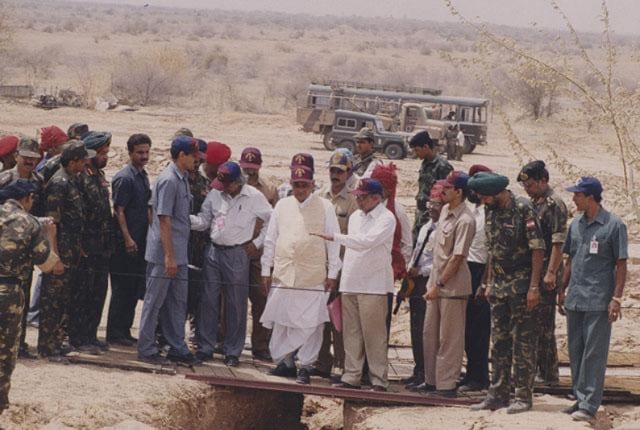
• While working at DRDO, Dr Kalam -- a vegetarian -- had rejected the proposal to put glasses on a building because he was concerned it would be harmful for birds.
Kalam never owned a television and his personal possessions were books, a veena, a CD player and a laptop, according to a Times of India report.
• NASA scientists named an organism found only on the International Space Station (ISS) after the much-loved president. They named the organism, a type of bacteria, Solibacillus kalamii.
• Kalam often spoke to students about achieving dreams and aiming higher. During an interaction at the 2015 Jaipur Literature Festival, he said, “Small aim is a crime, have great aim.” It is perhaps of no wonder that in his 70s, Dr Kalam was nominated twice for the MTV youth icon.

• At 83, APJ Abdul Kalam died in July 2015 after collapsing during a speech at the IIM Shillong, breathing his last at an educational institution.


