
 E-Paper



Army agrees to grant PC to 72 women officers, spared contempt proceedings by top court
On Friday, the Ministry of Defence presented an affidavit filed by Military Secretary to the Court stating that out of 36 officers, 21 had been granted permanent commission (PC) upon review and letters in this regard were issued to them on October 29.


The Supreme Court on Friday spared the Army of contempt proceedings after it beat a hasty retreat on its decision to deny permanent commission to 72 women short service commission officers and agreed to grant permanent commission to all the officers who had qualified on merit and had no disciplinary or vigilance clearance pending against them.
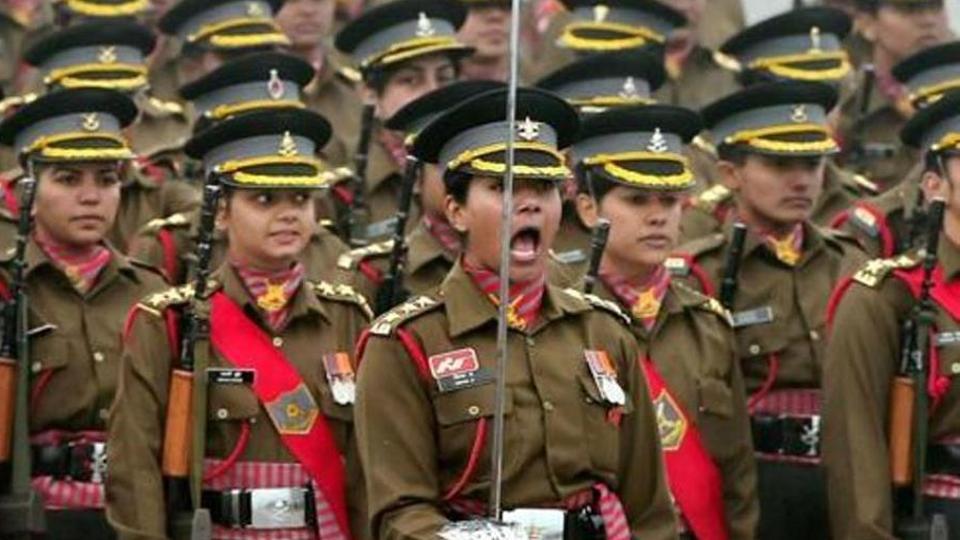
Out of the 72 women officers, 36 had filed contempt petitions in the top court that were taken up for hearing by a bench of Justices Dhananjaya Y Chandrachud and AS Bopanna.
These petitions were filed alleging that the Army was indulging in contempt of SC’s March 25 order by which it was held that all women short service commission officers (WSSCO) who qualify with 60% merit, are medically fit and have disciplinary and vigilance clearance are to be granted PC. 514 WSSCOs qualified on the 60% benchmark of which 442 secured PC while 72 were denied by the Selection Board that met in September 2020. One officer opted for premature release, leaving only 71 officers.
On Friday, the Ministry of Defence presented an affidavit filed by Military Secretary to the Court stating that out of 36 officers, 21 had been granted permanent commission (PC) upon review and letters in this regard were issued to them on October 29. The case of one officer was under consideration for PC on a separate ground leaving a remainder of 14 who were under the rejected list. Of these, three were found to be medically unfit while in the case of 11 officers, there were serious objections raised.
“If the service records of the relevant period of these 11 officers is to be taken as the basis, it raises question marks on their continuation in the force which is a relevant consideration adopted by Army to deny them,” said Additional Solicitor General (ASG) Sanjay Jain appearing for the Centre. The 11 officers had cleared the benchmark of 60% merit and were medically fit as well, thus being eligible for PC ility laid down in the Supreme Court’s March judgment and were found to be medically fit as well.
The Court wished to know if these officers secured disciplinary and vigilance clearance as well to which ASG replied, “As of today, they have those clearances, but there are some weak points against them pertaining to the relevant period.”
The Court remarked, “Army may be supreme in its own authority, but the Constitutional court is supreme in its own jurisdiction. We gave you a long rope and put you on guard that if you go beyond our order (of March), you will invite trouble. We are going to record a finding holding Army guilty of contempt.”
To prevent this eventuality, ASG Jain along with senior advocate R Balasubramanian appearing for the Army took an hour’s concession from the Court to discuss with top authorities in the Army and Government on this issue. The bench stated, “You cannot get behind our judgment and seek review of our orders. Our directions are very clear. Do not deny these people on some remarks made at some point in the past.”
Returning with instructions in the afternoon, ASG Jain told the Court that the 11 officers shall be granted PC within 10 days and all similarly placed WSSCOs who have not approached the Court in contempt petitions will also be given similar consideration. The Court accepted the fair stand of the Army and recorded the statement, granting three weeks’ time to consider grant of PC to the remaining similarly-placed officers.
ASG Jain said, “The Army officers are keen to see this matter attains finality today. We will consider them with open heart and open mind.” Balasubramanian, who too played a crucial part in convincing the Army officers to arrive at a consensus, said, “Army is being thrown apart by this litigation. We want to bring an end to these proceedings.” He further pointed out that the Court should state in the order that in peculiar facts of this case as otherwise, it will open a flood of litigations by male short service commission officers who have been denied in the past on similar grounds.
The Court disposed the contempt petitions and directed the Army authorities to deal with the complaints of two WSSCOs – Akansha Shrivastava and Himalini Pant – denied PC on medical grounds within a month. The accomplishment of these two officers was mentioned in the March judgment as an ode to the services rendered by the women officers in Army. Senor advocate V Mohana appearing for the two officers said that one officer was shown in low medical category at the relevant period due to her pregnancy while the other officer was being stopped for not producing medical documents of the relevant period.
The bench told Centre, “It is not that she is unfit but that she was pregnant.” However, the Court reiterated, “By way of abundant caution, it is clarified, those officers who have disciplinary and vigilance clearance as of present will be eligible for grant of PC subject to other conditions mentioned in paragraph 120 of our judgment.” This paragraph required WSSCOs to be medically fit at the relevant assessment period.
The women SSC officers had secured their right to permanent commission and command positions in non-combat streams at par with male officers after a prolonged legal battle culminating in the Supreme Court order on February 17, 2020. Later, the women officers again came to Court complaining against the whimsical standards on merit, medical fitness applied by Selection Board to deny them their due. This resulted in the March judgment.
In June, Centre moved an application for clarification of the judgment stating that the 72 officers denied PC faced serious issues of discipline, disobedience of orders, lapses in government procurement, forging medical documents, poor work ethics, lack of professionalism, un-officer like conduct and poor performance in courses. The Court refused to entertain this application in August and directed Army to comply with the March judgment.


