E-Paper



Arunachal Pradesh panel to safeguard rights of indigenous people from CAB
Chief Minister Pema Khandu said the committee will bring together all community based organizations, civil society groups and student unions for consultation on CAB.


The Arunachal Pradesh government will constitute a consultative committee to safeguard the rights of indigenous people of the state in view of the NDA government’s decision to amend the citizenship law through the contentious Citizenship Amendment Bill (CAB), Chief Minister Pema Khandu said Saturday.
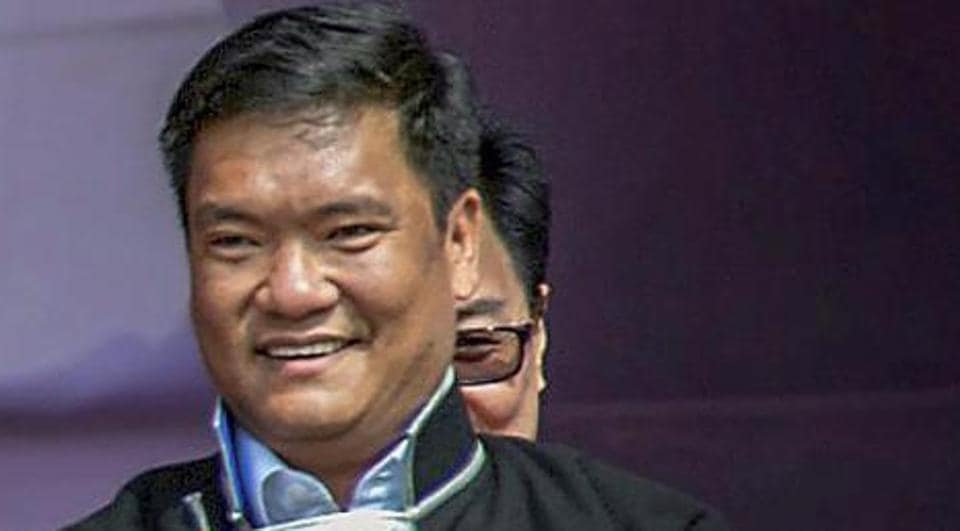
Addressing a gathering at Yingkiong in the Upper Siang district as part of the celebrations of the 150th birth anniversary of Mahatma Gandhi, Khandu said the committee will bring together all community based organizations, civil society groups and student unions for consultation on CAB.
“The committee will take inputs from these groups on adding safeguards to the proposed CAB so that protections given to the tribal people of the state under Bengal Eastern Frontier Regulation Act, 1873 and Chin Hill Regulations Act, 1896 are not diluted,” Khandu said.
He said the committee will also be responsible for interpreting the various provisions of CAB and to add clauses for protection of Arunachali people.
The CAB, which proposes to provide Indian citizenship to Hindus, Sikhs, Buddhists, Jains, Christians and Parsis from Bangladesh, Pakistan and Afghanistan who entered India before December 31, 2014, lapsed earlier this year after the government failed to table it in the Rajya Sabha. The CAB had triggered protests across the Northeast at the beginning of the year.
But Union Home Minister Amit Shah has insisted that the government will amend the citizenship law.
There is fear in several northeastern states that if CAB becomes a law, it would lead to large scale influx of illegal immigrants, which would in turn pose a threat to indigenous communities of the region.
Last month, during a meeting of North East Democratic Alliance (NEDA), the anti-Congress regional front led by BJP, Shah had assured that CAB won’t override any provisions that have for long protected the rights of the tribal people of the Northeast.