
 E-Paper



As BJP rises, legacy of Lals at stake in Haryana’s election battleground
Experts say that the BJP had taken on the dynastic politics in the state strongly and made winning just on legacy difficult.

 Prefer HTon Google


Ranbir Singh Mahendra, 78, a former lawmaker, is hoping to be third time lucky. Having lost the 2009 and 2014 polls from Badhra, he is seeking a comeback in the October 21 Haryana elections. “This is my last election. My father and I have worked honestly for Badhra’s people,” Mahendra said, referring to his father and late former chief minister Bansi Lal’s legacy as he canvassed in Jajhu Kalan village.
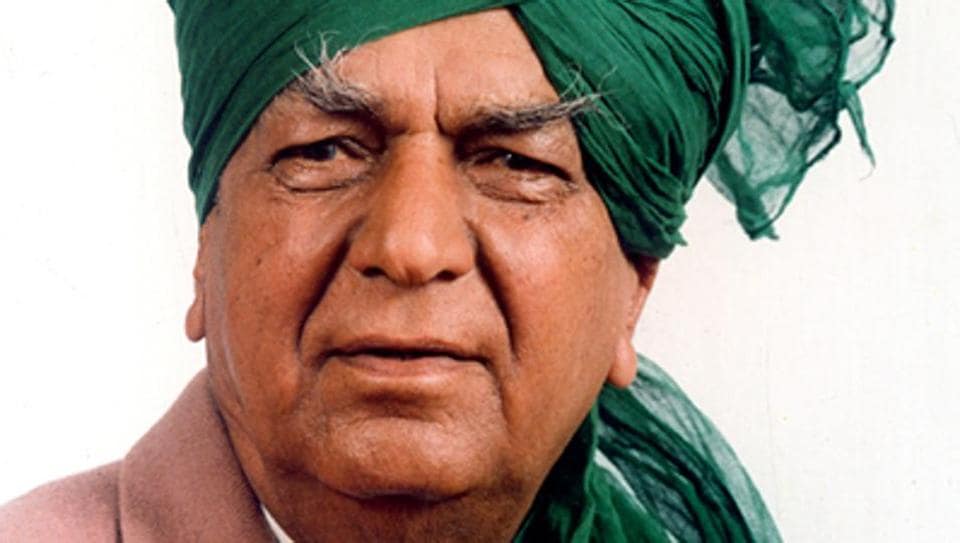
Mahendra is one of the 10 members of the families of Devi Lal, Bhajan Lal and Bansi Lal, who ruled Haryana for almost 30 years until the 1990s, contesting the polls in Haryana amid their diminishing influence and the ruling Bharatiya Janata Party (BJP)’s rise.
Years after they passed away, the legacy of the three continues to have a resonance. In Badhra, Surendra Sheoran, a local resident who identified himself as a BJP sympathiser, credited Bansi Lal with giving a new lease of life to the farmers of the western Haryana, where agriculture is the mainstay of the economy.
“Our land was barren before Bansi Lal provided us water through two canals. He pursued farmer-friendly policies saying that we have to be better than Punjab in agriculture,” Sheoran said.
Mahendra, who is a Congress candidate and a former Board for Control of Cricket in India chief, is pitted against Devi Lal’s granddaughter-in-law, Jannayak Janata Party (JJP)’s Naina Chautala.
Naina Chautala, who has earlier contested elections from Dabwali, too, is banking on her family legacy and Devi Lal’s work. On the campaign trail in Holambi Kalan village, she referred to tau (uncle), as Devi Lal was popularly known, and said he worked for the farmer welfare and ensured employment for all. “...Please vote for me as no one has done more for the farmers than Chaudhary Devi Lal ji,” she said.
Sukhvinder Singh Mandhi, the BJP lawmaker from Badhra, said that people may be emotionally attached to Bansi Lal and Devi Lal, but they no more vote in the name of their legacies. “My grandfather [Attar Singh Sheoran] was a minister [in Devi Lal government in the 1980s] but I do not seek votes in his name... people see which party works for them and which has fooled them for years. Our slogan Ek Haryana, Ek Haryanvi has brought all castes and communities together.”
Mandhi, Mahendra and Naina Chautala are all Jats and about 60% of the voters in Badhra are from the community. The sway of the families of the Lals has been increasingly confined to their pocket boroughs in Haryana’s Jat-dominated regions of central and western regions. The Jats account for about 28% of Haryana’s population and are the deciding factor in the electoral outcomes in almost half of the state’s 90 assembly seats, according to Delhi-based research institute Centre for Studies of the Developing Societies.
Apart from his family legacy, Mahendra is also banking on the “huge anti-incumbency” against chief minister Manohar Lal Khattar’s government. “People are unsatisfied with the BJP government here and have realised that the Congress works for farmers and Jats,” he said.
Bansi Lal’s daughter-in-law, Kiran Chaudhary, is contesting from Tosham and son-in-law, Sombir Singh Sheoran, from Loharu in Bhiwani district on Congress tickets.
Six other members of Devi Lal’s family are also contesting the polls. Naina Chautala’s son, Dushyant Chautala, a former Parliament member, is the JJP’s candidate from Uchana Kalan. Two members of the Chautala family are JJP candidates, while one each is contesting on INLD and BJP tickets. Another family member is contesting as an Independent.
Dushyant Chautala formed the JJP in April following a feud with his uncle, Abhay Chautala, who heads the INLD. Lawmaker Abhay Singh Chautala is contesting from Ellanabad again. Aditya Singh Chautala, another grandson of Devi Lal, is the BJP’s candidate from Dabwali. Members of Devi Lal’s family have represented Dabwali since 1980.
Devi Lal is known in the region for introducing a slab system for electricity consumption and pension for senior citizens. “The introduction of the slab system ended corruption and harassment of farmers, who had to pay exorbitant money for electricity. The same system, with some modifications, is continuing even today,” said Raju Mann, a farmer leader.
Bhajan Lal’s son, Kuldeep Bishnoi, who is the Congress’s candidate from Adampur, said that the people recall his father’s contribution in developing the region. “My father listened to every person in Adampur and I have continued this tradition,’’ said Bishnoi, whose father represented Adampur eight times. Bishnoi’s brother, Chander Mohan, is also a Congress candidate from Panchkula
Bishnoi is facing a stiff electoral battle against the BJP’s Sonali Phogat, who has over 1.51 lakh followers on social media app TikTok.
Phogat referred to Bishnoi’s legacy but said he has failed to live up to the expectations. “You just cannot rely on your family legacy. You have to deliver. People here are wise. They know where he lived. He was never seen in his constituency,” she said.
Bishnoi, who has also been a two-time Parliament member, said that the people of Adampur know who stood solidly behind them all these years. “She [Phogat] is welcome but she should not expect votes as she does not know anything about Adampur,” he said. “I am part of the Adampur family unlike Phogat, who does not stay here.”
Umesh Singh Parmar, 75, a resident of Adampur’s Nachaun Kalan village, said that they cannot forget what Bhajan Lal has done for them. “He got a member of almost every family a government job. But now things have changed and the young generation is attracted to Prime Minister Narendra Modi and the BJP.”
Rann Singh Mann, 74, a former lawmaker who worked with all the three Lals, said that the younger generation does not relate to them despite their contributions. “Bansi Lal was infrastructure development-oriented and gave Haryana an irrigation network and worked for the farm sector. Devi Lal was more focused on addressing grievances of people and it was said that nobody came empty-handed from his darbar,’’ he said.
Mann added Bhajan Lal’s politics was that of social engineering. “He tried to take everyone along while keeping the Jat pride at the forefront,” he said.
Experts say that the BJP had taken on the dynastic politics in the state strongly and made winning just on legacy difficult.
SS Chahar, a former political science professor at Rohtak’s Maharshi Dayanand University, said that the BJP’s narrative against dynastic politics seems to be working and it has weakened the political power of the three Lal families. “So many prominent Jat leaders have also joined the BJP, which was considered a party of non-Jats, thereby increasing its acceptability among all. To counter the BJP’s narrative, political parties need to change their tactics,’’ he said. He said that the Lals enjoyed respect and influence and their legacy can be revived by highlighting their ideals instead of projecting the faces of their families.


