
 E-Paper



As countries battle curbs, India keeps up diplomatic ties
A recurring theme in Jaishankar’s last interaction on March 20 was to urge the envoys to tell Indians stranded abroad to stay put where they were and not to panic; he also asked them to look around to secure medical equipment supplies that India would need.


External affairs minister S Jaishankar on Thursday kicked off a detailed interaction with Indian envoys abroad to compare notes on the battle against Covid-19, its impact on India and the road ahead. This is Jaishankar’s second round of discussions with top Indian diplomats overseas.
A recurring theme in Jaishankar’s last interaction on March 20 was to urge the envoys to tell Indians stranded abroad to stay put where they were and not to panic; he also asked them to look around to secure medical equipment supplies that India would need.
The government’s evacuation plan to bring the stranded Indians home over the next few weeks could figure in Thursday’s interaction with the Indian envoys. Jaishankar has started with envoys from the Asia-Pacific region -- Jaoan, Australia, New Zealand, Fiji and Paua New Guinea. South-East Asian countries will be next and then, South Asia. Jaishankar isn’t the only one talking. Top external affairs ministry officials are holding a parallel global outreach campaign, interacting with foreign envoys posted in New Delhi. The foreign envoys are being told how India is fighting the Sars-CoV-2 pathogen that causes Covid-19.
Coronavirus outbreak: Full coverage
Indian diplomats are also taking notes on how other countries have dealt with the virus that has, in just about four months, killed 225,000 people, infected over 3 million, driven countries to go into lockdown mode and threatened to push the global economy into a recession. Diplomacy couldn’t afford to go in lockdown mode. Instead, it went virtual, shifted gears and moved into an overdrive, a foreign ministry official told Hindustan Times.
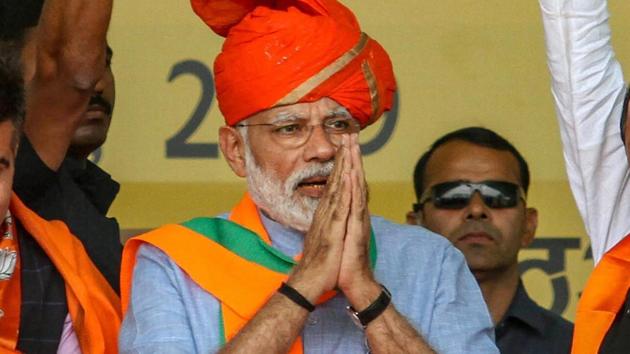
Prime Minister Narendra Modi set the template early in the crisis and has been working the phones to scale up India’s diplomatic engagement with the world. That he had also held a video conference with the heads of Indian missions on 30 March was one step in this direction.
In the next 30 days, PM Modi spoke to leaders of 30 countries. Ditto for Jaishankar ,who has kept pace with the prime ministers and reached out to his counterparts even in countries that may have been assumed to be off New Delhi’s radar. Grenada, a tiny Caribbean island - one of the smallest countries in the western hemisphere - has a population of just over 100,000. Comoros, a volcanic archipelago off Africa’s east coast, has a population of 800,000.
Many of these calls were to offer support and help.
Jaishankar told the G-20 foreign ministers’ conference this week that New Delhi is providing pharma assistance to nearly 85 countries on a grant basis, many of them in Africa, to support their response to the pandemic. There has been at least one occasions on which Jaishankar spoke to his counterparts in Russia, Brazil, the United States, Saudi Arabia and Oman in a matter of 24 hours. This was on April 23.
Jaishankar calls it “virtual diplomacy”.“Strong friendships thrive even virtually,” he tweeted after wrapping up his video calls to leaders in five countries. The stepped-up efforts are designed to ensure that the diplomatic machinery doesn’t go into a stall mode but is kept primed for big action, government officials say..
India will be moving into a lead role at the World Health Organisation next month when its nominee formally takes over as director general of WHO. Next year, India will get a spot in the United Nations Security Council as one of the 10 non-permanent members. The last time India made it to the UNSC was in 2012; Hardeep Singh Puri, the ex-diplomat in PM’s council of ministers, was then India’s face at the UN.


