
 E-Paper



ASI to survey Bhojshala complex in MP’s Dhar amid tight security from Friday
As per an ASI order issued on April 7, 2003, Hindus are allowed to worship inside the Bhojshala complex every Tuesday, while Muslims are allowed to offer namaz at the site on Fridays.

 Prefer HTon Google


Bhopal: The Archaeological Survey of India (ASI) will begin a scientific survey of Bhojshala, a protected 11th-century monument, in Madhya Pradesh’s tribal-dominated Dhar district from Friday, officials said.
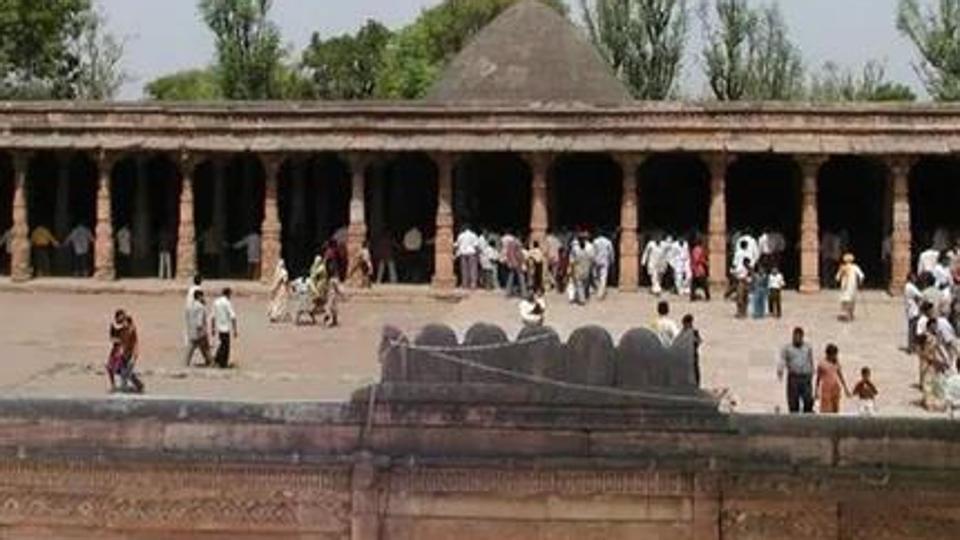
In a letter written to the Dhar district administration, Bhopal ASI’s additional director general Alok Tripathi said the organisation would conduct an archaeological survey and scientific investigation of the complex in compliance with the state high court order.
“The team will reach on Friday and that’s why we have requested safe access to the site to conduct archaeological investigations and adequate security...during the stay and work,” Tripathi said.
A team of experts will complete the survey within six weeks as asked by the court, he added.
Also Read: Bhojshala dispute: Madhya Pradesh HC issues notice to Centre, ASI and state govt
The Madhya Pradesh high court on March 11 directed the ASI to carry out a scientific survey of the Bhojshala complex, which Hindus believe is a temple of Goddess Vagdevi (Saraswati) and the Muslim community treats it as Kamal Maula Mosque.
“As directed by the court, ASI will conduct scientific investigation, survey and excavation through the adoption of the latest methods, techniques and modes of GPR-GPS survey of the site in question constituting the disputed site and also the entire 50m of peripheral ring area surrounding/constituting the circular periphery from the boundary of the complex,” Bhopal ASI superintendent Manoj Kurmi said.
“A detailed scientific investigation will be conducted by adopting the carbon dating method for ascertaining the age, and life of various structures both above and beneath the ground; permanent, movable and immovable structures both beneath as well as above the ground, constituting the walls, pillars, floors, surfaces, upper top, sanctum sanctorum of the entire complex,” he added.
The district administration has decided to provide three layers of security to the surveyors, Dhar superintendent of police (SP) Manoj Kumar Singh said, adding that one company of special armed force (SAF) of 100 security personnel would be posted during the survey along with cameras and an armed patrolling team.
Meanwhile, the two communities will continue to pray at the site as per the arrangement made by the ASI in 2003, the SP added.
As per an ASI order issued on April 7, 2003, Hindus are allowed to worship inside the Bhojshala complex every Tuesday while Muslims are allowed to offer namaz at the site on Fridays.
The MP high court order came on the petition filed by the Hindu Front for Justice in May 2022, demanding a scientific survey of Bhojshala, to determine the character and nature of contentious premises.



