E-Paper



Assam Cabinet approves UCC implementation, to be tabled in Assembly on May 26
Sarma said that a legislation in this regard would be tabled in the assembly on May 26, the last day of the first session of the new assembly.

 Prefer HTon Google


The Himanta Biswa Sarma led Bharatiya Janata Party (BJP) government in Assam, in its first cabinet meeting after returning to power, approved implementation of the uniform civil code (UCC) in the state.
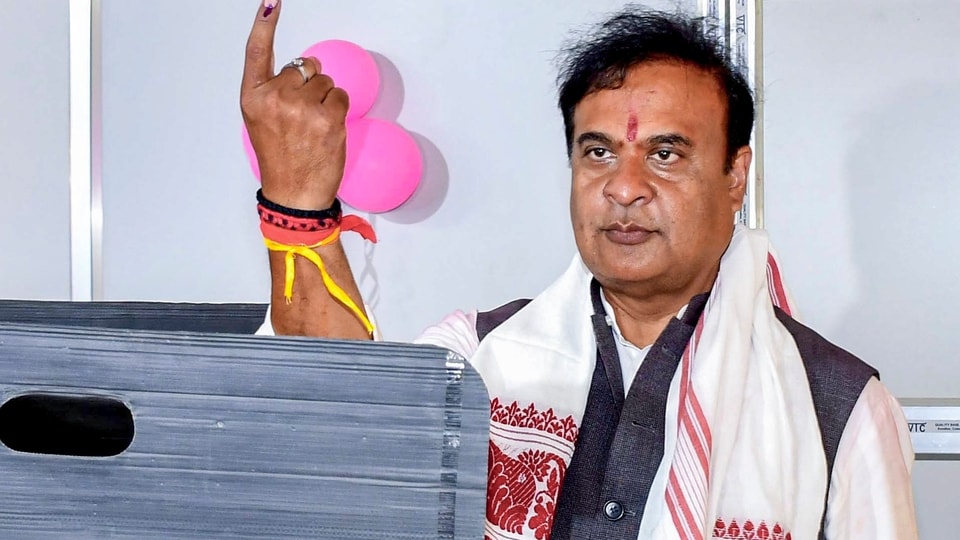
Sarma said that a legislation in this regard would be tabled in the assembly on May 26, the last day of the first session of the new assembly. “All tribal people in Assam, both residing in hills and plains, will be kept outside the purview of UCC. All religious rituals, customs and traditions will also be out of its ambit,” he added.
Also read | Assam CM Himanta completes 25 years as elected representative, calls journey ‘Anant Sewa’
Assam has a tribal population of 12.45%. It also has a Muslim population of 34.22% according to 2011 census, and will be the first state with a significant Muslim population to push for UCC.
Uttarakhand became the first state in the country to implement a Uniform Civil Code in 2024; Gujarat passed a bill adopting UCC earlier this year, but its yet to be formalised as a law; and Madhya Pradesh has set up a committee this yearto prepare a draft UCC.
To be sure, Goa has always had a uniform civil code, with the Goa Civil Code being drawn from the Portugese Cicil Code.
Also read | In first meeting after govt formation, Assam cabinet approves UCC in state
The uniform civil code is a proposed set of common civil laws that will replace religion-specific personal laws in matters like marriage, divorce, inheritance, and adoption. Along with the construction of a Ram Mandir in Ayodhya, and the abrogation of Article 370 in Jammu & Kashmir, it has been a constant in BJP’s manifesto for years.
Sarma said the code will regulate minimum age of marriage, protect the right of women to family property, abolish polygamy, recognise live-in relationships, and mandate compulsory registration of marriages and divorces.
In other decisions, the cabinet approved formation of a task force headed by the chief secretary to submit a report within three months on how the government can provide 200,000 jobs in the next five years as promised in BJP’s manifesto. The BJP-led alliance won 102 seats in the 126-member assembly with a vote share of 37.81% in results to the assembly elections declared last week.
It also followed up on Prime Minister Narendra Modi’s call for austerity in view of the economic challenges India faces on account of the crisis in West Asia, deciding not to procure any new government vehicles for the next six months, reducing other purchases of foreign products, and also cutting down on government convoy sizes and foreign tours. Sarma said the government will reduce its fuel consumption by 20%.
“We decided that government officials won’t be given permission to take foreign tours for the next six months for both official and personal trips. There will be an exception for medical cases,” Sarma said.