E-Paper



Assam govt mulls voluntary ‘traditional’ dress code for staff, triggers row
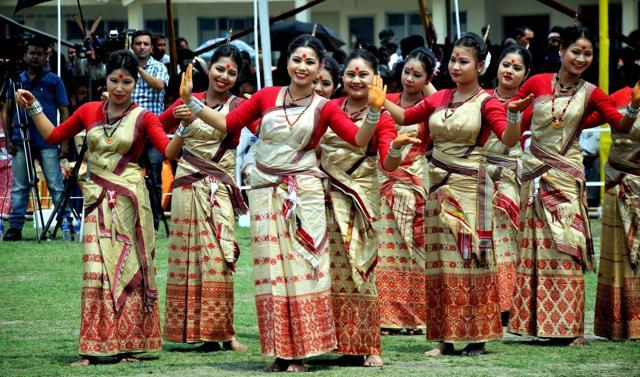
After officials were seen wearing traditional finery at Civil Services Day, a proposal has been moved to ask bureaucrats to wear ‘dhoti-kurta’ (for men) and ‘mekhela-chador’ (for women).


Assam government employees could soon be wearing ‘dhoti-kurta’ (for men) and ‘mekhela-chador’ (for women) on first and third Saturdays every month even as a section of staff has opposed the move, saying it doesn’t represent the many tribes and communities of the state.
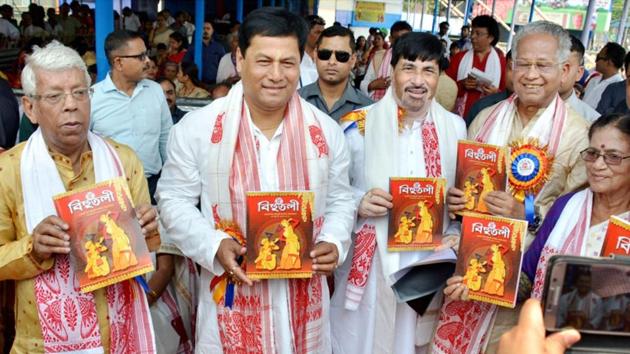
The idea germinated after several officials, particularly chief secretary V K Pipersenia, wore traditional finery during Civil Services Day celebration, an event attended by chief minister Sarbananda Sonowal, on April 21.
PK Borthakur, principal secretary (personnel), then wrote a letter to PK Tiwari, principal secretary (general administration), “to formulate a suitable proposal” in this regard.
“It appears that coming in traditional dresses also induced feelings of enthusiasm and spirit among the officers,” Borthakur wrote.
“In this regard, as advised by the chief secretary, you may like to formulate a suitable proposal asking officials/employees to come dressed up with traditional dresses on first and third Saturdays…on voluntary basis,” he said.
The proposal has however not been welcomed by Sadou Asom Karmachari Parishad (SAKP), the umbrella organisation of state government employees, which feels it will create differences between employees who belong to diverse communities and tribes.
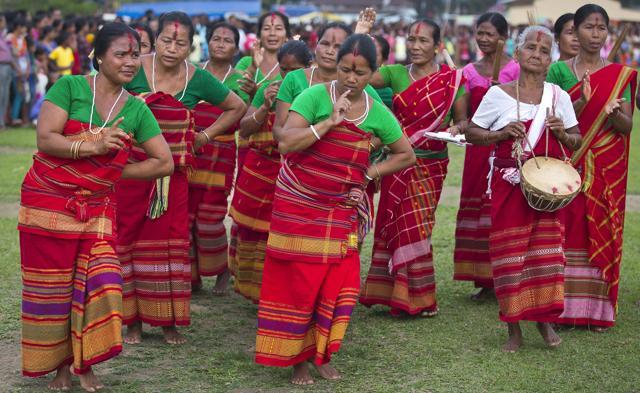
“Every tribe and community has their own traditional dress, which are not same as ‘dhoti-kurta’ and ‘mekhela-chador’. Hence the move may create confusion and controversy,” SAKP president Basab Kalita said.
There are at least 20 tribes in Assam recognised by the government and each has varying customs and costumes.
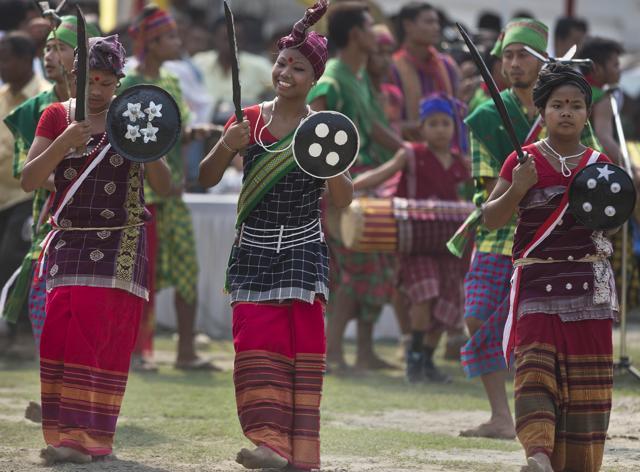
See more: The Rongali Bihu celebrations