E-Paper



Assam village manages to avoid Covid-19 with strict safety measures
The village, located around 35 km from the district headquarters, hasn’t reported a single Covid-19 case since the pandemic started early last year. Safety measures strictly enforced by the villagers are stated to be the reason for this.


Life in Kawoimari Gohain gaon in Assam’s Jorhat district hasn’t been the same in over a year now, courtesy the pandemic. But unlike in many other districts across the country, it hasn’t all been bad news here.
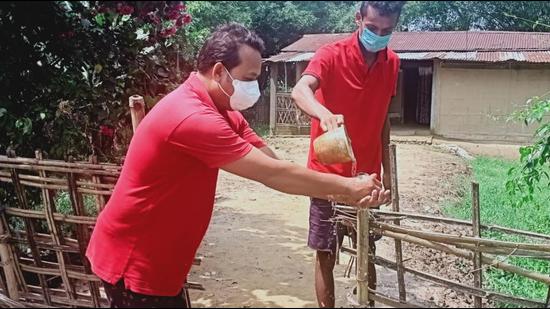
The village, located around 35 km from the district headquarters, hasn’t reported a single Covid-19 case since the pandemic started early last year. Safety measures strictly enforced by the villagers are stated to be the reason for this.
Spread over around 4 sq km, residents of the village were originally from Nematighat close to the Brahmaputra River. But large-scale erosion of the river’s banks following the big earthquake of 1950 forced people to move to the new location and set up Kawoimari Gohain gaon.
“Our village has around 400 families and a total population of nearly 2,000. We have managed to escape the virus till now,” said Madhurjya Kakati, secretary of Kawoimari Gohain Gaon’s village defence party (VDP).
Since the pandemic began, villagers have strictly complied with safety protocols such as social distancing, wearing face masks and washing hands regularly.
Roads within the village have been blockaded with bamboos to prevent entry of outsiders. Banners and notices pasted all over the village urge residents to follow all safety measures and each house keeps a bucket of water and soap at the gate to allow people to wash their hands before entering.
More than half of the villagers are engaged in cultivation while some are employed with government and private offices. Those who go out for work are required to follow all safety measures before returning to the village.
“We have a VDP of 25 people which includes five women. We take turns to guard the entry points of the village and also check for violations within. Those flouting rules would be liable for punishment /fine as fixed by the government. We don’t see any violations by villagers,” said Kakati.
Assam has enforced curfew for 17 hours daily in urban areas and 11 hours in rural areas. Educational institutions and offices are closed till the end of May and there’s a ban on inter-district movement of persons and vehicles.
“Life hasn’t been same since the pandemic began as we don’t get to socialise. But we are happy that we haven’t recorded any positive case yet or lost anyone to the disease,” said Naresh Das, a teacher from the village.
“We have been following the safety measures properly. There was some laxity towards the end of last year and during the recent assembly election. But with the second wave of Covid19 striking the country, everyone became cautious again. Inspired by what we are doing, some neighbouring villages have also started enforcing Covid-19 protocols,” he added.
Villagers said only around 15% of those eligible have managed to vaccinated.
“Kawoimari Gohain gaon hasn’t had any Covid case this year and there were no reports last year as well,” said Dr Rekha Hazarika, in-charge of Kakojan block primary health centre (BPHC) under which the village falls.
Till Sunday, Assam had recorded 406,868 Covid cases and 3,300 deaths. In the past two weeks, the state has been recording around 5,000-6,000 cases and 70-80 deaths daily.