
 E-Paper



Bengal rhino population up 14% in 4 years, adverse sex ratio a concern: Report
Wildlife experts attributed best conservation practices as the reason behind the increase in the population by 36 in just four years.


The population of the one-horned rhinoceros in north Bengal has reached 289, a report has said, as experts expressed concern over the dwindling sex ratio among the rare animals.
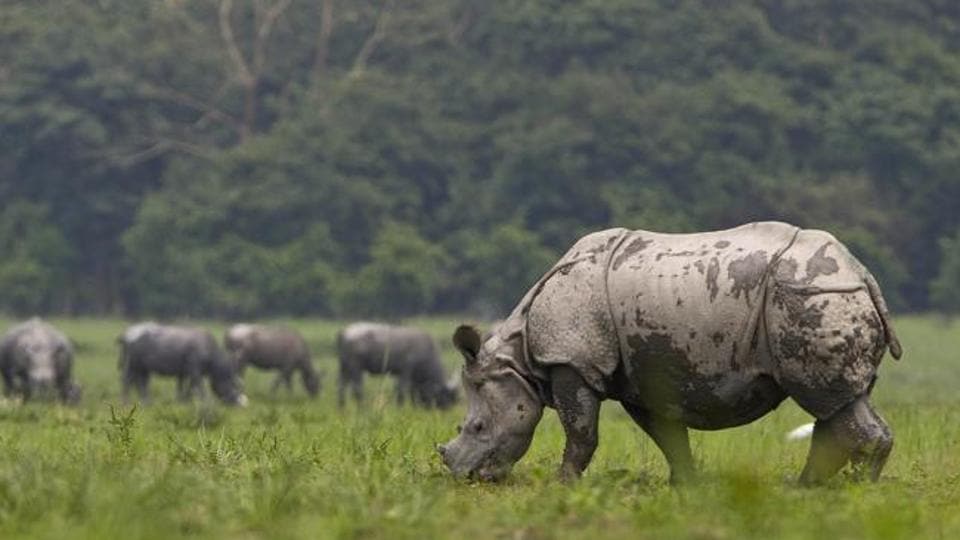
According to the rhino census report released by state forest minister Bratya Basu in Siliguri on Monday, there has been an increase of 66 in 11 years. The figure was 223 in 2008 and 253 in 2015.
Wildlife experts attributed best conservation practices as the reason behind the increase in the population by 36 in just four years.
“The number of rhinos in Jalpapara and Gorumara landscapes are 237 and 52 respectively,” Basu said while releasing the report.
The Jaldapara National Park and Gorumara National Park in north Bengal are among four forest tracts in the country, where the one-horned rhino can be seen in the wild. The others are Assam’s Kaziranga and Manas National Parks.
The report also talked about the dwindling sex ratio of the rhinos, which has come as a major concern.
“The sex ratio of rhinos in Gorumara landscape is 25:17. This means there is one male for 0.68 female. From the result of the present estimation, it is evident that the number of male rhinos appears to be on the higher side and this may lead to more incidents of infighting in future,” the report said.
The ratio in Gorumara in 2015 was 1:1.
“The decrease in the number of females in a persistent issue which seriously needs to be taken into consideration,” the report added.
There are regular instances of rhinos, both male and female, being killed due to infighting. Forest officials said that male rhinos often fight for female rhinos.
In Jaldapara National Park and Gorumara National Park, one or two female rhinos die every year due to infighting. Once the female rhinos reject the mating attempts of male rhinos, they are attacked and suffer grievous injuries.
However, the situation is relatively better at Jaldapara, where the number of rhinos has increased from 204 in 2015 to 237 in 2019 — an increase of 33 in four years. Here the existing sex ratio is 98:94, which means there is one male for 0.95 female. This ratio is almost that same as that in 2015, the report said.
“The state has adopted one of the best wildlife conservation practices in the world. The increase in the population of rhinos is an outcome of these practices,” Narendra Kumar Pandey, principal chief conservator of forests, said.
Pandey said that in the late seventies and early eighties there were years when as many as 35 rhinos were poached in a year in north Bengal. “Rhino poaching is down to nearly zero level now,” he said.
The last rhino to be poached in Bengal was on December 25, 2018, said Ujjal Ghosh, chief conservator of forest, wildlife north.


