
 E-Paper



Bengaluru records 125% rise in October rainfall, infra crumbles
Continuous rains over the last couple of weeks have once again exposed the chinks in Bengaluru’s poor quality of infrastructure and planning or the lack of it.


The city received 233 mm of rainfall till October 18 as against the normal of 104 mm, registering an increase of 125%, as per Karnataka State Disaster Management Authority (KSDMA) data. .
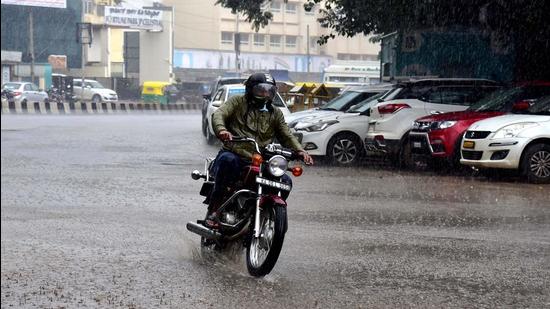
Continuous rains over the last couple of weeks have once again exposed the chinks in Bengaluru’s poor quality of infrastructure and planning or the lack of it.
On Monday, Karnataka chief minister Basavaraj Bommai himself acknowledged the lack of town planning and unscientific methods used for creating new residential layouts or providing basic amenities in existing ones.
The rains have left a trail of destruction, misery and suffering of people living in low lying regions of the city and other places where drains and lakes have overflowed into the homes and basements in several localities.
The increase in the eight zones of Bengaluru ranges between 62% to 222% recorded in the west side of the city, data from the Karnataka State Disaster Management Authority (KSDMA) said.
At least 21 persons have died so far in Karnataka since the beginning of October, according to KSDMA data.
Thousands of homes have been damaged and hundreds of animals and livestock have died during the same period as rains continue in the state.
At least 14 districts have received large excess rains or higher than 60% departure, 6 districts have received excess rains, according to data. Five districts have received near normal rains while six more have recorded a deficit.
Chikkaballapura, about 60.kms from Bengaluru, has recorded the highest departure at 150% as the district received 235 mm of rains since October 1 as against the normal of 94mm.
The rains have damaged crops in over 471,000 hectares of agriculture and horticulture crops, according to data.
During the same period, all major divisions of Karnataka received over 46% more rains than usual with 89% of all taluks recording higher than normal rain this year.
“This is what happens when a town is built without town planning,” Bommai said after visiting HSR Layout, an upscale locality in the southern part of Bengaluru, thereby acknowledging one of the biggest challenges in India’s IT capital and how the civic authorities continue to dodge blame.
Bommai said that earlier there were many lakes that took in the water but now the layouts or residential localities are interfering with the natural flow of water, causing an impact that has led to water logging, flooding and damages to property.
The quality of infrastructure in Bengaluru is among the poorest in the country and at least 18 people died in the city, which prides itself of being the technology capital of India, due to civic apathy last year, according to data by the National Crime Records Bureau.
At least 400 out of the fortune 500 companies globally have a presence in Karnataka but the quality of infrastructure, toxic and encroached lakes, pot-hole laden roads, traffic snarls, unplanned expansion and other problems have contributed to the rapidly deteriorating quality of life in the city.
The corruption in civic agencies have also led to approval of several buildings without proper plans or engineering, making them prone to collapsing. There have been at least six buildings that have collapsed in the city over the last couple of weeks.
According to the Bruhat Bengaluru Mahanagara Palike (BBMP), there were 185 dilapidated buildings in the city according to its survey carried out in 2019. However, only 10 among these were demolished and people continue to reside in several other buildings even today. A recent rapid survey revealed that the total number of dilapidated buildings is in excess of 400.
Gaurav Gupta, the chief commissioner of the BBMP had earlier told Hindustan Times the rains had caused some shifting of soil and weakened foundations.


