E-Paper



Bengaluru stampede: Event organiser moves HC against judicial commission report
DNA’s counsels mentioned the petition on Friday before a bench of Justices Jayant Banerjee and SG Pandit, seeking an urgent hearing and the bench agreed to hear the matter on July 28

 Prefer HTon Google


Event management company, DNA Entertainment Networks, has moved the Karnataka High Court (HC) challenging the judicial commission report which holds the company and its officials among those responsible for the June 4 stampede that took place outside the Chinnaswamy Stadium in Bengaluru ahead of the victory celebrations by IPL franchise Royal Challengers Bengaluru leaving 11 people dead.
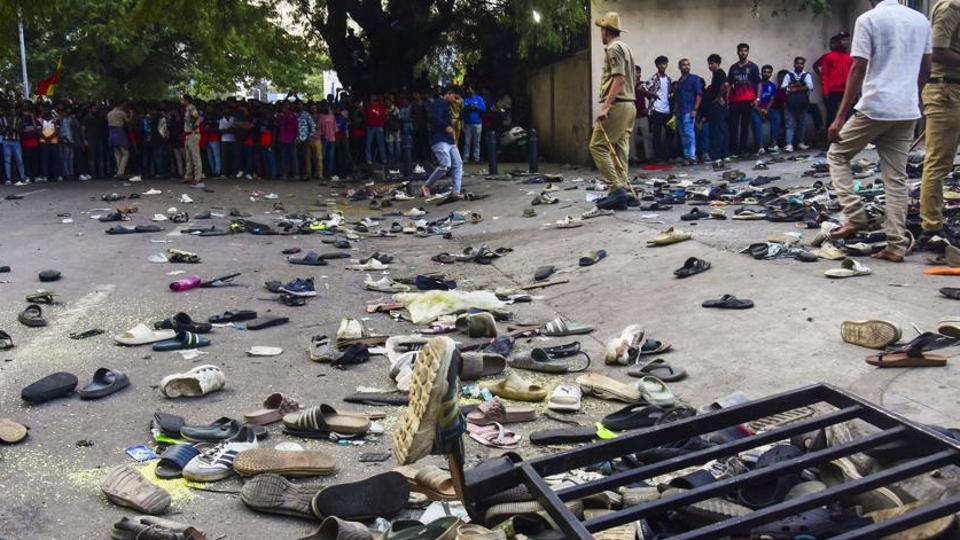
In the aftermath of the stampede, the Karnataka government had constituted a judicial commission headed by retired high court judge Justice John Michael D’Cunha.
In his report submitted before the state government earlier this week, Justice D’Cunha’s report has blamed the “reckless” conduct of the organisers, including DNA, RCB, the Karnataka State Cricket Association (KSCA), and certain police officials for the huge crowd that gathered at the stadium gates and the subsequent stampede.
The commission report has recommended legal action against them for failing to regulate crowd movement and for inadequate planning. However, DNA has now challenged these findings before the high court, arguing that the tragedy was due to the failure of state authorities, particularly the police, in managing the crowd outside the stadium, which it has claimed was “beyond the scope” of the company’s responsibility.
DNA’s counsels mentioned the petition on Friday before a bench of Justices Jayant Banerjee and SG Pandit, seeking an urgent hearing and the bench agreed to hear the matter on July 28.
Also Read:Bengaluru stampede: Karnataka HC directs release of RCB’s marketing head Nikhil Sosale, others
In its petition, DNA has also alleged serious procedural lapses in the judicial commission’s functioning. It has claimed that it was never provided a copy of the report before its contents were “leaked to the press,” violating principles of natural justice.
“The fact that the impugned Report is leaked to the press but not given to the Petitioner till date makes it clear that the Respondents have acted in a pre-planned manner with a vendetta,” the plea reads.
Further, DNA has accused the Commission of failing to allow its directors to cross examine witnesses, a right guaranteed under the Commissions of Inquiry Act, 1952.
The company also said that its directors, Venkata Varadhana Thimmaiah and Sunil Mathew, who had appeared before the Commission, and had answered all its questions, realised their statements had been recorded “inaccurately,” and that their requests to correct these were ignored.
The petition contends that the commission submitted its report in undue haste to deflect blame and pacify public anger. The inquiry, it has claimed, was a mere “eyewash” intended to scapegoat the company.