
 E-Paper



Bhopal train blast ‘gift’ from Baghdadi, ‘announcement’ of Indian IS: Probe
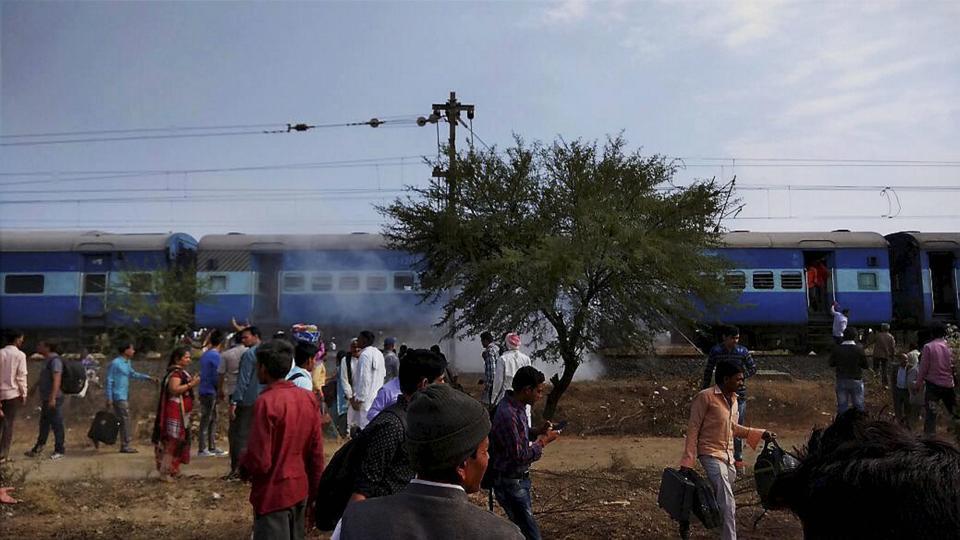
The investigation into the March 7 Bhopal-Ujjain passenger train blast reveals that it was meant to be an ‘announcement’ of the arrival of the Indian chapter of the Islamic State (IS).


The investigation into the March 7 Bhopal-Ujjain passenger train blast reveals that it was meant to be an ‘announcement’ of the arrival of the Indian chapter of the Islamic State (IS). The ‘announcement’ was in the form of a letter wrapped around the pipe bomb that caused the explosion. The letter named one of the accused, Atif Muzaffar, as ‘emir’ and the strike a ‘gift’ from IS leader Abu Bakr al-Baghdadi. The letter did not survive the blast but its contents have been revealed by the interrogation of Kanpur-born school dropout Muzaffar.
Read | MP train blast points to rise in radicalisation of Muslim youth
North Block sources told Hindustan Times that the strike was an amateurish effort but has serious security ramifications as the nine-member Lucknow module accused of the act was inspired by IS literature available on the Net. The pipe bomb used potassium chlorate and a clock detonator, and was designed after reading “How to Make Bomb in the kitchen of your Mom” chapter in the first edition of Inspire, the online English magazine of the Islamic State.
Ten people were injured in the blast on March 7, three of them seriously. All are all out of danger now. Ten arrests have been made so far in connection with the blast.
The nine-member module, of whom Mohammad Saifullah was killed in Lucknow on March 7-8, had familial associations. Investigations revealed that accused Danish, Faisal and Imran were brothers and that Saifullah was their cousin.
Read | Was blast revenge for SIMI enounter?
The module, which was under the scanner of Intelligence Bureau and Telangana Anti-Terrorist Squad for months, had been radicalised over the internet and was in touch with a Pakistan-Syrian module that is currently under investigation. While a section of security agencies believe that former Indian Mujahideen terrorist-turned IS recruiter Shafi Armar or Yousuf Al Hindi was in touch with the module, others attribute the attack to Pakistan’s Inter-Services Intelligence (ISI) using IS as cover.
According to the interrogation report, Fakre Alam, another accused, had purchased country-made pistols and ammunition from Rocky Ranavat and Shailendra Yadav of Etawah in Uttar Pradesh with Atif Muzaffar providing the cash. While the weapon suppliers have been arrested, it has now come to light that Muzaffar had rented a house in Thakurganj area of Lucknow and turned it into the main base. The accused also conducted a couple of dry runs in Lucknow to test the bomb before targeting the Bhopal-Ujjain train.


